o
p
t
i
m
a
r
o
b
o
t
i
c
s

Make a Call


Make a Call
Blogs
2026 Best Inverter Wire Harness Suppliers for Buyers?
Choosing an Inverter Wire Harness supplier in 2026 takes more than comparing unit prices. Buyers need to examine current capacity, engineering support, traceability, and test documentation. A harness may look simple on a drawing. In service, its terminals, insulation, and routing face heat, vibration, and electrical stress. Small details matter.
A representative expert perspective, expressed here by fictional harness engineer Lena Chen, captures the key test: “A reliable harness is proven at its connections, not promised in a catalog.” Treat that as a reminder, not a sourced quotation. Ask suppliers how they validate crimp quality, verify continuity, and control changes between production runs. Request clear answers and sample records. If a supplier cannot explain its process plainly, pause.
This guide compares suppliers through practical buyer questions: What applications do they support? Can they provide custom designs, consistent lead times, and responsive technical help? Do their inspection plans match the risks of your project? These checks help separate polished sales claims from evidence buyers can review. Still, no shortlist fits every application. A supplier suited to a low-volume prototype may struggle with a demanding production schedule. That distinction is easy to overlook. The sections ahead offer a structured way to assess capabilities, compare trade-offs, and identify the right questions before requesting a quotation.
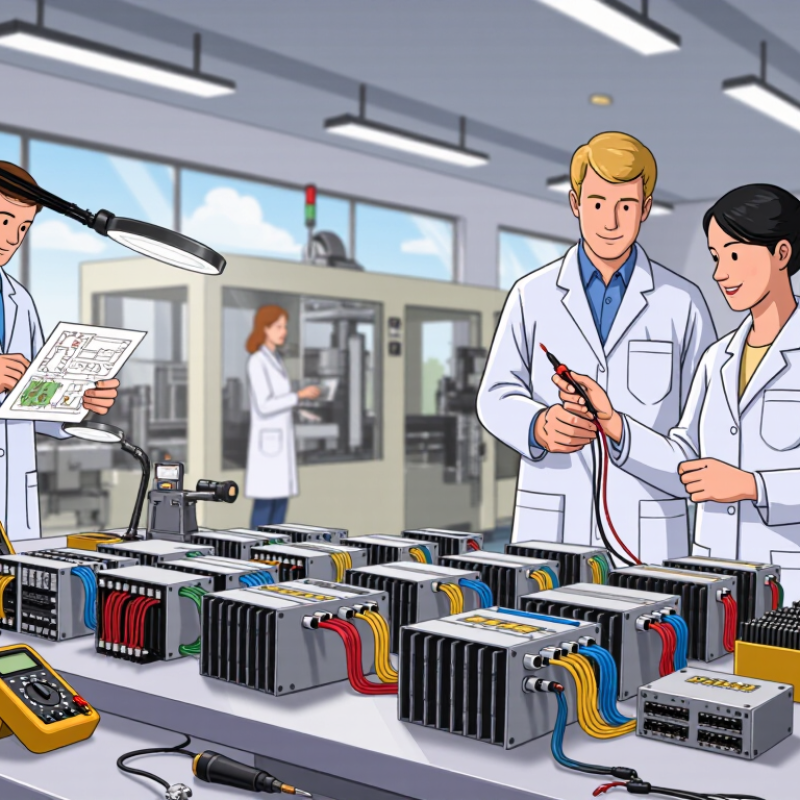
Table of Contents [Hide]
What an Inverter Wire Harness Does in Power Conversion Systems
An inverter wire harness connects power, sensing, and control circuits inside or around a power conversion system. It carries direct-current input from a battery or solar array, then supports alternating-current output and signals used for monitoring and protection. Exact layouts vary. A harness must match the inverter’s voltage, current, temperature, and connector requirements, not just fit the enclosure.
The scale of deployment makes this practical detail important.
The International Energy Agency’s Renewables 2024 report says global renewable capacity additions reached about 510 GW in 2023, with solar providing roughly three-quarters. That figure describes capacity, not harness failure rates, but it shows why dependable connections matter.
In service, undersized conductors can increase voltage drop and heat. Poor strain relief can let vibration stress a terminal. Small details matter. A well-designed harness keeps power and signal paths organized, supports inspection, and reduces avoidable wiring errors.
Still, a clean drawing is not proof of field reliability; real operating temperatures, routing, and maintenance access deserve review before production.
Brands
Proudly Trusted by Top Suppliers Worldwide




Let us know and we will automate, together to fit your industrial needs.
 +91-97254 16844
Clients
Proudly Trusted by Top Companies Worldwide


Do you need Help? Get in touch.
X
Please fill out the form below and we will get back to you as soon as possible.