o
p
t
i
m
a
r
o
b
o
t
i
c
s

Make a Call


Make a Call
Blogs
What Is the Best Handheld Infrared Sensor in 2026?
Choosing the best Handheld Infrared Sensor in 2026 requires more than comparing screen size or advertised temperature range. Field experience shows that a bright display cannot rescue poor calibration, weak thermal sensitivity, or confusing software. A technician may stand beside a vibrating motor, rain-covered pipeline, or crowded electrical cabinet. Small temperature differences can decide whether an inspection is useful.
Market research points to steady demand. MarketsandMarkets projects the global thermal imaging market to grow from about USD 4.5 billion in 2023 to more than USD 8 billion by 2028. Grand View Research also reports strong expansion through industrial maintenance, building inspection, healthcare, and automotive applications. These figures describe thermal imaging broadly, not handheld sensors alone. That distinction matters. Report estimates are not perfectly consistent.
Dr. Michael Vollmer, a recognized thermography researcher and co-author of Infrared Thermal Imaging, states, “Temperature measurement is only meaningful when emissivity and reflected radiation are considered.” That principle should guide every 2026 comparison. The strongest device combines reliable calibration, suitable spectral response, low NETD, accurate focus, and practical data export. It should also survive real work, including dust, accidental drops, and long shifts. Standards such as ISO 18434-1 and IEC 62471 offer useful reference points, but compliance does not automatically guarantee excellent field performance. This guide examines the details that manufacturers often place in small print, including accuracy limits, battery behavior, image clarity, software quality, and after-sales support. The best choice may not be the most expensive model. It may be the sensor that produces dependable evidence when conditions become difficult.
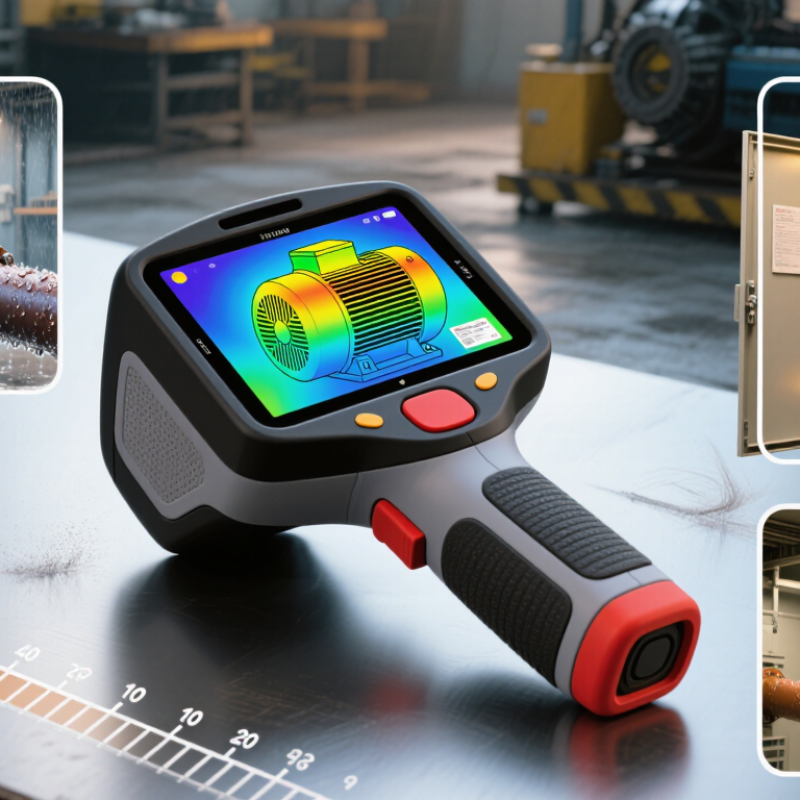
Table of Contents [Hide]
What Is a Handheld Infrared Sensor?
What Is the Best Handheld Infrared Sensor in 2026?
What Is a Handheld Infrared Sensor?
A handheld infrared sensor is a portable device that detects infrared energy from objects, surfaces, or nearby environments. It converts invisible heat radiation into readable information, such as temperature, movement, or surface differences. Unlike ordinary cameras, it responds to thermal patterns rather than visible color. This makes it useful for checking electrical panels, locating insulation gaps, monitoring machinery, and observing warm or cool areas during maintenance.
In practical use, the best handheld infrared sensor should offer stable readings, a clear display, fast response, and dependable calibration. A comfortable grip also matters when inspections last for hours. Experienced technicians usually compare measurement range, accuracy, image clarity, battery life, and environmental protection. However, no sensor is perfect. Shiny metal, airflow, dust, and incorrect distance can distort results. I have found that a careful second measurement often matters more than a higher specification.
Tips: Let the sensor adjust to the surrounding temperature before testing. Keep the lens clean and avoid touching it during measurement. Check unusual readings from another angle. Record the surface condition, distance, and ambient temperature. These small details improve reliability, although field conditions can still produce uncertain results.
Brands
Proudly Trusted by Top Suppliers Worldwide







Let us know and we will automate, together to fit your industrial needs.
 +91-97254 16844
Clients
Proudly Trusted by Top Companies Worldwide


Do you need Help? Get in touch.
X
Please fill out the form below and we will get back to you as soon as possible.