o
p
t
i
m
a
r
o
b
o
t
i
c
s

Make a Call


Make a Call
Blogs
2026 Best LNG Exchanger Manufacturers for Global Buyers
Choosing the right Lng Exchanger manufacturer requires more than comparing catalog prices. LNG projects operate under severe conditions. Temperatures can fall below -160°C. Pressure cycles, vibration, salt air, and thermal contraction test every weld and seal. A small weakness can become a costly shutdown.
Dr. James R. Fair, a respected chemical engineering authority, offered a practical design principle: “Heat transfer, pressure drop, and cost must be considered together.” That principle still matters in 2026. A high-performing exchanger must deliver stable thermal efficiency without creating excessive pressure loss. Buyers should examine cryogenic design experience, material traceability, welding qualifications, and documented factory testing. Helium leak tests, hydrostatic testing, cleanliness controls, and performance verification deserve close attention. Certifications matter, but paperwork alone cannot prove field reliability.
This guide reviews the 2026 best LNG exchanger manufacturers for global buyers. It considers technology, production capacity, customization, after-sales support, delivery discipline, and experience with large-scale LNG facilities. It also looks at plate-fin, spiral-wound, shell-and-tube, and printed circuit exchanger solutions. Each type has a different operating profile. No ranking is perfect. Public data can be uneven, and some manufacturers disclose more than others. That limitation deserves honest attention.
A serious buyer should request reference projects, inspection records, maintenance requirements, and clear warranty terms. Factory photographs may show polished equipment. They do not reveal every manufacturing weakness. The strongest suppliers combine proven engineering, transparent communication, and repeatable quality control. Cost still matters. Reliability usually matters longer.
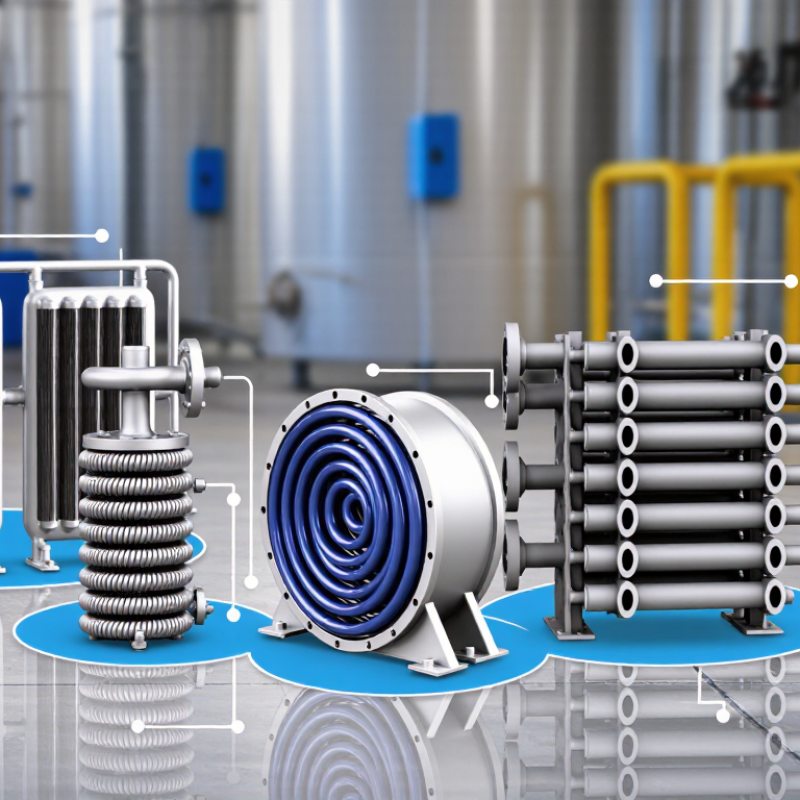
Table of Contents [Hide]
LNG Heat Exchangers: Types, Functions, and Industrial Applications
LNG heat exchangers control temperature during liquefaction, storage, and regasification. According to the GIIGNL Annual Report 2024, global LNG trade reached 404.3 million tonnes in 2023. That volume increases demand for dependable thermal equipment. Cold service changes everything. Plate-fin exchangers offer high surface area and compact footprints. They commonly support liquefaction trains and nitrogen rejection systems. Shell-and-tube units provide stronger mechanical separation and easier maintenance. They suit vaporizers, seawater heating, and industrial gas facilities.
Printed circuit heat exchangers handle high pressure and severe temperature differences. Their welded channels reduce leakage risks, but inspection requirements remain demanding. Regasification terminals often use open-rack vaporizers, submerged combustion vaporizers, or intermediate-fluid systems. Each design responds to water quality, emissions limits, available space, and seasonal demand. The IEA Gas Market Report 2024 forecasts strong LNG supply growth through 2025. More capacity does not automatically mean better reliability. Poor fouling control can still reduce output.
Global buyers should examine thermal duty, pressure cycling, metallurgy, cleaning access, and documented testing. Aluminum alloys work well in cryogenic plate-fin designs, while stainless steels support demanding process sections. ASME construction records and applicable pressure-equipment certifications improve purchasing confidence. A useful factory audit checks weld procedures, helium leak testing, and performance data under simulated operating conditions. I have seen specifications become too generic. That mistake hides maintenance costs. A careful manufacturer should explain assumptions, not only provide a low initial price.
Brands
Proudly Trusted by Top Suppliers Worldwide







Let us know and we will automate, together to fit your industrial needs.
 +91-97254 16844
Clients
Proudly Trusted by Top Companies Worldwide


Do you need Help? Get in touch.
X
Please fill out the form below and we will get back to you as soon as possible.