o
p
t
i
m
a
r
o
b
o
t
i
c
s

Make a Call


Make a Call
Blogs
The Best Robotic Automation Solutions for Businesses in 2026?
In 2026, businesses face a fast-evolving landscape where efficiency is critical. Robotic automation is no longer a choice; it is a necessity for survival. Companies are increasingly turning to robotic solutions to streamline operations and reduce costs. The rise of intelligent automation tools enables firms to enhance productivity while freeing up human resources for strategic tasks.
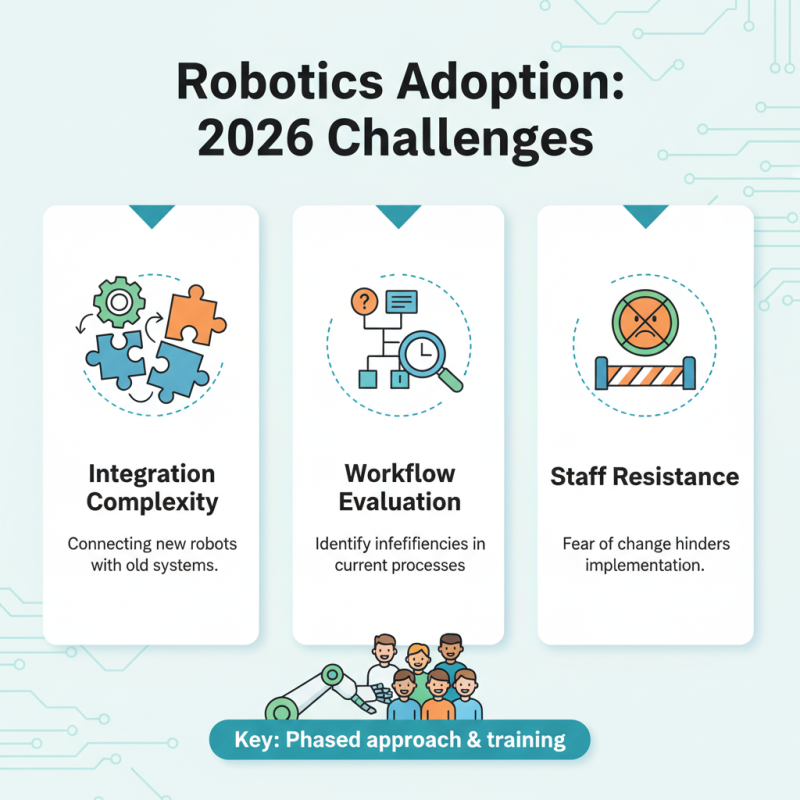
Challenges accompany this technological shift. Not all businesses can seamlessly adopt robotic automation. Many struggle with integration into existing workflows. Companies must carefully assess their readiness and investment. This demands expertise in both robotics and operational processes. Failure to adapt can lead to increased operational risks and missed opportunities.
The future of business lies in mastering robotic automation. Those that embrace these innovations early will likely lead their industries. However, the journey is fraught with uncertainties and requires thoughtful consideration. Finding the best solutions is essential to harnessing the full potential of robotic automation.

Table of Contents
[Hide]
Overview of Robotic Automation Solutions in 2026
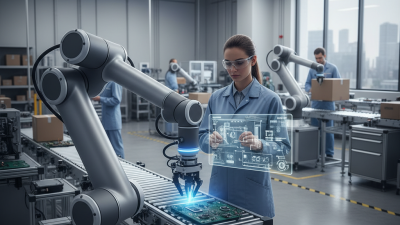
In 2026, robotic automation solutions are set to transform various business sectors. Companies are increasingly adopting these technologies to enhance productivity and streamline operations. The rise of collaborative robots is particularly noteworthy. These robots work alongside humans, improving efficiency while ensuring safety in the workplace.
Many industries are experimenting with automation. Manufacturing facilities employ robots for assembly tasks, reducing labor costs and increasing output. In logistics, autonomous vehicles handle deliveries, which cuts down on transportation times. However, not all solutions are perfect. Integration with existing systems can pose challenges. Some businesses struggle with training staff to work with new technologies.
Data security remains a significant concern too. As businesses rely more on automation, protecting sensitive information becomes crucial. Cybersecurity measures must evolve simultaneously to safeguard against threats. Continuous evaluation and adaptation are necessary to navigate this complex landscape. Companies must assess their unique needs and choose solutions that align with their goals.
The Best Robotic Automation Solutions for Businesses in 2026
| Solution Type | Key Features | Industry Applications | Expected ROI (%) | Deployment Time (Months) |
|---|---|---|---|---|
| Process Automation | Task scheduling, data entry, report generation | Finance, HR, Customer Service | 30% - 50% | 3 - 6 |
| Robotic Process Automation (RPA) | Software bots, integration with existing systems | Retail, Healthcare, Manufacturing | 40% - 60% | 2 - 4 |
| AI-Driven Automation | Machine learning, natural language processing | Marketing, Sales, IT Services | 50% - 70% | 6 - 12 |
| Collaborative Robots (Cobots) | Safety features, ease of use, payload flexibility | Manufacturing, Warehousing | 20% - 40% | 4 - 8 |
| Process Mining | Data visualization, process optimization | Finance, Operations Management | 25% - 45% | 3 - 5 |
Related Posts
-
How to Implement Robotic Automation Solutions in Your Business
-

Unlocking Creativity: How a Small Robotic Arm Can Transform Your DIY Projects
-
Best Cobot Solutions for Enhanced Efficiency in Manufacturing Processes
-
Top Advantages of Cobot Automation in 2025 for Smart Manufacturing
-

10 Best Benefits of Cobot Automation for Modern Manufacturing
-
How to Choose the Right Cobot for Your Universal Robot Applications
Brands
Proudly Trusted by Top Suppliers Worldwide



Let us know and we will automate, together to fit your industrial needs.
 +91-97254 16844
Clients
Proudly Trusted by Top Companies Worldwide


Do you need Help? Get in touch.
X
Please fill out the form below and we will get back to you as soon as possible.