o p t i m a r o b o t i c s

Blogs

China Best Refrigeration Fan Motor Manufacturer?

China’s refrigeration equipment sector is expanding as food logistics, supermarkets, cold storage, and data-driven facilities demand stable temperature control. The International Energy Agency’s The Future of Cooling report warns that global space-cooling energy demand could more than triple by 2050 without stronger efficiency measures. This pressure also reaches every Refrigeration Fan Motor installed behind a condenser coil or evaporator grille.

“Cooling is a fundamental need, not a luxury,” said Fatih Birol, Executive Director of the International Energy Agency. His statement explains why motor selection deserves more attention than a simple price comparison. A dependable motor must manage airflow, noise, heat, vibration, and continuous operation. In a Chinese factory, that may mean watching a motor run through humid summer shifts while dust gathers around the guard. Small defects become expensive when compressors overheat or stored food loses temperature.

Industry reports from the IEA and the U.S. Department of Energy consistently connect efficient motors with lower electricity use and improved equipment performance. However, efficiency labels alone do not prove manufacturing quality. This assumption is too simple. Buyers should examine bearing life, insulation class, IP rating, speed control, shaft balance, and tested operating temperatures. They should also verify production records, sample results, certifications, and after-sales response.

This guide evaluates how to identify a reliable China Refrigeration Fan Motor manufacturer. It considers engineering experience, customization capability, quality control, export reliability, and total operating cost. The cheapest option may not remain cheap. A poorly matched motor can create noise, downtime, and repeated replacement costs. Supplier claims deserve evidence, not polite trust.
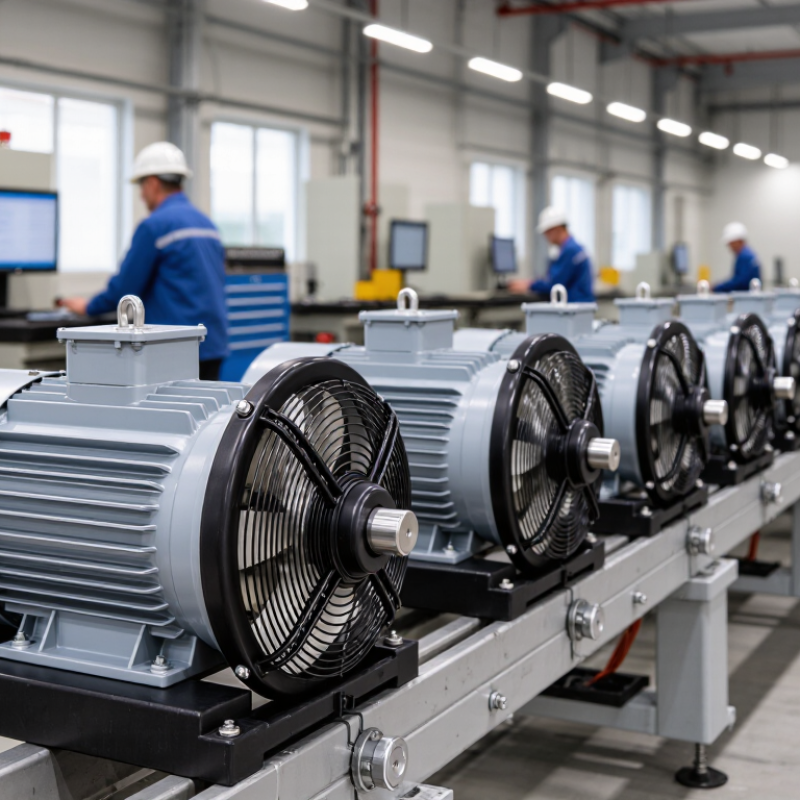
China Best Refrigeration Fan Motor Manufacturer?

What Defines a Refrigeration Fan Motor Manufacturer in China?

What defines a refrigeration fan motor manufacturer in China? It is not simply production capacity or a low quotation. A capable manufacturer understands evaporator and condenser airflow, cold-start torque, vibration, noise, and moisture resistance. In a freezer operating at -25°C, a motor may start repeatedly while lubricants become thicker. Engineers should test this condition, not only room-temperature samples. The IEA’s The Future of Cooling report projects global cooling demand could nearly triple by 2050, reaching about 6,200 TWh annually. That pressure makes motor efficiency and service life practical purchasing concerns.

A reliable Chinese manufacturer should show measured data, not polished claims. Ask for winding resistance records, locked-rotor tests, insulation checks, airflow curves, and endurance results. Factory traceability should connect each motor to its coil material, bearing lot, test operator, and shipment date. Production should follow applicable IEC safety requirements, while quality systems should support consistent inspection. Independent laboratory reports can strengthen confidence, especially for overseas buyers. Small details matter. A loose terminal can stop a cold room.

Experience also appears in customization. The supplier should adjust shaft length, mounting holes, connector position, speed, and protection class without weakening reliability. According to the U.S. Department of Energy, electric motors account for a major share of industrial electricity use, often estimated near 46% globally. That figure is broad, but it highlights an overlooked issue: a cheaper motor may consume more power for years. No factory is perfect. Buyers should still question test limits, repeat samples, and failure records before approval.

What Defines a Refrigeration Fan Motor Manufacturer in China?

Typical efficiency ranges by refrigeration fan motor technology. Higher efficiency, reliable low-temperature operation, stable quality control, and compliance with electrical safety requirements are key characteristics of a capable manufacturer.

The ranges shown are typical industry reference values: shaded-pole motors are generally economical but less efficient, PSC motors provide improved efficiency, and EC motors typically deliver the highest efficiency with electronic commutation and speed control.

Key Refrigeration Fan Motor Types and Technologies

China Best Refrigeration Fan Motor Manufacturer?

Key Refrigeration Fan Motor Types and Technologies

Refrigeration fan motors control airflow across evaporator and condenser coils. The main choices are shaded-pole, PSC, and electronically commutated motors. Shaded-pole motors are inexpensive and simple. However, they usually consume more power and offer limited speed control. PSC motors improve efficiency and remain common in medium-duty refrigeration equipment.

EC motors use electronic commutation and permanent magnets. They can adjust speed according to cabinet temperature, coil pressure, or door activity. This reduces unnecessary airflow and operating noise. The International Energy Agency’s Future of Cooling report projects global cooling demand could more than triple by 2050. Small motor improvements may therefore produce meaningful lifetime savings. Field testing still matters. A catalog efficiency number cannot fully predict performance inside a dirty condenser.

Tips: Check voltage, mounting dimensions, rotation, airflow, IP rating, and ambient temperature range. Match the motor to the fan blade, not only the refrigeration system. Variable-speed control is valuable, but poor programming can create unstable temperatures. It is an easy mistake.

A reliable supplier should provide thermal data, insulation class, bearing details, efficiency curves, and test conditions. The UNEP Cooling Emissions and Policy Synthesis Report warns that cooling demand and related emissions may rise sharply without efficiency improvements. For harsh cold rooms, sealed bearings and suitable low-temperature lubrication deserve careful attention. The cheapest motor is rarely the lowest-cost choice. Sometimes, even experienced technicians select excessive airflow. That wastes energy and may increase product dehydration.

How Chinese Manufacturers Produce and Test Fan Motors

China Best Refrigeration Fan Motor Manufacturer?

Chinese manufacturers usually begin with steel lamination stamping, copper winding, rotor balancing, and controlled varnish treatment. Each step affects vibration, heat, and service life. Experienced plants measure winding resistance, insulation strength, current, speed, noise, and airflow during production. End-of-line systems can detect abnormal current within seconds. Manual checks still matter. Sensors sometimes miss loose terminals or unusual bearing sounds.

The International Energy Agency reported that global space-cooling electricity demand could rise from about 2,020 TWh in 2016 to 6,200 TWh by 2050. This pressure makes motor efficiency more important. Reliable factories test motors under rated voltage, low voltage, overload, and locked-rotor conditions. They also monitor temperature rise after continuous operation. Testing should follow relevant IEC 60034 requirements and use calibrated instruments. A polished report is useful, but traceable raw data is better.

Tips: Ask for airflow curves, efficiency values, noise limits, insulation-class details, and sample test records. Confirm the test temperature and voltage. Results from one perfect sample may not represent monthly production. No laboratory removes every field failure. Condensation, dust, installation errors, and poor maintenance still change performance. A dependable supplier should explain these risks clearly, not promise impossible results.

China Best Refrigeration Fan Motor Manufacturer? - How Chinese Manufacturers Produce and Test Fan Motors

Production or Test Dimension Typical Manufacturing Practice Key Parameters or Equipment Typical Verification Method Representative Acceptance Consideration
Motor Design and Application Matching The motor is selected according to evaporator or condenser fan duty, voltage, frequency, mounting arrangement, ambient temperature, and required airflow. Rated voltage, frequency, output power, rotational speed, torque, insulation class, enclosure protection, and operating temperature. Design review, electrical calculations, prototype evaluation, and application-specific performance testing. The selected motor should meet the equipment duty point without exceeding its thermal, electrical, or mechanical limits.
Laminations and Magnetic Core Electrical-steel laminations are stamped, deburred, stacked, and secured to form the stator and rotor cores. Lamination thickness, burr height, stack height, slot geometry, concentricity, and core-locking condition. Dimensional inspection, visual examination, and sampling checks with gauges or coordinate measuring equipment. Core dimensions and slot geometry must remain within the approved engineering drawing tolerances.
Copper Winding Automatic or semi-automatic winding equipment forms the coils, while operators or machines connect, shape, and secure the winding ends. Wire diameter, turns per coil, winding resistance, connection sequence, slot fill, and terminal arrangement. Resistance measurement, visual inspection, turn-count control, and electrical analyzer testing. Resistance and winding configuration must be consistent with the approved design and phase-balance requirements.
Insulation System Insulating materials are fitted between conductive parts and the core; windings are treated with varnish or another approved insulation process when required. Insulation material, dielectric strength, insulation resistance, curing temperature, and curing time. High-potential test, insulation-resistance test, and process-temperature recording. No dielectric breakdown is permitted during the specified high-potential test; insulation resistance must satisfy the product specification.
Rotor, Shaft, and Bearing Assembly The rotor is mounted on the shaft, bearings are installed, and the rotating assembly is checked for alignment and smooth movement. Shaft diameter, bearing fit, axial play, radial runout, rotor balance, and lubricant compatibility. Runout measurement, manual rotation check, bearing inspection, and dynamic balancing. The shaft and rotor must rotate smoothly without abnormal contact, excessive play, or vibration.
Housing and Fan Interface End shields, housings, mounting brackets, terminals, and fan interfaces are assembled using controlled fixtures and fastening procedures. Mounting-hole position, shaft extension, housing dimensions, fastener torque, connector position, and sealing condition. Gauge inspection, torque verification, visual inspection, and sample fit checks with the fan assembly. Critical interfaces must fit correctly and must not create shaft misalignment or interference with the fan blade.
Electrical Safety Testing Finished motors are connected to automated end-of-line electrical test equipment before packing. Winding resistance, insulation resistance, dielectric withstand, current, power input, and phase or auxiliary-winding condition. Automatic motor analyzer and calibrated electrical safety tester. Each unit must pass the approved electrical limits; failed units should be isolated and investigated.
No-Load Running Test The motor is operated at its specified supply condition to confirm starting, direction, speed, current, and general running behavior. Supply voltage, frequency, no-load current, rotational speed, start-up behavior, and operating noise. Test bench with tachometer, current meter, voltage meter, and noise or vibration monitoring. The motor should start reliably, rotate in the specified direction, and remain within approved current, speed, noise, and vibration limits.
Temperature-Rise Evaluation Sample motors are operated under defined load and ambient conditions until temperatures stabilize or the test duration is completed. Winding temperature, bearing temperature, ambient temperature, load point, and test duration. Thermocouples, resistance-change calculations, or other calibrated temperature measurement methods. Measured temperatures must remain below the limits established for the insulation system, bearings, and application.
Airflow and Fan Performance When supplied as a fan-motor assembly, the motor is evaluated with the specified blade and guard or housing arrangement. Airflow, static pressure, speed, input power, efficiency, and operating sound. Airflow test chamber, anemometer or calibrated flow instrumentation, pressure measurement, and electrical power analyzer. Performance results must meet the approved fan curve or application-specific specification at the defined test conditions.
Vibration and Noise Control Balancing, bearing control, shaft alignment, and fastening procedures are used to reduce mechanical and electromagnetic noise. Vibration velocity or acceleration, sound pressure level, rotational speed, and test-room conditions. Vibration analyzer and sound-level meter operated under a documented procedure. Results must remain within the agreed product limits without rattling, scraping, or abnormal tonal noise.
Environmental and Reliability Testing Qualification samples may be exposed to defined temperature, humidity, endurance, cycling, or storage conditions based on the application. Test temperature, relative humidity, operating cycles, duration, start-stop frequency, and post-test condition. Temperature-humidity chamber, endurance bench, and post-test electrical and mechanical inspection. The motor should retain required safety, electrical, mechanical, and performance characteristics after the defined test sequence.
Traceability and Final Quality Control Production lots are identified through work orders, inspection records, material batches, and end-of-line test results. Lot number, date code, operator or workstation record, test result, nonconformance status, and packaging condition. Document review, barcode or serial tracking where applicable, final visual inspection, and sampling audit. Only products with completed records and accepted inspection results should be released for shipment.

Note: Actual limits vary by motor design, refrigeration application, rated conditions, applicable standards, and the purchaser’s approved specification.

Quality Standards, Certifications, and Customization Options

The best refrigeration fan motor manufacturer is not defined by price alone. It should demonstrate controlled production, measurable testing, and transparent documentation. The International Energy Agency’s The Future of Cooling report projects that cooling electricity demand could more than triple by 2050. Efficient motors will therefore matter across cold rooms, display cabinets, and condensing units.

Look for compliance with IEC 60034-1 for rotating electrical machines and IEC 60529 for enclosure protection ratings. Depending on the target market, CE, UKCA, UL, or CSA certification may also be required. RoHS and REACH documentation supports safer material selection. A reliable supplier should provide insulation-class records, IP test results, winding-temperature data, and batch traceability. Ask for independent laboratory reports, not only factory declarations.

Customization should cover voltage, frequency, shaft length, mounting holes, airflow direction, bearing type, and noise limits. A practical sample test can compare airflow, power input, vibration, and temperature rise under actual cabinet conditions. Small details matter. A motor that fits mechanically may still waste energy or create disturbing resonance. However, certification does not guarantee perfect field performance. Testing conditions can be too clean, and customer requirements may be incomplete. I would request pilot samples, endurance testing, and a written corrective-action process before approving mass production.

How to Choose the Best Chinese Refrigeration Fan Motor Supplier

China Best Refrigeration Fan Motor Manufacturer?

Choosing the best Chinese refrigeration fan motor supplier requires more than comparing quotations. The International Energy Agency’s The Future of Cooling report estimates that global space-cooling electricity demand could more than triple by 2050. Efficient motors will therefore influence operating costs, cabinet temperature, and equipment life. Ask suppliers for measured efficiency, airflow, noise, vibration, and temperature-rise data, not only catalog values. Check whether testing follows relevant IEC standards and whether reports come from qualified laboratories.

02

A reliable supplier should explain its winding process, bearing selection, insulation class, IP rating, and starting performance. Request traceable samples from the same production line used for mass orders. Factory audits should include incoming-material checks, rotor balancing, end-of-line testing, and batch records. The U.S. Department of Energy reports that motor systems can consume more than half of industrial electricity, so a small efficiency gap may become expensive over years. However, higher efficiency does not always guarantee better refrigeration performance. Poor airflow matching can waste energy.

Tips: Compare identical duty points. Confirm voltage, frequency, speed, airflow, noise, and ambient temperature. Request a three-stage sample plan: laboratory sample, pilot batch, and production lot. Inspect packaging too; damaged bearings can create early noise. A low quote may be reasonable, but unexplained savings deserve questions. Supplier websites can look impressive. They are not proof. Recheck certificates, test dates, and factory capacity before signing a long-term agreement.

Brands

Proudly Trusted by Top Suppliers Worldwide

Let us know and we will automate, together to fit your industrial needs.

Clients

Proudly Trusted by Top Companies Worldwide

Do you need Help? Get in touch.

X

Please fill out the form below and we will get back to you as soon as possible.

    Subscribe our newsletter & get updates







