How to Choose the Right Welding Robot for Your Manufacturing Needs?
Choosing the right welding robot for your manufacturing needs can be daunting. There are various options available on the market. Each welding robot has its unique features and capabilities. It's essential to understand your production requirements before making a decision.
Consider the materials you will be using. Different robots excel with different metals and thicknesses. Assess your production speed needs. Some robots operate faster than others, which can impact overall output. Precision is another key factor. A welding robot's accuracy can influence the quality of your products.
Reflect on your current needs versus future growth. A robot that suits your current plans may not accommodate future expansions. Evaluate the available space in your facility; some robots need more room to operate effectively. Ultimately, finding the right welding robot requires a careful consideration of all these elements. It’s not merely about purchasing; it’s about aligning the technology with your business goals.
Factors to Consider When Selecting a Welding Robot for Your Shop
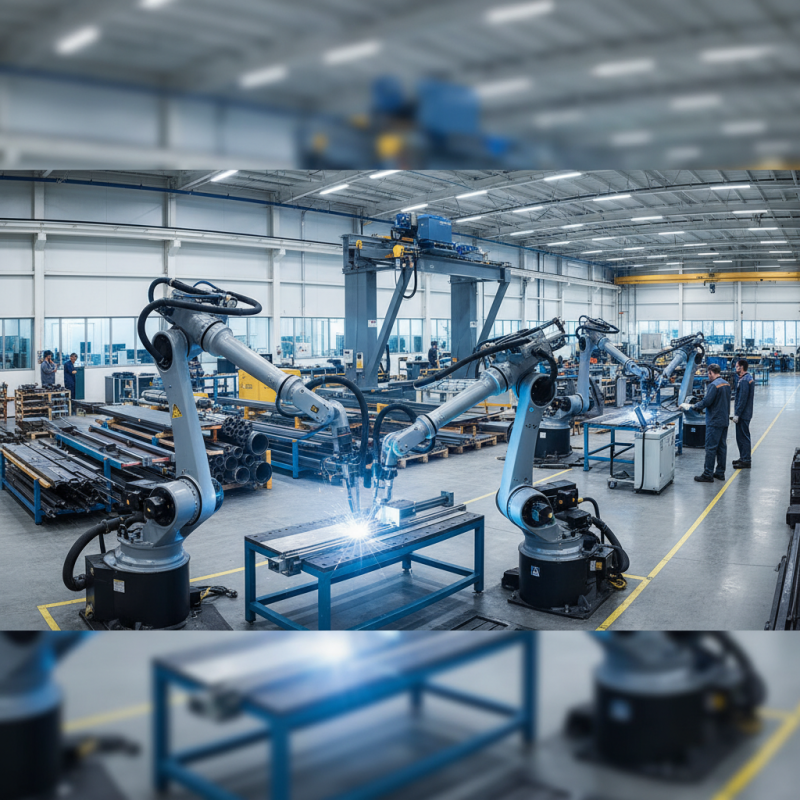
Choosing the right welding robot for your shop is crucial. Several factors can determine the best fit for your manufacturing needs. Start with understanding your production volume. High-volume production often requires
faster, more efficient robots. If your projects vary in size, consider a more versatile model.
Think about the type of welding you'll be doing. Different processes, like MIG or TIG welding, may require different robots. Ensure that the robot you choose can handle the specific tasks in your shop.
Don’t overlook the workspace dimensions either. A robot must fit comfortably in your operating environment without disrupting other processes.
Tips: Evaluate your team’s skill level with robotic systems. Training may be necessary for optimal performance. Consider future growth, too. Will your current choice still meet your needs in a few years?
Don't settle for the first option; reflect on various models and their capabilities. Do thorough research before investing.
Assessing Production Volume and Cycle Times for Optimal Robot Selection
When selecting a welding robot, understanding your production volume is crucial. High production demands require robust robots that can handle continuous use. Analyze your daily output needs. Are you welding small batches or large quantities? This will influence your choice significantly. A robot designed for high volumes may not be necessary for low-demand applications. Aim to find a balance that suits your specific needs.
Cycle times are another vital factor. Determine how quickly you need the robot to complete tasks. This includes the time taken for setup, welding, and cooldown. Shorter cycle times enhance productivity, but not every robot excels in speed. Sometimes, faster robots compromise quality. It’s important to evaluate the trade-offs. Seek models that offer speed without sacrificing precision.
Not every option will be a perfect fit. Understanding your unique production requirements is essential. Each model has its strengths and weaknesses, and choices may require reevaluation. Consider how each robot will impact overall efficiency and quality in the long run. Adjust your expectations as you gather more data from your manufacturing process.
Understanding Different Welding Processes and Their Robot Compatibility
When selecting a welding robot, understanding the welding processes is crucial. Different methods, like MIG, TIG, and Spot welding, have unique characteristics. MIG welding is preferred for thicker materials and high-speed production. Its compatibility with robots is robust, allowing for dynamic programming and faster cycles. On the other hand, TIG welding offers precision and is ideal for thin materials. However, it requires more skill and careful setup. Not all robots can handle these processes equally.
Spot welding is another option, often used in automotive manufacturing. It is fast and efficient but may not be as versatile as MIG or TIG. A potential downside is that not every robot can perform spot welding. Businesses must assess the demands of their projects carefully. Sometimes, the costs of adapting robots for various welding processes can be significant. Efficiency is vital, but rushing the decision may lead to issues later.
Robot compatibility also hinges on the materials involved. Aluminum requires different handling than steel. Each material reacts differently to heat and energy input. Choosing materials without considering the robot's capabilities can hinder project success. It's essential to weigh the pros and cons. Analyzing these factors helps narrow the choices and make better-informed decisions.
How to Choose the Right Welding Robot for Your Manufacturing Needs?
Welding Process
Robot Compatibility
Advantages
Common Applications
MIG Welding
High Compatibility
Fast, Versatile, Less Waste
Automotive, Structural Steel
TIG Welding
Moderate Compatibility
High Quality, Control
Aerospace, Art Fabrication
Spot Welding
High Compatibility
Speed, Efficiency
Sheet Metal Assembly
Plasma Welding
Limited Compatibility
Precision, Clean Cuts
Thin Materials, Aerospace
Laser Welding
Growing Compatibility
High Speed, Minimal Distortion
Thin Metals, Electronics
Evaluating Return on Investment (ROI) for Welding Automation Solutions
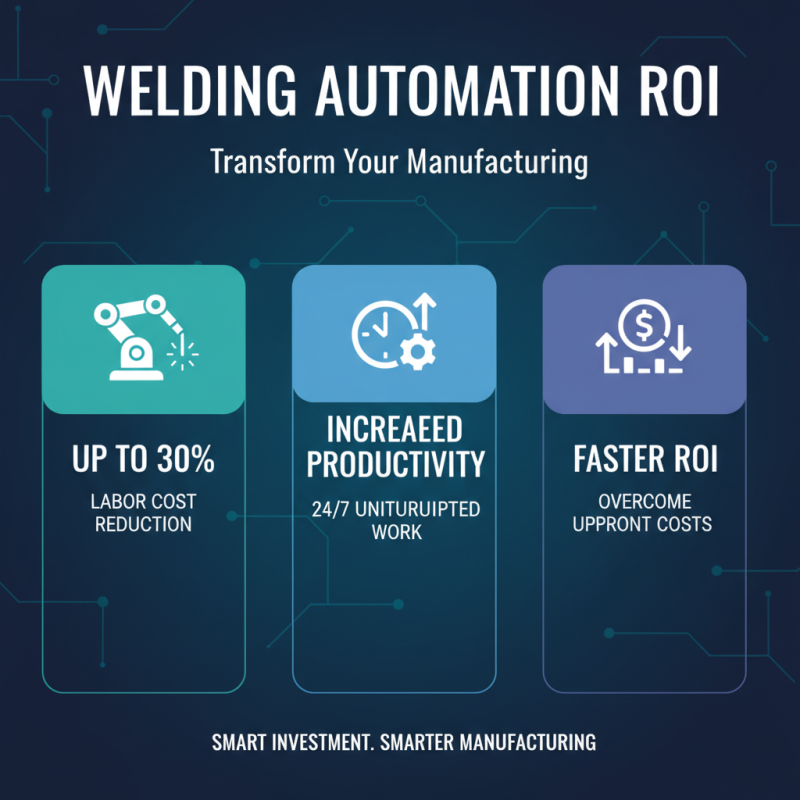
Investing in welding automation can transform your manufacturing process. Understanding the return on investment (ROI) is crucial. Studies indicate that companies can achieve up to 30% reduction in labor costs through automation. A welding robot can work tirelessly, compared to human workers who require breaks. This can lead to increased productivity. However, this shift also comes with upfront costs.
Evaluating the ROI involves more than just cost savings. An industry report by the Fabricators & Manufacturers Association shows that businesses experience a 25% increase in quality with robotic welding. Consistency in welds reduces rework and scrap. Yet, some manufacturers overlook the initial training needs for staff to operate these systems. Such oversight can negate some benefits.
Moreover, maintenance plays a vital role in ROI. Regular maintenance schedules can prevent costly downtimes. A well-maintained welding robot can last over a decade, but improper care may lead to failures. Ultimately, understanding these factors is key in making an informed decision about welding automation investments.
Importance of Technical Support and Maintenance in Welding Robot Selection
When selecting a welding robot, technical support and maintenance are crucial factors. A study from the International Robotics Federation shows that 40% of robotic systems fail due to inadequate maintenance. Regular technical support can minimize downtime and improve productivity. Manufacturing teams should consider how often they will need assistance.
Welding robots often require specific expertise for troubleshooting and repairs. Many manufacturers underestimate this need, leading to production delays. In fact, 55% of companies report costly interruptions caused by lack of proper support. Investing in a vendor who provides comprehensive training and responsive service can lead to better outcomes.
Furthermore, understanding the maintenance schedules for different models is vital. Many welding robots need routine checks and software updates. Ignoring these aspects can result in poor performance. Research suggests that timely maintenance can extend a robot's lifespan by up to 30%. This highlights the importance of not just choosing the right robot, but also ensuring robust technical support and maintenance.