o
p
t
i
m
a
r
o
b
o
t
i
c
s

Make a Call


Make a Call
Blogs
How to Choose the Best Pipe Swaging Machine?
Choosing the best Pipe Swaging Machine begins with understanding the work, not browsing the highest-powered model. Tube diameter, wall thickness, material hardness, production volume, and end-form design all influence the decision. A machine that handles stainless steel beautifully may struggle with softer aluminum or thin-wall tubing. Small details matter, too. Inspect the tooling range, stroke control, motor capacity, cycle speed, and adjustment accuracy. Ask how quickly dies can be changed. In a busy workshop, ten lost minutes can become several lost hours.
Manufacturing quality expert W. Edwards Deming said, “Quality comes not from inspection, but from the improvement of the production process.” His principle applies directly to pipe swaging. A reliable machine should create consistent ends before defects reach final inspection. Look for repeatable pressure, stable alignment, guarded moving parts, and accessible maintenance points. Check the supplier’s technical support, spare-parts availability, training, and warranty terms. These practical factors often matter more than impressive brochure figures.
Do not choose by tonnage alone. That is an easy mistake. A larger machine may waste energy, floor space, and tooling budget when your components are modest. At the same time, an undersized unit can produce uneven shoulders, surface marks, or premature tool wear. Review sample parts, request a forming trial, and measure the finished dimensions. Your first choice may still need revision after testing. That is not failure; it is useful evidence. The right Pipe Swaging Machine should fit your material, workflow, operators, and long-term production goals.
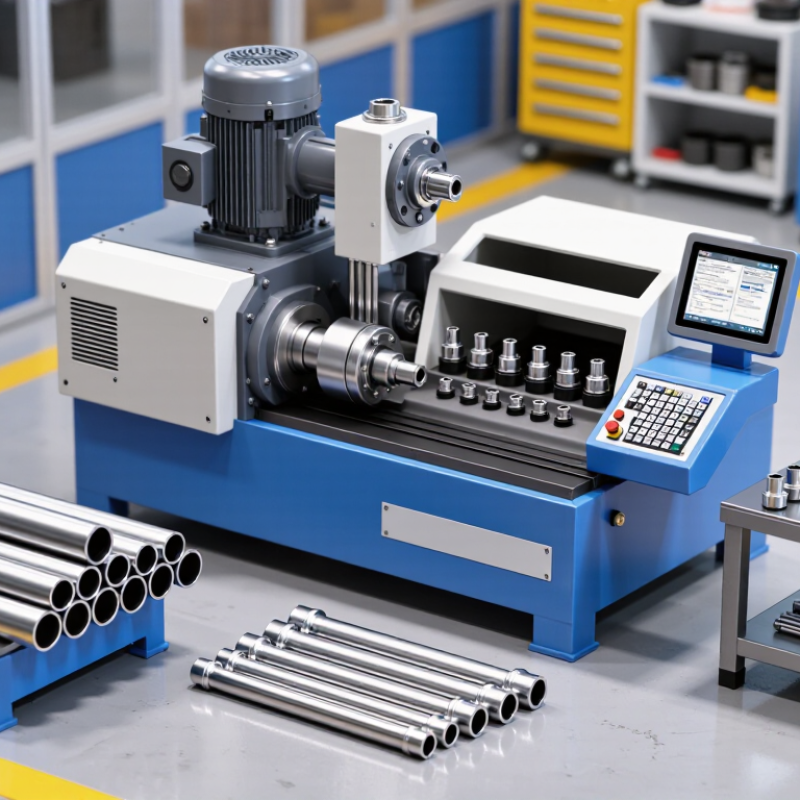
Table of Contents [Hide]
Understanding Pipe Swaging Machines and Their Main Applications
How to Choose the Best Pipe Swaging Machine?
Understanding Pipe Swaging Machines and Their Main Applications
A pipe swaging machine reshapes a tube end by controlled radial pressure. It can reduce diameter, form shoulders, or prepare a clean joint. The process usually uses matched dies, hydraulic force, and measured closing strokes. Unlike cutting, swaging preserves a continuous surface with limited material waste.
These machines serve many industries. Plumbing workshops use them for fitting connections. Automotive fabricators form exhaust tubes and suspension parts. HVAC and heat-exchanger production depend on consistent tube ends. Structural manufacturers may swage thin-wall tubes before assembly. However, one machine cannot suit every application. Material hardness, tube diameter, wall thickness, and production volume all change the decision. A specification sheet may look impressive but still hide difficult setup requirements. That deserves checking.
Tips: Test actual tubes before buying. Measure the finished diameter at several points. Check die-change time, pressure control, guarding, and emergency stops. Ask whether standard tooling fits your common sizes. For stainless steel or high-strength alloys, confirm the required forming force. A trial run can reveal springback, surface marks, or uneven shoulders. These details often matter more than maximum machine capacity. Also examine maintenance access and operator training materials. A powerful machine is not automatically the best machine.
Brands
Proudly Trusted by Top Suppliers Worldwide







Let us know and we will automate, together to fit your industrial needs.
 +91-97254 16844
Clients
Proudly Trusted by Top Companies Worldwide


Do you need Help? Get in touch.
X
Please fill out the form below and we will get back to you as soon as possible.