o p t i m a r o b o t i c s

Blogs

How to Choose the Best Robotic Arm for Your Business?

In today's fast-paced business landscape, choosing the right robotic arm is crucial for operational success. With various options available, businesses must navigate a complex market. An ideal robotic arm enhances productivity and efficiency. It can automate tasks, reduce labor costs, and improve precision.

However, selecting the best robotic arm is not straightforward. Companies should consider their specific needs and use cases. Factors like payload capacity, reach, and software compatibility play a significant role. Additionally, the potential return on investment (ROI) should be analyzed carefully. It’s essential to weigh both the technical features and the long-term benefits.

Many businesses struggle with this decision. Some may overlook critical specifications, leading to unsuitable choices. Others may feel overwhelmed by the technology. Addressing these challenges is key to making an informed decision. Ultimately, the right robotic arm can transform business operations and drive growth.

How to Choose the Best Robotic Arm for Your Business?

Understanding Your Business Needs for a Robotic Arm

When selecting a robotic arm for your business, understanding your specific needs is crucial. Begin by evaluating your operational requirements. Consider the tasks it will perform. Is it for assembly, welding, packaging, or another purpose? Each task has unique demands. A robotic arm suited for delicate assembly will differ from one built for heavy lifting. Think about the speed and precision needed for your applications.

Next, assess the environment where the robotic arm will operate. Will it work alongside humans or in a separate area? Safety protocols vary significantly based on these factors. For instance, collaborative robotic arms need advanced sensors for safe interaction with workers. On the other hand, industrial arms designed for isolated environments may prioritize strength over safety features.

You should also reflect on scalability. As your business grows, so may your automation needs. Choose a robotic arm that can adapt and grow with your company. The initial investment can be substantial, but a flexible solution can provide returns in efficiency and productivity over time. Consider reaching out to experts in robotics for additional guidance. Their experience could help you avoid common pitfalls.

Key Features to Consider in Robotic Arms

When selecting a robotic arm for your business, it's crucial to focus on key features that align with your operational needs. Payload capacity is essential; understand how much weight your tasks require the arm to lift and manipulate. This determines the robustness of the robotic arm you need. Additionally, consider the reach and workspace of the arm. A greater reach allows for flexibility in assembly or packaging processes.

Another critical feature is the degree of programmability. Some robotic arms offer simple programming interfaces, while others provide advanced options for complex tasks. Evaluate your team's expertise in programming to choose a suitable model. Moreover, look into the arm's precision and repeatability. Even minor deviations can impact product quality, especially in industries like electronics or manufacturing.

Lastly, assess the safety features integrated into the robotic arms. Safety sensors and emergency stop functions are vital in preventing accidents. Remember to reflect on the long-term maintenance and support services available. Will spare parts be easy to obtain, and is professional help accessible? These elements will influence the overall efficiency and reliability of your operations. Take time to analyze these aspects carefully.

Comparing Different Types of Robotic Arms

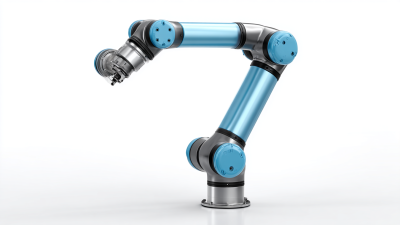
When evaluating different types of robotic arms for your business, it's crucial to understand their core functionalities. Articulated robotic arms are highly versatile. They can perform complex tasks across various industries. Their multiple joints allow for a wide range of motion. This flexibility makes them ideal for assembly and welding tasks. However, their complexity can lead to higher maintenance costs.

Conversely, SCARA arms are simpler but effective for specific applications. They excel in pick-and-place tasks with great speed and precision. Though often less expensive, their limited motion range may restrict usage. Cartesian robotic arms provide excellent linear motion control. They are perfect for tasks requiring accurate positioning. Yet, their large footprint might be a drawback in space-constrained environments.

Choosing the right robotic arm involves balancing functionality and limitations. Not every robot fits every need. You need to assess your specific operational requirements. Consider the available floor space, the task's complexity, and budget constraints. Reflecting on these factors can help you avoid common pitfalls in the selection process.

How to Choose the Best Robotic Arm for Your Business? - Comparing Different Types of Robotic Arms

Type of Robotic Arm Payload Capacity (kg) Reach (mm) Degrees of Freedom Typical Applications
Articulated Arm 5 - 20 500 - 1800 6 Welding, Assembly
SCARA 3 - 10 300 - 800 4 Pick and Place, Packaging
Delta Robot 1 - 5 400 - 1200 3 Food Packaging, Sorting
Cartesian Robot 5 - 50 500 - 2000 3 Assembly, Machine Tending

Evaluating Costs and ROI of Robotic Arms

Evaluating the costs and return on investment (ROI) of robotic arms is crucial for any business considering automation. Initial costs can be high, including purchase price and installation fees. However, many companies find that these expenses are offset by increased productivity. The savings from reduced labor costs often lead to quicker ROI. Businesses can calculate their specific ROI by factoring in these elements.

Maintenance is another cost factor. Regular upkeep of a robotic arm can impact overall expenses. Understanding these costs helps in evaluating long-term value. For many businesses, training staff to operate and maintain these systems adds to their investment. Yet, skilled operators can significantly enhance efficiency and safety.

Selecting the right robotic arm also requires assessing the specific application. Not all robotic arms are suitable for every task. A misalignment between the selected arm and its intended use can lead to frustrating inefficiencies. It’s essential to analyze the production demands carefully. Recognizing the balance between cost and benefits ensures a more thoughtful decision-making process.

Researching Reliable Suppliers and Manufacturers

Choosing a robotic arm for your business can feel overwhelming. One key factor is finding reliable suppliers and manufacturers. According to a recent industry report by MarketsandMarkets, the robotic arms market is projected to reach $20 billion by 2025. This growth highlights the increasing need for businesses to invest wisely.

Researching suppliers requires attention to their experience and reputation. Look for companies with a solid track record and positive customer reviews. A supplier's certification and compliance with industry standards can be crucial indicators of quality. Invest time in understanding their technology and product offerings.

When assessing options, consider reaching out to multiple suppliers. This can help gauge their customer service and response time. It is also beneficial to ask for case studies or testimonials from existing clients.

To avoid potential pitfalls, be wary of vendors making unrealistic claims. Transparency about capabilities is essential. Many businesses find themselves disappointed after choosing a supplier based solely on low price. And while affordability is important, quality should not be compromised. Conduct thorough due diligence regardless of the urgency to acquire robotic technology.

Brands

Proudly Trusted by Top Suppliers Worldwide

Let us know and we will automate, together to fit your industrial needs.

Clients

Proudly Trusted by Top Companies Worldwide

Do you need Help? Get in touch.

X

Please fill out the form below and we will get back to you as soon as possible.

    Subscribe our newsletter & get updates