o
p
t
i
m
a
r
o
b
o
t
i
c
s

Make a Call


Make a Call
Blogs
How to Choose the Right Chemical Storage Cabinet?
Choosing the right Chemical Storage Cabinet is a risk-control decision, not a simple purchasing task. OSHA estimates that approximately 32 million workers handle hazardous chemicals across about 3 million American workplaces. Its Hazard Communication Standard also covers more than 650,000 chemical products. These figures reveal the scale of everyday chemical exposure. A small laboratory cabinet can still protect people, equipment, and business continuity.
The correct choice begins with chemical compatibility. Flammable liquids, corrosives, oxidizers, and toxic substances require different storage approaches. NFPA 30 offers recognized guidance for flammable and combustible liquid storage. OSHA’s chemical safety requirements emphasize labeling, hazard information, training, and controlled handling. FM Global property-loss guidance also highlights the importance of separating incompatible materials and managing ignition sources. A cabinet should match the chemical’s hazard class, container size, storage volume, and workplace conditions. Check the Safety Data Sheet before comparing models.
Details matter. Look for suitable construction, adjustable shelves, spill containment, self-closing doors, grounding options, and clear labeling. Ventilation should not be added automatically; it may create new risks or reduce fire protection if poorly designed. A cabinet may appear robust yet fail the real test: can staff identify the contents quickly during a spill? That question is sometimes overlooked. Selection also depends on local fire codes, insurance requirements, and the cabinet’s certification, not only its price. The safest decision combines manufacturer documentation, professional review, and regular inspection. No cabinet removes risk completely. It only manages risk when people use it correctly.
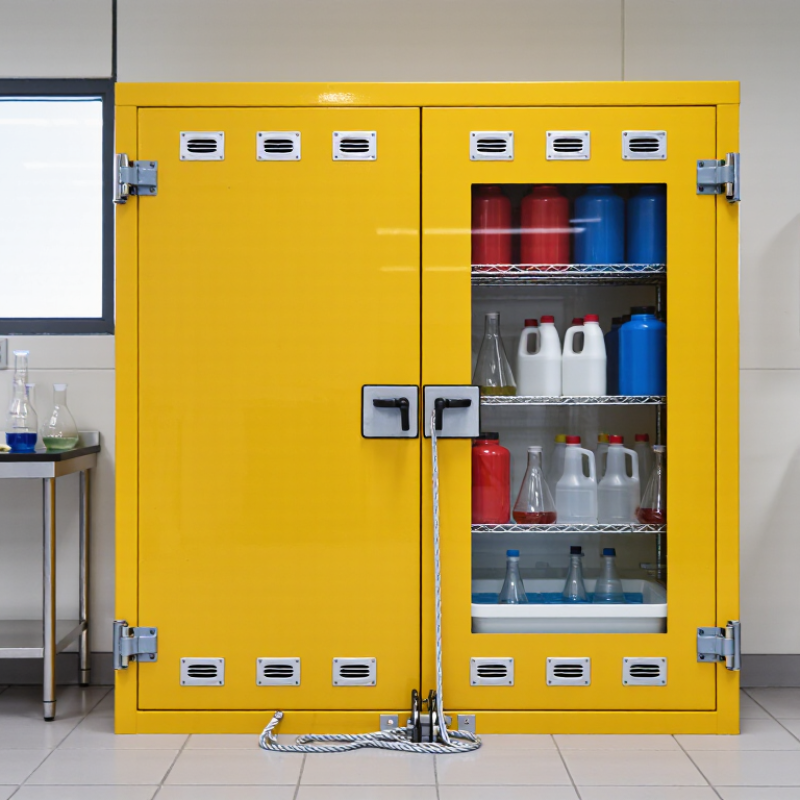
Table of Contents [Hide]
Classify Chemicals Using SDS, GHS Hazard Classes, and Compatibility Data
How to Choose the Right Chemical Storage Cabinet?
Classify Chemicals Using SDS, GHS Hazard Classes, and Compatibility Data
Choosing a chemical storage cabinet begins with classification, not appearance. Read the current Safety Data Sheet before measuring cabinet space. Sections 2, 7, and 10 provide essential information. Check hazards, handling instructions, storage conditions, and incompatibilities. Record the chemical name, concentration, physical state, and required temperature. Never rely on memory. SDS documents can become outdated, so verify their revision dates.
Use GHS hazard classes to identify risks such as flammability, corrosivity, oxidation, and acute toxicity. However, GHS labels alone cannot determine every storage decision. Compatibility data must guide placement. Keep acids away from bases. Separate oxidizers from organic solvents and reducing agents. Store water-reactive materials in dry, controlled areas. Check each mixture separately. Small details matter.
Create compatibility groups and match them with suitable cabinet compartments. Secondary containment can control leaks, but it cannot correct incompatible storage. Ensure shelves support the container weight and cabinet capacity. Avoid placing incompatible chemicals together, even when containers are sealed. Follow SDS instructions and applicable workplace requirements. Consult a qualified safety professional when information conflicts. A tidy cabinet can still be unsafe. Review the arrangement after formulation changes, new SDS documents, or spills. Document the reason for each storage decision. That record may expose a weak assumption later.
Brands
Proudly Trusted by Top Suppliers Worldwide







Let us know and we will automate, together to fit your industrial needs.
 +91-97254 16844
Clients
Proudly Trusted by Top Companies Worldwide


Do you need Help? Get in touch.
X
Please fill out the form below and we will get back to you as soon as possible.