o p t i m a r o b o t i c s

Blogs

How to Choose the Right Electric Gate Valve?

Choosing the right Electric Gate Valve is not a simple matter of matching pipe size. The valve must suit the medium, pressure, temperature, flow direction, operating frequency, and available power. A 100-millimeter valve carrying clean water may perform reliably, while the same design could fail quickly with abrasive slurry or corrosive chemicals.

Industry data shows why this decision deserves careful engineering. The International Energy Agency’s Energy Efficiency 2023 report identifies industry as responsible for roughly two-fifths of global final energy consumption. Efficient, dependable flow control can therefore support broader energy and maintenance objectives. MarketsandMarkets’ Industrial Valves Market research also highlights automation, water infrastructure, and process industries as major demand areas. These trends are important, but market growth does not guarantee a suitable product.

The practical choice begins with the operating details. Check the valve’s pressure class, body material, seat design, actuator torque, ingress protection, and emergency operating method. Confirm whether the motor can complete the stroke under the highest differential pressure. A valve that works perfectly on a test bench may struggle when sediment settles around the gate. Small details matter.

Standards such as ISO 5210 and IEC 60529 can help verify actuator interfaces and enclosure protection. However, standards alone do not replace field experience. That assumption is convenient, but incomplete. A reliable selection also considers installation space, cable routing, cycle frequency, inspection access, and spare-part availability. The following guide explains how to compare these factors and avoid costly mismatches.、】【
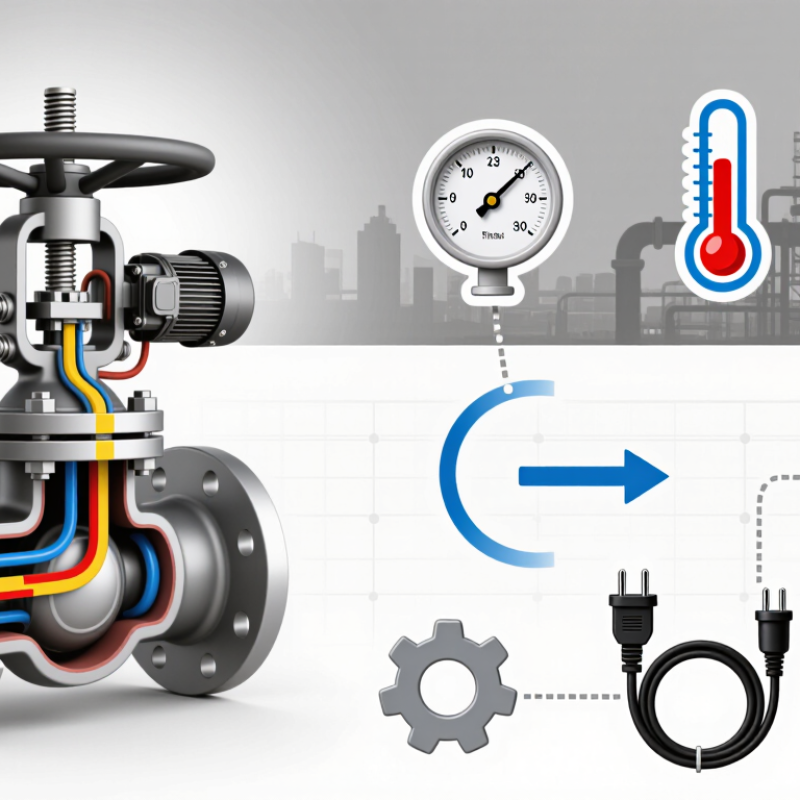
How to Choose the Right Electric Gate Valve?

What Is an Electric Gate Valve and How Does It Work?

An electric gate valve uses a motorized actuator to open or close a pipeline. Inside, a wedge or parallel gate moves vertically across the flow path. The motor turns a gearbox, which drives the stem and converts rotary motion into linear travel. Limit switches stop movement at open and closed positions. Torque protection reacts when the gate meets unusual resistance. That is the working principle. Unlike a globe valve, a gate valve mainly provides isolation, not precise throttling. When fully open, it normally creates low pressure loss. When partly open, vibration and seat damage can develop. Not always.

Selection should begin with the medium, line size, pressure class, temperature, and required closing time. Then check actuator output, duty rating, enclosure protection, emergency operation, and feedback signals. An oversized actuator can waste energy and stress the stem. An undersized actuator may stall. The International Energy Agency’s World Energy Outlook 2023 reports that industry consumed about 37% of global final energy in 2022. This figure does not measure valves directly, but it highlights the value of efficient motors and maintenance. U.S. Department of Energy pumping-system guidance reports that pumping can represent 25–50% of industrial electricity use. Field experience complicates the spreadsheet. Dirty service, infrequent cycling, and poor alignment can defeat a theoretically correct selection. Verify actual operating torque, not catalogue assumptions. Review cold starts and power failures, because those moments often expose weak decisions.

Which Operating Conditions Define the Right Valve Choice?

How to Choose the Right Electric Gate Valve?

Which Operating Conditions Define the Right Valve Choice?

Operating conditions should lead the selection, not actuator convenience. Begin with media, pressure, temperature, pipe size, and required flow isolation. A gate valve suits fully open or fully closed service. It performs poorly during continuous throttling. High pressure demands a verified pressure class, while hot service requires compatible body, seat, and stem materials. The American Petroleum Institute’s valve standards emphasize pressure-temperature ratings and testing, not guesswork. That distinction matters. Small errors become costly during commissioning.

Cycle frequency also changes the answer. A rarely operated emergency valve may need position feedback and a reliable fail response. A frequently cycled valve needs suitable motor duty, thermal protection, and accurate torque settings. The actuator must overcome packing friction, differential pressure, and possible scale buildup. I have seen calculations use clean-water conditions only. Real pipelines are less polite. The U.S. Department of Energy reports that industrial motor systems consume about 23% of U.S. electricity, so inefficient operation deserves attention. The IEA’s Energy Efficiency 2023 report identifies industry as using nearly 40% of global final energy. Valve power is a small share, but repeated starts still affect maintenance and plant reliability. Do not overlook enclosure protection. Outdoor units may require protection against rain, dust, condensation, and temperature swings. A technically correct valve can still fail when its operating environment was imagined, rather than measured.

How to Match Valve Materials, Size, and Pressure Ratings

How to Choose the Right Electric Gate Valve?

Material selection should begin with the actual fluid, temperature, and surrounding environment. Water service may suit a ductile iron body with corrosion-resistant internal parts. Aggressive chemicals often require stainless steel or special alloys. Do not match materials by habit. Check the fluid concentration, chlorides, and cleaning chemicals. A gasket that works at room temperature may fail near a hot process line. I once saw a valve body survive while its packing hardened and leaked. Small details matter.

Valve size should reflect flow, velocity, and connection dimensions. A larger valve is not automatically safer. Oversizing can reduce control accuracy and increase actuator travel time. Undersizing may create excessive pressure loss. Compare the required flow with the pipe diameter, then review the manufacturer’s flow data. Leave room for real operating conditions. Sediment changes the calculation.

Pressure rating needs careful interpretation. The listed pressure class may decrease as temperature rises. Select a rating above the maximum working pressure, including pump startup and water hammer. Also confirm the required shutoff differential pressure. The electric actuator must provide enough torque to overcome seating force, packing friction, and occasional debris. Add a practical safety margin, but avoid guessing. Review test records, material certificates, and installation conditions before ordering. I still recheck these figures against the site data, because early assumptions are often incomplete.

How to Select the Best Electric Actuator and Control Method

Choosing the right electric actuator starts with the valve’s real operating conditions, not its advertised size. Check required torque, pressure, temperature, cycle frequency, and available power. A valve moving slowly may still need high starting torque after months of inactivity. Review the manufacturer’s torque chart, then add a reasonable safety margin. Excessive oversizing can cause poor control and unnecessary cost.

For simple isolation, an on-off actuator with open and closed limit switches is often practical. For flow adjustment, choose a modulating actuator with proportional control, such as a 4–20 mA signal. Confirm whether the control system needs local buttons, remote commands, position feedback, or communication through a plant network. Power failure behavior also matters. A spring-return or battery-backed design may help protect equipment, but it can increase installation complexity. I sometimes see projects specify the signal first and the process second. That approach needs reconsideration.

Tips: Match the actuator duty cycle to actual valve movements. Check enclosure protection for outdoor moisture, dust, and washdown areas. Test manual override access before installation. Confirm wiring diagrams with a qualified technician. During commissioning, operate the valve repeatedly and compare the displayed position with its physical position. Small calibration errors can become serious process problems. Keep records of torque settings, limit positions, and alarm responses for future maintenance.

What Installation and Maintenance Factors Should You Evaluate?

How to Choose the Right Electric Gate Valve?

Installation conditions often determine whether an electric gate valve performs reliably. Check the pipeline diameter, pressure rating, fluid temperature, and flow direction before selection. The valve must match the system, not just the pipe size. Confirm the actuator’s voltage, torque range, enclosure rating, and control signal. An undersized actuator may stall, while excessive torque can damage the stem or seat.

Pipe alignment deserves close attention. Uneven flanges can place constant stress on the valve body. Use proper supports, and leave enough clearance for actuator removal and inspection. Keep the actuator away from flooding, heavy dust, and direct heat when possible. Outdoor installations may require sealed electrical connections and corrosion-resistant hardware. Grounding should follow local electrical requirements. Do not improvise here.

Maintenance access is often overlooked. Can a technician reach the limit switches, wiring, stem, and manual override safely? A narrow cabinet may make routine checks unnecessarily difficult. Test opening and closing cycles at planned intervals, and listen for slow travel, unusual noise, or motor overheating. Inspect packing, bolts, cable glands, and visible corrosion. Record leakage and operating time. Small changes matter. However, fixed maintenance intervals are not always perfect. A valve used daily in abrasive service needs closer inspection than one used monthly with clean water. Isolate the line before servicing, and use qualified personnel for electrical work.

Article Source:

Brands

Proudly Trusted by Top Suppliers Worldwide

Let us know and we will automate, together to fit your industrial needs.

Clients

Proudly Trusted by Top Companies Worldwide

Do you need Help? Get in touch.

X

Please fill out the form below and we will get back to you as soon as possible.

    Subscribe our newsletter & get updates