o
p
t
i
m
a
r
o
b
o
t
i
c
s

Make a Call


Make a Call
Blogs
How to Choose the Right Spray Hose for Any Application?
Choosing the right Spray Hose is not a matter of selecting the longest or cheapest option. It is a decision about pressure, temperature, chemicals, movement, and the material being sprayed. A hose that looks strong on a showroom shelf may soften, kink, or crack during real work.
Industrial hose specialist Daniel Mercer explains, “A reliable hose begins with the application, not the product label.” That advice is easy to remember. It is also easy to ignore. Before choosing, identify the fluid, operating pressure, temperature range, connection type, and required length. Check whether the hose will drag across concrete, bend around machinery, or remain exposed to sunlight. Small details matter.
Imagine a paint line running beside a warm compressor. The hose may face pressure pulses, solvent contact, and repeated flexing every hour. A rubber Spray Hose may offer excellent flexibility, while a thermoplastic design may provide better chemical resistance. Neither option is automatically correct. Sometimes the first choice is wrong.
This guide examines hose construction, reinforcement, inner-tube compatibility, working pressure, and safety margins. It also considers cleaning, storage, and replacement signals. A hose should not be judged by appearance alone. Examine fittings and bending points.
The goal is practical selection, not a perfect-sounding specification sheet. Field conditions can be messier than catalog descriptions. By comparing actual demands with manufacturer data, buyers can reduce leakage, downtime, and premature failure. That is where dependable decisions begin.
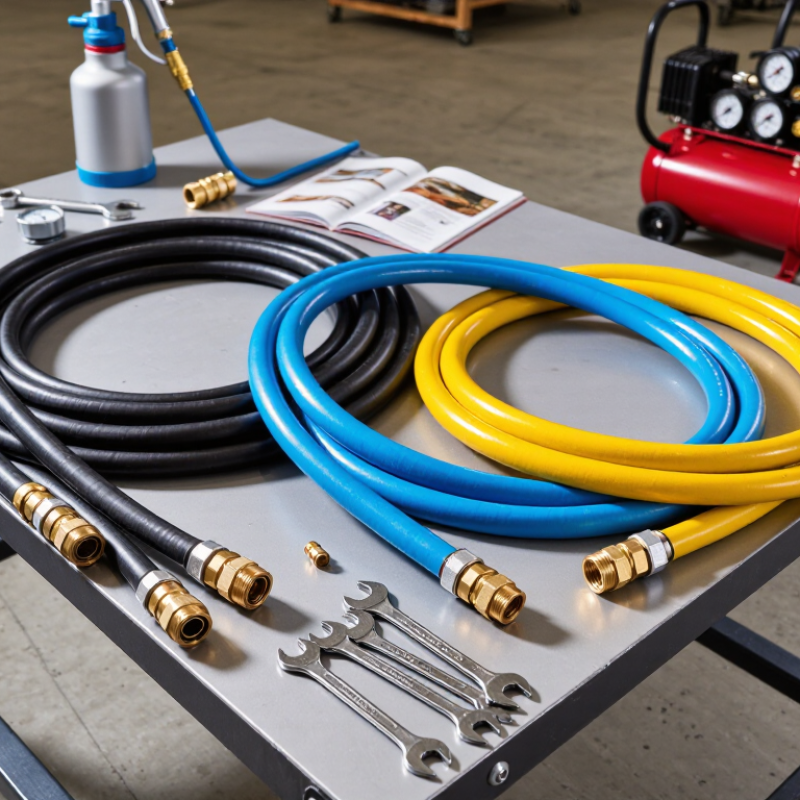
Table of Contents [Hide]
Define the Application and Required Spray Hose Performance
Choosing the right spray hose starts with defining the application, not selecting a hose by appearance. Identify the fluid, operating temperature, pressure, flow rate, and spray distance. Water, oil, cleaning solutions, and abrasive mixtures can require very different hose constructions. A hose used near hot machinery may need greater heat resistance than one used outdoors.
Consider movement and working conditions too. Will the hose drag across concrete, bend repeatedly, or face sunlight and moisture? These details affect cover material, reinforcement, flexibility, and service life. I have seen hoses fail early because users checked pressure but ignored repeated bending. That mistake is easy to make. Also, confirm the required spray pattern and nozzle connection before ordering. A suitable hose can still perform poorly with an unsuitable fitting.
Tips: Leave enough working length without creating large loops. Check both maximum working pressure and temperature ratings. Choose a safety margin for pressure changes during startup. Inspect fittings, seals, and the outer cover before each use. Keep a record of leaks, kinks, and replacement dates. It is not perfect, but this record often reveals the real cause of failure. When application details remain uncertain, consult technical data from a qualified hose supplier and test the assembly under controlled conditions. Never rely on appearance alone.
| Application | Typical Fluid or Material | Typical Temperature Range | Common Working Pressure | Suggested Inside Diameter | Recommended Hose Construction | Cover and Chemical Requirements | Performance Priorities | Important Selection Checks |
|---|---|---|---|---|---|---|---|---|
| Agricultural crop spraying | Water-based fertilizers, herbicides, insecticides, fungicides and cleaning solutions | Approximately 5–60°C | Usually 20–60 bar, depending on the sprayer and nozzle system | 6–19 mm | Flexible thermoplastic or synthetic-rubber hose with one or more textile reinforcement layers | UV-resistant, weather-resistant and compatible with the specific pesticide formulation |
| Confirm chemical compatibility, minimum bend radius, operating pressure and fitting type. Flush the hose after use. |
| High-pressure cleaning and washdown | Cold or hot water, detergents and mild cleaning chemicals | Approximately 5–150°C, subject to hose and equipment limits | Typically 100–400 bar for high-pressure equipment | 6–13 mm | High-tensile textile or wire-reinforced hose designed for repeated pressure cycles | Abrasion-resistant cover; temperature-resistant tube and cover; suitable for detergent exposure |
| Never use a hose above its rated working pressure. Check hot-water rating, safety factor, coupling retention and whip-control requirements. |
| Industrial spray painting | Water-based or solvent-based coatings, primers and lacquers | Approximately 5–60°C | Commonly 10–35 bar, depending on spray technology | 6–13 mm | Low-permeation, solvent-compatible hose with smooth inner tube and suitable reinforcement | Resistant to solvents and coating ingredients; use a static-dissipative or electrically conductive design when required |
| Verify compatibility with every component in the coating system. Avoid hoses that can swell, soften or contaminate the coating. |
| Compressed-air spray systems | Compressed air, atomizing air and low-viscosity fluids | Approximately -20–60°C | Usually 6–20 bar | 6–13 mm | Lightweight, kink-resistant hose with textile reinforcement and a smooth bore | Oil-resistant and abrasion-resistant cover; use an anti-static construction where the risk assessment requires it |
| Size the inside diameter for the required air flow and hose length. Drain moisture from the air system and protect the hose from sharp edges. |
| Foam and sanitizing spray | Detergent foam, alkaline cleaners, acidic cleaners and sanitizing solutions | Approximately 5–90°C | Typically 20–100 bar | 10–19 mm | Chemical-resistant rubber or thermoplastic tube with reinforcement suitable for pressure and temperature | Resistant to the actual cleaning chemicals, hot water, ozone and frequent wet-service exposure |
| Review concentration, exposure time and temperature together. A hose suitable for dilute chemicals may fail with concentrated solutions. |
| Mining and quarry dust suppression | Water, water with wetting agents and suspended mineral particles | Approximately -20–60°C | Usually 20–80 bar | 19–50 mm | Heavy-duty, abrasion-resistant hose with textile or wire reinforcement | Thick abrasion-resistant cover, UV resistance and protection against dragging over rough surfaces |
| Allow for solids, pulsation and movement. Select couplings that cannot loosen under vibration and support the hose near connections. |
| Fire protection and emergency spray | Fresh water, seawater or approved foam solution | Approximately -20–60°C | Commonly 10–40 bar, according to the system design | 19–50 mm | Reinforced hose designed for rapid deployment, pressure stability and repeated handling | Flame-resistant or heat-resistant cover when specified by the installation; resistant to weather and water exposure |
| Use only products approved for the applicable fire-protection standard and service. Inspect for cuts, flattening, aging and coupling damage. |
| Concrete and grout spraying | Cement slurry, grout, shotcrete and abrasive mineral mixtures | Approximately 5–60°C | Typically 40–100 bar, depending on the pump and nozzle | 25–50 mm | Heavy-duty hose with a highly abrasion-resistant inner tube and multiple reinforcement layers | Designed for severe abrasion, impact and flexing; cover should resist external wear and job-site damage |
| Check the hose for internal wear regularly. Do not exceed the rated pressure, and replace the hose when reinforcement becomes exposed. |
| Oil and fuel spraying | Diesel, lubricating oils, hydraulic oils and selected fuel products | Approximately -30–100°C | Usually 10–35 bar | 6–19 mm | Oil-resistant synthetic-rubber or thermoplastic tube with suitable textile reinforcement | Oil-resistant and ozone-resistant cover; use a conductive hose where static discharge could create a hazard |
| Match the hose to the exact fluid, additives and temperature. Verify electrical continuity where required by the application. |
| Marine and offshore spray service | Fresh water, seawater, detergents and selected process fluids | Approximately -20–70°C | Typically 20–100 bar | 13–38 mm | Reinforced hose with strong flex performance and resistance to pressure, salt water and weathering | UV-, ozone- and saltwater-resistant cover; corrosion-resistant or properly protected couplings |
| Consider buoyancy, hose routing, tidal movement, saltwater exposure and the corrosion resistance of all end connections. |
| Food and beverage spray cleaning | Potable water, cleaning solutions and approved sanitizing fluids | Approximately 5–100°C | Typically 20–100 bar | 13–25 mm | Hygienic, smooth-bore hose with materials suitable for repeated washdown and sanitation cycles | Non-marking, abrasion-resistant and easy-to-clean cover; materials must meet the applicable food-contact or hygienic requirements |
| Confirm regulatory suitability for the intended fluid and temperature. Prevent contamination by using dedicated hoses and proper drainage. |
| Selection note: The pressure and temperature figures above are typical design ranges, not universal ratings. Final hose selection must be based on the actual fluid composition, concentration, temperature, pressure peaks, flow rate, hose length, minimum bend radius, environmental exposure, coupling system and applicable safety standards. The hose working pressure must exceed the maximum operating pressure, including pulsation and transient spikes. | ||||||||
Brands
Proudly Trusted by Top Suppliers Worldwide







Let us know and we will automate, together to fit your industrial needs.
 +91-97254 16844
Clients
Proudly Trusted by Top Companies Worldwide


Do you need Help? Get in touch.
X
Please fill out the form below and we will get back to you as soon as possible.