o
p
t
i
m
a
r
o
b
o
t
i
c
s

Make a Call


Make a Call
Blogs
How to Choose the Best Metal Shingles?
Choosing the best Metal Shingles requires more than comparing colors, profiles, and retail prices. A roof must withstand wind, rain, hail, heat, and repeated temperature changes. The National Roofing Contractors Association recommends evaluating design, materials, installation, and maintenance together. That advice matters because even premium shingles can fail when fasteners, flashing, or underlayment are poorly selected.
Industry data also provides useful direction. Fortune Business Insights valued the global metal roofing market at approximately USD 8 billion in 2023. Its report expects continued growth through 2032, driven by durability, energy efficiency, and replacement demand. The U.S. Department of Energy notes that reflective roofing surfaces can reduce heat transfer into buildings. Results vary by climate, roof assembly, insulation, and ventilation. Marketing claims often simplify these details.
Todd Miller, a metal-roofing specialist and president of Isaiah Industries, has stated, “The quality of the installation is just as important as the quality of the product.” This principle should guide every comparison. Check the substrate, coating system, panel thickness, wind rating, warranty language, and installer credentials. Ask for project photographs, not only testimonials. A realistic budget should include trim, ventilation, underlayment, labor, and future maintenance.
No checklist is perfect. A beautiful profile may perform poorly in severe weather. A lower-priced option may cost more after early repairs. The right choice depends on local exposure, building design, drainage, and workmanship. This guide examines those factors closely, helping property owners choose Metal Shingles with clearer expectations and fewer expensive surprises.
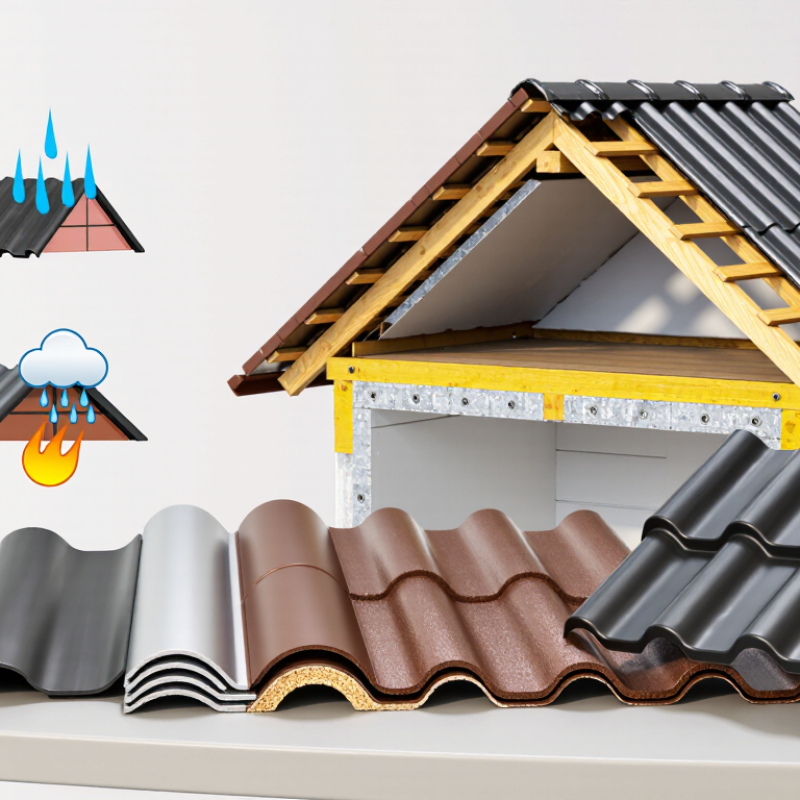
Table of Contents [Hide]
Understanding Metal Shingle Types and Construction
How to Choose the Best Metal Shingles?
Metal shingles are not all built the same. Their type and construction affect durability, appearance, maintenance, and installation requirements.
Steel shingles offer strong impact resistance and usually cost less than aluminum. Aluminum weighs less and resists corrosion, making it useful in coastal areas. Copper develops a natural patina, but its price and movement require careful planning. Zinc can last for decades, although it needs compatible flashing and skilled installation.
Panel Construction
Look closely at the panel construction. A quality shingle should have a reliable metal core, protective coating, and secure interlocking edges. Thicker metal often feels sturdier, but thickness alone does not prove quality. Coating performance, fastener placement, and underlayment matter just as much.
Hidden fasteners create a cleaner surface, while exposed fasteners can simplify repairs. I once assumed the heaviest panel was always best. That assumption was incomplete.
Tips
Request the metal thickness, coating specification, warranty terms, and installation instructions. Check how valleys, roof edges, vents, and skylights will be sealed. Ask for a sample and bend its edge gently. Poorly formed edges may reveal weak manufacturing. Confirm that the roof structure can support the selected system. A local installer’s experience also matters, especially where snow, salt air, hail, or strong winds are common. Do not ignore small details. Water usually finds them.
Brands
Proudly Trusted by Top Suppliers Worldwide







Let us know and we will automate, together to fit your industrial needs.
 +91-97254 16844
Clients
Proudly Trusted by Top Companies Worldwide


Do you need Help? Get in touch.
X
Please fill out the form below and we will get back to you as soon as possible.