o p t i m a r o b o t i c s

Blogs

How to Choose a Pudu Robot in 2026?

Choosing a pudu robot in 2026 requires more than comparing prices or advertising claims. The right model must fit your venue, staffing pattern, floor plan, and service expectations.

The International Federation of Robotics reported approximately 205,000 professional service robots sold worldwide in 2023, representing around 30% annual growth. Hospitality robots formed one of the strongest segments, with demand driven by restaurants, hotels, and healthcare facilities. These figures show momentum. They do not guarantee a successful deployment.

Pudu Robotics founder and CEO Felix Zhang has described the company’s mission as “using robots to enhance human life.” That principle offers a useful test: does the robot reduce repetitive work while improving customer experience? A reliable pudu robot should navigate crowded aisles, carry the required load, return to charge independently, and integrate smoothly with daily operations. Battery life matters. So do noise levels, cleaning requirements, software updates, and local service support.

This guide will compare practical selection factors for 2026, including payload, mapping, obstacle avoidance, fleet management, and total ownership cost. It will also examine popular Pudu models for restaurants, hotels, hospitals, and retail environments. Real conditions can be messy. Tables move, children interrupt routes, and wireless signals fail. A showroom demonstration may hide these weaknesses.

That is why buyers should request a site trial, measure delivery times, and interview existing users. Industry growth is encouraging. Still, the cheapest robot may become the most expensive choice after maintenance, training, and downtime are included.
How to Choose a Pudu Robot in 2026?

What Is a Pudu Robot and What Tasks Can It Perform?

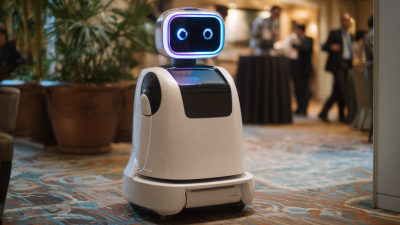
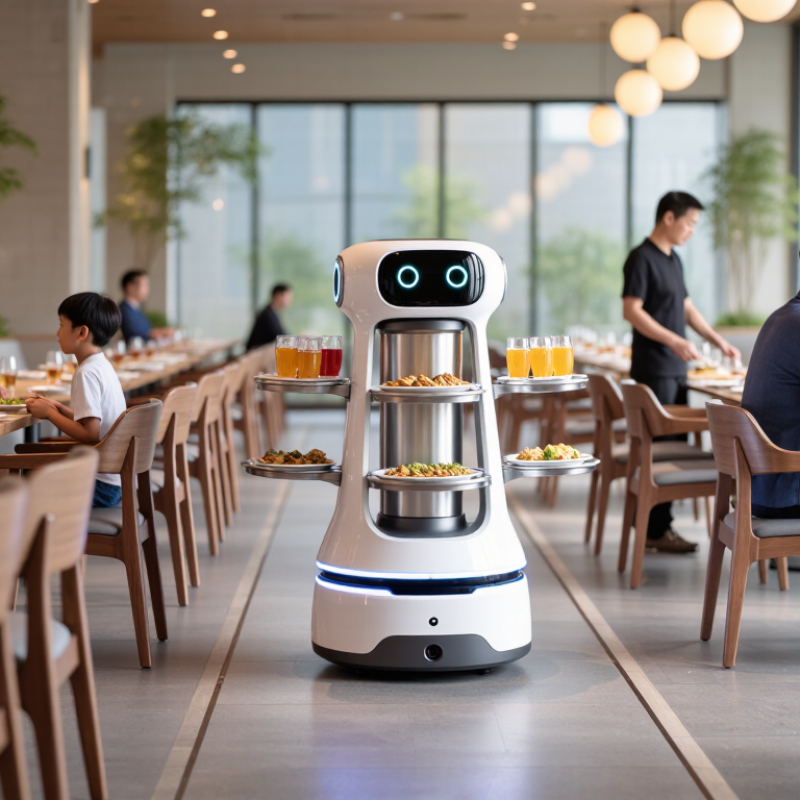
A commercial indoor service robot is a mobile machine designed to handle routine tasks in places such as restaurants, hotels, and care facilities. It typically combines wheels, sensors, mapping software, and shelves or a work surface. Sensors help it detect people and obstacles, while a mapped route guides it between set locations. Not magic. Staff still need to load it and keep its path clear.

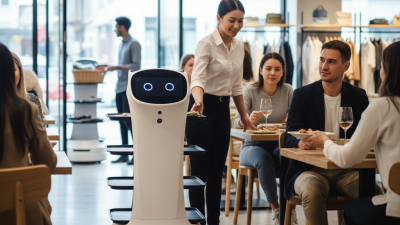
Depending on its design, a service robot can carry meals from a kitchen to dining tables, move supplies between hotel floors, or transport trays to a collection point. Some models are built for floor cleaning, while others support reception or delivery workflows. A robot may follow scheduled routes or respond to staff requests through a screen or connected system. Its useful tasks depend on the site, its layout, and the payload it can safely carry.

Before choosing one, observe a normal shift: narrow aisles, crowded tables, and elevator access can change how well a route works. Check battery life, cleaning needs, navigation performance, and how easily workers can request help. A robot can reduce repetitive walking, but it will not resolve a poorly organized workflow by itself. I would test it during a busy service period; quieter demonstrations can hide awkward turns and delays.

Which Pudu Robot Model Fits Your Industry and Work Environment?

Choosing a service robot starts with the work, not the feature list. In a hotel, a compact delivery model may need to share narrow corridors with guests and stop accurately beside elevators. A busy restaurant may need several trays per trip, plus reliable navigation around chairs and sudden foot traffic. In a clinic, quiet movement and easy-to-clean surfaces can matter more than top speed. Details matter.

For warehouses, compare transport robots by payload, turning space, floor condition, and how they interact with staff. For cleaning, check whether the machine can reach under tables, handle thresholds, and cover the required area before a shift ends. Measure doorways and test routes during normal operations, not only in an empty showroom. A smooth demo can hide awkward corners.

Also check charging time, maintenance access, and integration with doors or elevators. Ask who will clear a blocked route and how staff can pause the robot. A model that performs well in one building may struggle in another; that is easy to underestimate. Run a small pilot on the busiest route, record delays and interventions, then adjust expectations before expanding deployment.

How to Choose a Pudu Robot in 2026? - Which Pudu Robot Model Fits Your Industry and Work Environment?

Generic Robot Type Typical Tasks Good-Fit Industries Work Environment Fit Key Selection Factors Before Deployment
Indoor delivery robot Moves meals, drinks, documents, or small items between service points. Restaurants, hotels, offices, and senior living facilities. Indoor spaces with navigable routes, predictable traffic, and delivery or pickup points. Tray or compartment configuration, route width, traffic density, and required delivery volume. Check doorway and corridor clearance, floor transitions, elevator access, and how staff will load and unload items.
Reception and guidance robot Provides wayfinding, basic information, and visitor assistance. Hotels, hospitals, retail centers, and public-facing offices. Public indoor areas where visitors can approach the robot and signage or spoken guidance can be heard. Visitor languages, screen readability, interaction needs, and the accuracy of location information. Confirm that routes and destination information can be updated, and define how the robot handles requests it cannot answer.
Commercial floor-scrubbing robot Scrubs and collects water from suitable hard-floor surfaces. Supermarkets, shopping centers, warehouses, and large facilities. Broad, mostly hard-floor areas with manageable obstacles and suitable charging or service access. Cleaning width, tank capacity, operating time, floor type, and the amount of manual preparation required. Assess wet-floor safety, debris and spill handling, narrow sections, cleaning schedules, and access to water and waste disposal.
Commercial vacuuming robot Collects dust and light debris from compatible floor surfaces. Hotels, offices, retail spaces, and other facilities with recurring floor-cleaning needs. Indoor routes with surfaces and floor transitions supported by the cleaning system. Floor mix, cleaning coverage, dust capacity, operating schedule, and edge or corner requirements. Verify carpet compatibility, thresholds, cables, loose objects, and how the robot will be maintained between cleaning runs.
Heavy-load transport AMR Moves carts, containers, or materials between work areas. Manufacturing, logistics, back-of-house operations, and large campuses. Defined indoor routes with adequate turning space, suitable floors, and controlled loading and unloading points. Required payload, load dimensions, traffic conditions, docking method, and integration with existing workflows. Validate route capacity, safety separation, stopping zones, charging arrangements, and any elevator or door integrations.
Inventory-scanning mobile robot Captures shelf or location data to support stock checks and inventory workflows. Retail stores, warehouses, and facilities with organized storage locations. Areas with accessible aisles, consistent location identifiers, and sufficient space for scanning passes. Required scan coverage, shelf layout, data-system compatibility, and the frequency of inventory checks. Check lighting, aisle access, data quality, privacy requirements, and how scan results will be reviewed and acted upon.
Multi-purpose indoor service robot Supports a defined combination of light delivery, guided interaction, or routine service tasks. Hotels, offices, healthcare facilities, and mixed-use venues. Indoor environments where routes and tasks can be standardized across departments. Task priority, configuration flexibility, user training, fleet management, and support for the intended workflow. Start with a limited pilot, measure completed tasks and staff time, and expand only after operational issues are resolved.

Selection note: Robot capabilities vary by configuration. Confirm payload, dimensions, supported surfaces, navigation features, integrations, and operating requirements against the specifications for the exact model being considered and the conditions at your site.

How to Compare Pudu Robot Features, Capacity, and Navigation Systems?

A useful comparison starts with the work the robot must do, not a feature list. Map one busy shift: serving tables, moving supplies, or carrying items between rooms. Note narrow turns, door thresholds, floor changes, and where people often stop. Then compare how each system handles those specific conditions. A polished demonstration can miss the awkward corner near the kitchen.

Check capacity in practical terms. Maximum payload is only one part of the picture; tray size, usable surface area, and stability matter too. Ask how performance changes when the robot is fully loaded. Can it pass through your narrowest aisle? Test it loaded. Also check whether it can use elevators or automatic doors, if your route requires them.

Navigation deserves a real-site trial. Compare mapping, obstacle detection, localization, and recovery after a route is blocked. Watch what happens when a chair moves or a person pauses in front of the robot. Record completed trips, delays, reroutes, and staff interventions over several shifts. One quiet-hour test is not enough. Ask what maintenance and software support are included, and how the system reports faults. No navigation system is perfect; the important question is whether its limitations fit your space and staffing.

How to Choose a Pudu Robot in 2026? Compare Capacity and Navigation

Typical payload ranges vary by model and configuration; the bands below are a general selection guide, not a standardized classification.

How to compare: Match payload to the heaviest expected load, then check tray layout, doorway and elevator clearance, and runtime. For navigation, compare how each system handles obstacles, changing layouts, and shared spaces; confirm performance in your actual site, since mapping and sensor setups differ between models.

What Deployment Requirements Should You Assess Before Choosing?

Before choosing a service robot, measure the routes it must actually travel. Record the narrowest aisle, door clearance, ramp gradient, floor transitions, elevator dimensions, and turning space near tables or storage racks. Check Wi-Fi coverage at every stop, not just the lobby. Confirm charging access, operating hours, payload, and whether staff can clear blocked paths. A polished floor plan is not a live test.

The International Federation of Robotics’ World Robotics 2024 report found that nearly 205,000 professional service robots were sold worldwide in 2023, up 30% year over year. Transportation and logistics accounted for about 113,000 units. This signals wider adoption, not automatic suitability for your site. Ask for a supervised trial during peak traffic. Test with real carts, open doors, entry mats, and the busiest shift. Small obstacles matter.

Tips: Map one full route, then run a pilot for several shifts. Log missed stops, manual interventions, charging downtime, and staff feedback. Set acceptance targets before the trial. Changing them later is tempting, but weakens the comparison.

How to Evaluate Costs, Support, Safety, and Long-Term Value?

How to Choose a Pudu Robot in 2026?

A useful evaluation starts with the actual route, not a glossy demonstration. Measure doorway widths, lift access, floor transitions, and peak-hour traffic. Then test the robot with the loads and service pace your staff handle daily. Watch where it pauses, how often people must redirect it, and whether it can return to charging without blocking a busy corridor. Small delays add up.

Compare the full cost of ownership, not just the purchase price. Include installation, staff training, software fees, maintenance, replacement parts, and expected downtime. Ask for a written service response target and local parts availability. A low quote can become expensive if a routine repair leaves the unit idle for days. Get realistic.

Safety deserves a practical review. Observe how the robot detects people near corners, handles crowded passages, and signals when it stops. Check emergency controls and charging-area requirements against your site’s procedures. Request documentation and verify the setup with the people who will work alongside it. A polished demo is not enough.

Long-term value depends on measurable results. Track delivery time, completed trips, staff interruptions, and service calls during a pilot. Compare results across ordinary and busy shifts, not just ideal conditions. Be willing to admit when a route or task is a poor fit; automation does not fix a confusing workflow. Keep the trial data, even if it complicates the decision.

Brands

Proudly Trusted by Top Suppliers Worldwide

Let us know and we will automate, together to fit your industrial needs.

Clients

Proudly Trusted by Top Companies Worldwide

Do you need Help? Get in touch.

X

Please fill out the form below and we will get back to you as soon as possible.

    Subscribe our newsletter & get updates