o
p
t
i
m
a
r
o
b
o
t
i
c
s

Make a Call


Make a Call
Blogs
What Is a Lithium Vacuum Cleaner and How Does It Work?
A Lithium Vacuum Cleaner is more than a cordless appliance with a modern battery. It combines a lithium-ion power pack, compact motor, airflow channels, filters, and a dust container. Together, these parts create portable cleaning power without a wall outlet.
Dr. M. Stanley Whittingham, a Nobel Prize-winning battery scientist, said, “The lithium-ion battery has changed the world.” His observation helps explain why cordless vacuums became practical. Lithium batteries store substantial energy in a relatively small and light package. A Lithium Vacuum Cleaner can therefore move easily from a kitchen floor to car seats or narrow stair edges. The motor draws energy from the battery, spins an impeller, and produces suction through the cleaning head. Dust travels through the tube before reaching the filter and bin.
The process sounds simple. It is not always simple.
Battery capacity, motor efficiency, airflow resistance, and filter condition affect real performance. A cleaner may feel powerful during the first minutes, then weaken as its charge falls. Fine dust can also restrict airflow when the filter is neglected. That detail is easy to miss. A reliable evaluation should examine runtime, charging time, suction consistency, noise, weight, and battery replacement options. Personal experience matters too; a heavy handle may become uncomfortable during a ten-minute cleaning task. This article explains how a Lithium Vacuum Cleaner works, what its internal components do, and where its practical limitations deserve honest attention.
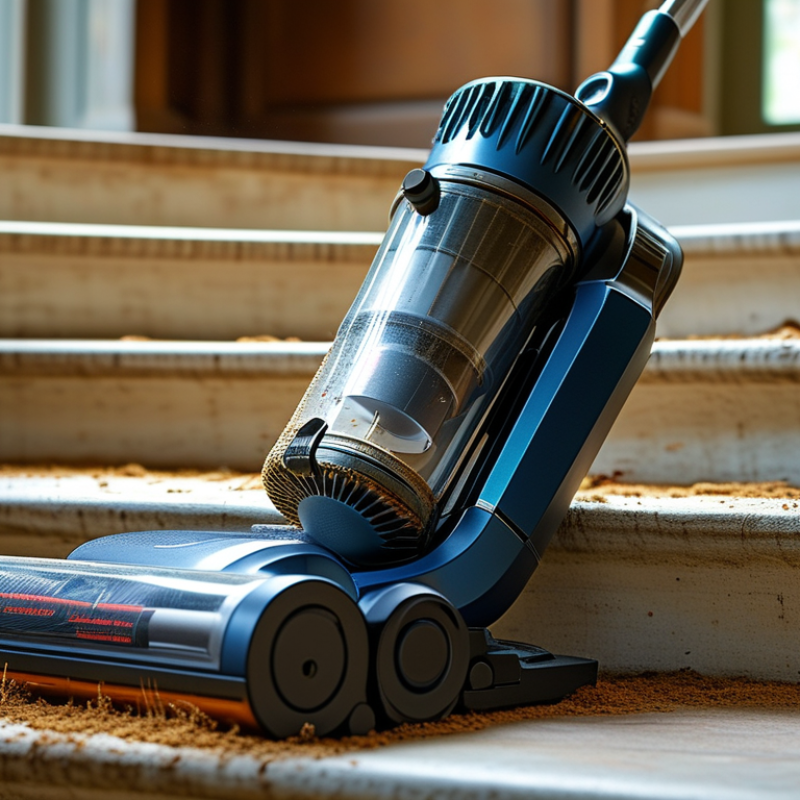
Table of Contents [Hide]
What Is a Lithium Vacuum Cleaner? Definition and Main Components
A lithium vacuum cleaner is a cordless cleaning device powered by rechargeable lithium-ion cells. The term describes its energy source, not a special cleaning method. Instead of drawing continuous power from a wall outlet, it stores electricity in a removable or built-in battery. During operation, the battery sends controlled current to a motor. The motor spins an impeller, creating airflow that pulls dust, hair, and crumbs into the dust bin. This design offers easier movement around stairs, cars, and tight corners.
Its main components work as one system. The battery pack contains several lithium-ion cells and a battery management system. This system monitors temperature, voltage, and charging conditions. A digital controller regulates motor speed through the handle or control panel. The motor and fan produce suction, while the floor head guides debris toward the air path.
A dust bin collects larger particles. Filters capture fine dust before air leaves the cleaner. Some models include sensors that detect blockages or adjust power automatically. These sensors are useful, but they are not always perfectly accurate.
A charger restores the battery after cleaning, although charging time varies with capacity and temperature. High suction usually consumes power faster. In practical use, carpets, full filters, and blocked brushes can reduce performance noticeably. The machine may feel light at first, but a large battery can make the handle tiring. Lithium batteries also lose capacity gradually, even with careful charging. This point is often overlooked. Regular filter cleaning and correct storage help, but they cannot prevent normal battery aging.
Brands
Proudly Trusted by Top Suppliers Worldwide






Let us know and we will automate, together to fit your industrial needs.
 +91-97254 16844
Clients
Proudly Trusted by Top Companies Worldwide


Do you need Help? Get in touch.
X
Please fill out the form below and we will get back to you as soon as possible.