o
p
t
i
m
a
r
o
b
o
t
i
c
s

Make a Call


Make a Call
Blogs
What Are Sheet Metal Parts and How Are They Made?
Sheet Metal Parts are components formed from thin metal stock through controlled cutting, bending, and shaping. They appear in server enclosures, vehicle brackets, HVAC panels, kitchen equipment, and medical housings. Their simple appearance can hide demanding engineering decisions. Material thickness, alloy, grain direction, and bend radius affect strength and fit. A reliable design begins with the part’s function, not merely its outline.
Manufacturers commonly use laser cutting, punching, shearing, press-brake forming, stamping, and sometimes welding. Each method suits different volumes, geometries, and tolerance requirements. For example, a laser can produce clean profiles, while a press brake creates accurate folds along planned bend lines. Experienced fabricators also account for springback, tool clearance, edge distortion, and burr formation. Small details matter.
Quality depends on more than modern machinery. Engineers review drawings, select suitable metals, and verify dimensions with calipers, gauges, or coordinate measuring equipment. Surface finish and corrosion protection may also require deburring, powder coating, plating, or passivation. Yet no process is flawless. Unexpected warping can appear after forming, and a design that works on paper may resist efficient production. Careful prototyping, documented inspections, and honest feedback reduce these risks. This guide explains how Sheet Metal Parts are designed, made, and evaluated, while recognizing that practical judgment remains essential.
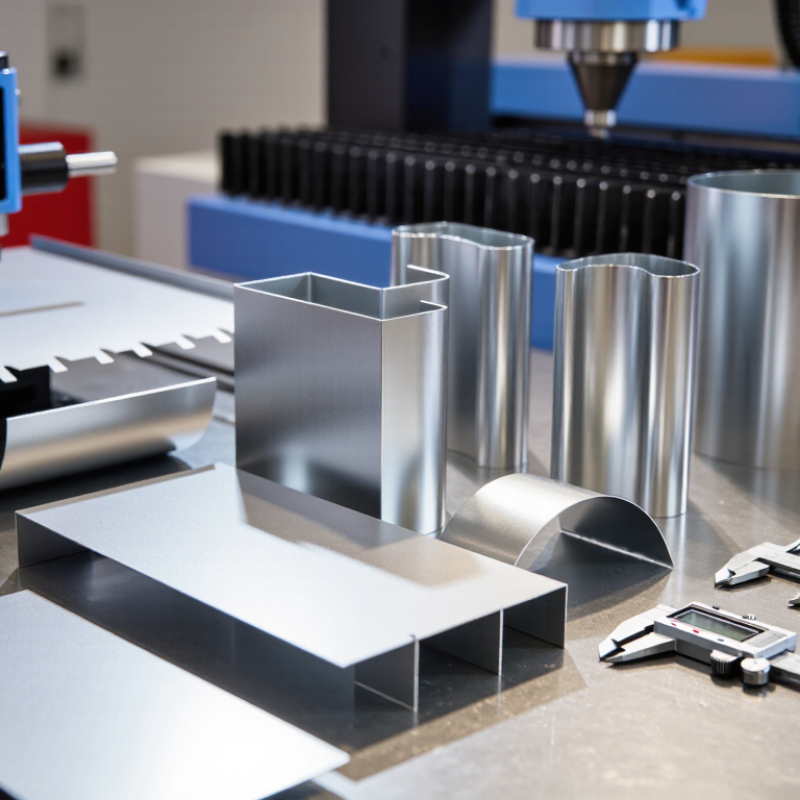
Table of Contents [Hide]
What Are Sheet Metal Parts?
Sheet metal parts are components formed from thin, flat metal sheets. They can become brackets, panels, enclosures, frames, ducts, and protective covers. Common materials include steel, stainless steel, aluminum, and copper. Each material behaves differently during cutting and forming.
A fabricator may cut a sheet with a laser, punch, or shear. Bending machines then create precise angles, flanges, or channels. Some parts require welding, riveting, threading, or surface finishing. A small enclosure, for example, may start as a 1.5-millimeter aluminum sheet. After cutting and bending, it can protect electrical equipment from dust and physical contact.
Good sheet metal parts depend on more than a clean drawing. Designers must consider material thickness, bend radius, grain direction, hole spacing, and tool access. Tight bends can cause cracking. Tiny holes may distort during forming. A practical design leaves enough space around each feature. It also allows inspection with calipers, gauges, or a simple test assembly.
Manufacturing tolerances matter. They affect fit, strength, appearance, and assembly speed. Powder coating or plating may improve corrosion resistance, but finishing adds thickness. That change can affect tight joints. No design is perfect. A part that looks efficient on screen may waste material or require difficult setup. Careful review and prototype testing often reveal those hidden problems.
Brands
Proudly Trusted by Top Suppliers Worldwide







Let us know and we will automate, together to fit your industrial needs.
 +91-97254 16844
Clients
Proudly Trusted by Top Companies Worldwide


Do you need Help? Get in touch.
X
Please fill out the form below and we will get back to you as soon as possible.