o
p
t
i
m
a
r
o
b
o
t
i
c
s

Make a Call


Make a Call
Blogs
10 Steel Shelving Buying Tips for Global Buyers
Global buyers need more than a low unit price when selecting Steel Shelving. They need capacity, consistency, safety, and dependable delivery across borders. The global warehousing sector continues to expand. Grand View Research valued the warehouse racking market at approximately USD 9.38 billion in 2023 and forecast continued growth through 2030. This trend reflects rising inventory volumes, e-commerce fulfillment, and pressure to use vertical space efficiently.
Reliable purchasing decisions should connect market data with warehouse realities. The 2024 MHI Annual Industry Report highlights ongoing investment in supply-chain technology, labor efficiency, and storage performance. Steel shelving remains practical for cartons, tools, spare parts, and packaged goods. Yet the strongest specification is not always the heaviest one. A shelf holding 200 kilograms may fail operationally if loads are uneven or frequently moved.
Small details matter. Measure clear aisle width, not only room dimensions. Check beam thickness, deck design, corrosion protection, and adjustable pitch. Confirm whether stated capacity applies per shelf or to the entire bay. Ask suppliers for test methods, load charts, material grades, and inspection records. ISO 9001-certified quality systems can support consistency, but certification does not replace product verification.
Think beyond the catalog.
International orders also involve packaging, customs documents, replacement parts, and installation guidance. Regional safety requirements may differ, so buyers should consult qualified local professionals before deployment. No buying guide is flawless. I have seen attractive quotations hide unclear tolerances and incomplete freight assumptions. These ten Steel Shelving buying tips create a disciplined starting point, while careful site inspection and supplier questioning complete the decision.
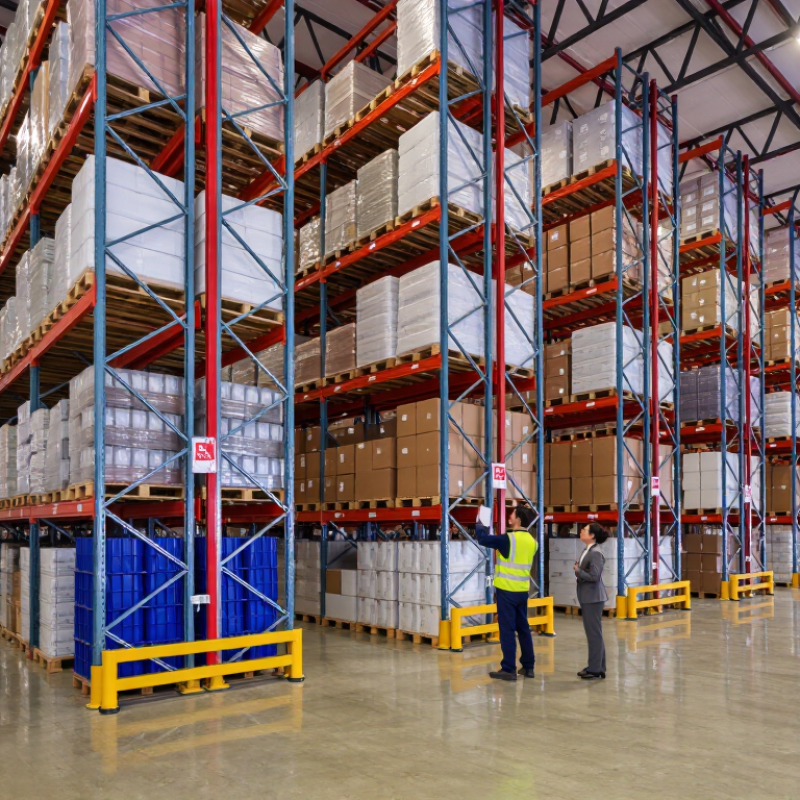
Table of Contents [Hide]
Define Shelf Loads with ANSI/RMI Ratings and a safety factor of 1.5
Global buyers should define steel shelving loads with verified ANSI/RMI ratings, not rough visual estimates. ANSI/RMI MH16.1 addresses rated capacities, testing, design, and safe use of industrial steel storage systems. Confirm whether the rating applies to each shelf, bay, or upright frame. Also check whether the load is uniformly distributed or concentrated at specific points.
Apply a 1.5 safety factor during purchasing. For example, a shelf expected to carry 1,500 kilograms should have a rated capacity of at least 2,250 kilograms.
This calculation should include pallets, containers, and handling impact. A neat spreadsheet can still be wrong. Measure real products, uneven weights, shelf spacing, and floor conditions.
Have a qualified structural professional review unusual loads or seismic locations. The U.S. Bureau of Labor Statistics recorded 885 fatal workplace injuries from falls, slips, and trips in 2023. Stable storage deserves serious attention.
Tips:
Request the manufacturer’s load tables and test basis. Confirm shelf deflection limits, connector details, and anchoring requirements.
Never combine ratings from different configurations without written engineering approval. Inspect bent beams, loose clips, and overloaded shelves immediately.
OSHA 1910.176(b) also requires stored materials to remain stable and secure.
In practice, users often forget future inventory growth. Planning only for today may create tomorrow’s overload.
Brands
Proudly Trusted by Top Suppliers Worldwide







Let us know and we will automate, together to fit your industrial needs.
 +91-97254 16844
Clients
Proudly Trusted by Top Companies Worldwide


Do you need Help? Get in touch.
X
Please fill out the form below and we will get back to you as soon as possible.