o
p
t
i
m
a
r
o
b
o
t
i
c
s

Make a Call


Make a Call
Blogs
What Are the Top 10 Cleanroom Swing Doors for Global Buyers?
Choosing the right Cleanroom Swing Doors can influence contamination control, workflow safety, and long-term operating costs. Global buyers often compare more than appearance. They examine sealing performance, surface durability, opening force, vision panels, hinges, and maintenance access.
Dr. Tim Sandle, a pharmaceutical microbiologist and cleanroom specialist, has written, “Cleanrooms are designed to control airborne particulate contamination.” This principle remains practical when evaluating swing doors. A well-designed door should close consistently, resist corrosion, and avoid unnecessary ledges where dust can collect. Its frame must also fit the wall system accurately. Small gaps matter.
This guide introduces ten Cleanroom Swing Doors suitable for different environments, including pharmaceutical rooms, laboratories, hospitals, food facilities, and electronics production areas. Each option deserves attention for a different reason. Some prioritize hermetic sealing. Others offer stronger impact resistance or easier cleaning. A few provide better visibility through wide observation windows.
The ranking is not absolute. It depends on room classification, traffic frequency, pressure differences, and local installation conditions. That is worth admitting. A premium door can still perform poorly when fitted incorrectly or maintained irregularly.
We will compare materials, hardware, safety features, customization choices, and supplier reliability. Buyers should also review technical documentation and test evidence before ordering. Product photographs can mislead. Real performance appears at the threshold, hinge line, and bottom seal. That is where careful evaluation begins.
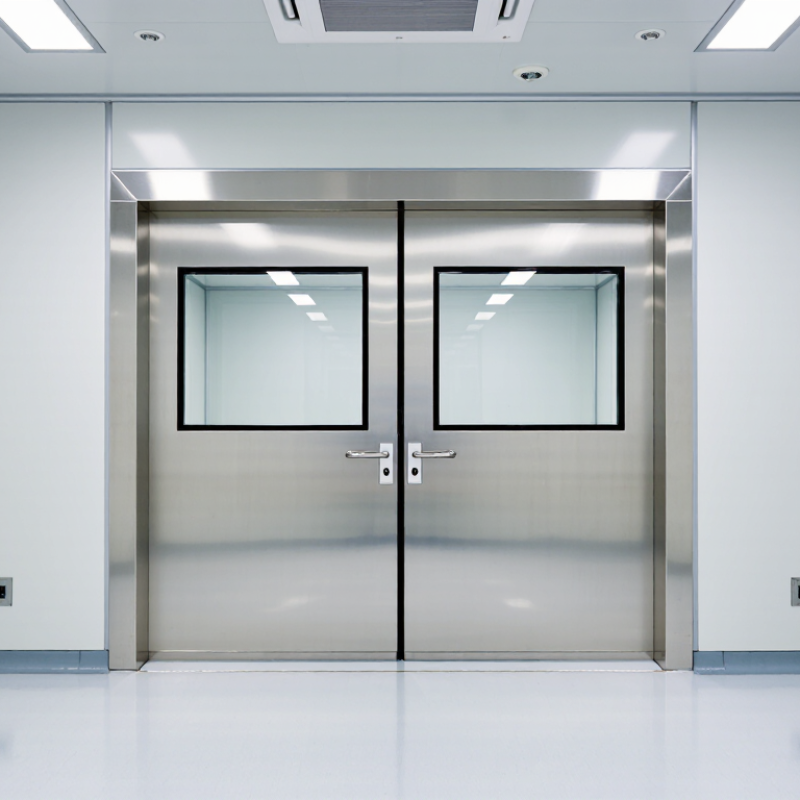
Table of Contents [Hide]
Cleanroom Swing Door Categories: Single, Double, Hermetic, and Fire-Rated Models
Global buyers often compare the top 10 cleanroom swing doors by category, not appearance alone.
Single-leaf doors suit narrow personnel openings and controlled traffic. They usually need less wall space and simplify daily cleaning.
Double-leaf doors support carts, equipment, and wider material movement. Their meeting stile must close evenly, or pressure control may suffer.
Hermetic swing doors create a tighter seal for operating rooms, laboratories, and high-grade production zones. Compression gaskets, adjustable hinges, and accurate frames matter here.
Fire-rated models add protection where building codes demand tested resistance. They may include heavier cores, certified hardware, and automatic closing systems.
A fire-rated door is not automatically suitable for every cleanroom. That assumption needs checking.
Tips: Confirm the required ISO classification, pressure difference, opening size, cycle frequency, and cleaning chemicals before purchase. Ask for test reports, installation tolerances, gasket details, and maintenance instructions. Stainless steel surfaces are practical, but poor welding can trap residue. Watch the threshold. It often causes trolley vibration and cleaning problems. In my experience, buyers sometimes choose the strongest door, then discover its closer is uncomfortable for frequent staff use. A better decision balances sealing, fire performance, hygiene, traffic flow, and long-term service access. Local approval requirements should also be reviewed before final specification.
Brands
Proudly Trusted by Top Suppliers Worldwide







Let us know and we will automate, together to fit your industrial needs.
 +91-97254 16844
Clients
Proudly Trusted by Top Companies Worldwide


Do you need Help? Get in touch.
X
Please fill out the form below and we will get back to you as soon as possible.