o
p
t
i
m
a
r
o
b
o
t
i
c
s

Make a Call


Make a Call
Blogs
China Top 35kV Power Transformer Suppliers?
China has become a major sourcing base for medium-voltage equipment, including the 35kv Power Transformer. However, a long supplier list does not guarantee dependable field performance. Buyers must examine manufacturing depth, test discipline, material traceability, and after-sales support.
John J. Winders Jr., a respected transformer engineer and author, notes, “Transformers are among the most reliable pieces of electrical equipment in service today.” That reliability still depends on careful design and maintenance. A credible Chinese supplier should provide verified electrical calculations, routine test records, temperature-rise results, insulation data, and clear factory quality procedures. Look for compliance with applicable IEC 60076 requirements, not only attractive catalogue figures.
Small details matter. Ask how the supplier controls winding tension, dries insulation, seals the tank, and checks oil leakage. Request references from substations with similar voltage, load, altitude, and climate conditions. A factory visit can reveal more than polished photographs. Observe the test hall, calibration labels, assembly cleanliness, and storage practices.
Not every low-cost offer is a bargain. Sometimes, the cheapest quotation hides weaker accessories, limited testing, or uncertain delivery support. That deserves attention. Supplier rankings can also mislead because market visibility is not the same as engineering capability. This guide reviews leading China-based suppliers through a practical lens, while recognizing an uncomfortable limitation: published information may remain incomplete. Final decisions should follow technical evaluation, witnessed testing, contractual clarity, and lifecycle cost analysis. Reliability is built before energization.
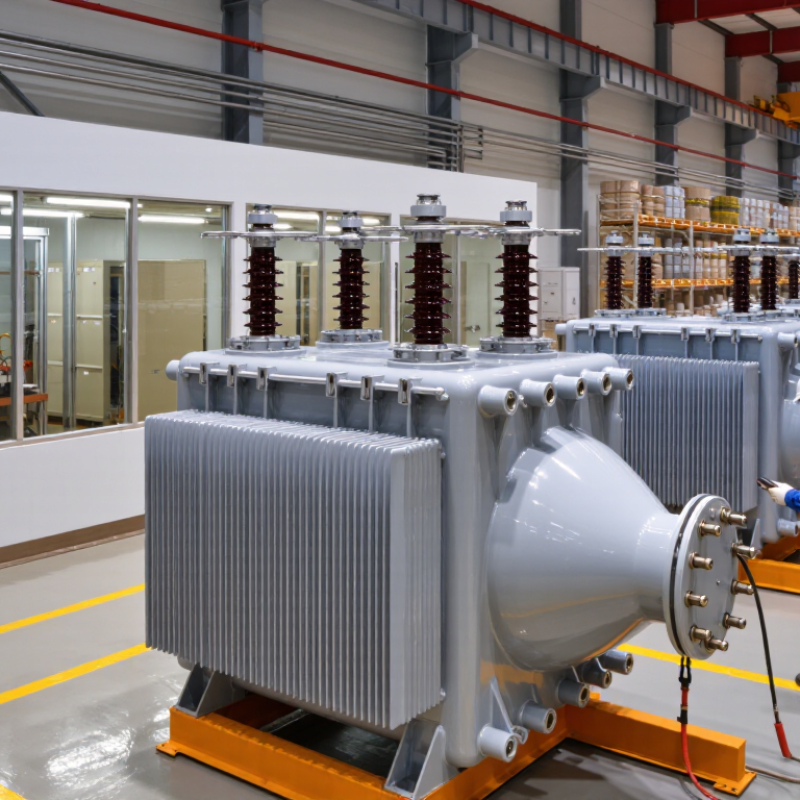
Table of Contents [Hide]
What Is a 35kV Power Transformer?
A 35kV power transformer is a static electrical machine that transfers energy between circuits through electromagnetic induction. Its high-voltage winding connects to a 35kV-class network, while the secondary winding supplies a lower voltage for factories, substations, or distribution feeders. The actual operating voltage may vary with the system design, so “35kV” describes a nominal class, not a constant reading.
IEC 60076 defines key requirements for power transformers, including insulation, temperature rise, testing, and performance. A typical unit includes a steel core, copper or aluminium windings, insulating liquid, bushings, and a conservator tank. On-site, engineers check the nameplate MVA rating, impedance, vector group, cooling method, and tap-changer range. These details affect fault current, voltage stability, noise, and maintenance.
The wider grid is under pressure. The International Energy Agency reported in Electricity Grids and Secure Energy Transitions that annual global grid investment must exceed 600 billion dollars by 2030. Medium- and high-voltage transformers will support this expansion, especially near renewable projects and industrial loads. In practical inspections, oil temperature and dissolved-gas results often reveal problems before failure. Yet supplier comparisons can be imperfect; published efficiency figures may use different test conditions. Buyers should request IEC-compliant test reports, loss measurements, routine-test records, and verified service data before selecting a 35kV transformer.
China Top 35kV Power Transformer Suppliers? - What Is a 35kV Power Transformer?
| Configuration or Evaluation Dimension | Typical Data | Technical Description | Common Application | Key Purchasing Checkpoint |
|---|---|---|---|---|
| Transformer Definition | High-voltage winding rated at 35kV | A power transformer transfers electrical energy between voltage levels through electromagnetic induction. In many Chinese grid applications, the equipment class uses a maximum system voltage of 40.5kV. | Utility substations, industrial substations, renewable-energy collection systems and distribution networks | Confirm the primary rated voltage, maximum system voltage and required secondary voltage before quotation. |
| Rated Frequency | 50Hz | 50Hz is the standard operating frequency for mainland China and many associated power-system projects. | Public utilities, factories, infrastructure projects and renewable-energy plants | Verify compatibility with the project grid frequency and applicable national or international standards. |
| Typical Rated Capacity Range | 1,600kVA to 63,000kVA | Common project ratings include 1,600kVA, 2,000kVA, 2,500kVA, 3,150kVA, 5,000kVA, 6,300kVA, 10,000kVA, 20,000kVA and higher. | From medium industrial loads to substation-level power transfer | Select capacity according to maximum demand, load-growth forecast, redundancy requirements and permitted loading. |
| Common Voltage Ratios | 35/10.5kV; 35/6.3kV; 35/0.4kV | The low-voltage side is customized according to the receiving network. Three-winding designs may use combinations such as 35/10.5/6.3kV. | Industrial distribution, mining, commercial facilities and regional substations | Confirm no-load voltage, tap range, phase arrangement and the actual downstream operating voltage. |
| Transformer Type | Oil-immersed or dry-type | Oil-immersed transformers generally support higher capacities and outdoor installation. Dry-type transformers are often selected where fire safety, indoor installation or reduced oil risk is important. | Outdoor substations, factories, buildings, data facilities and urban distribution systems | Evaluate installation environment, fire regulations, ventilation, noise limits, maintenance access and total lifecycle cost. |
| Common Vector Group | Dyn11; Yyn0; YNd11 | Dyn11 is widely used for step-down distribution transformers because it provides a neutral point on the low-voltage side and a 30-degree phase displacement. | Step-down substations and three-phase distribution networks | Match the vector group with parallel-operation requirements, system grounding and existing transformer phase displacement. |
| Tap-Changer Arrangement | Off-circuit tap changer; on-load tap changer | Off-circuit tapping normally requires the transformer to be de-energized. On-load tap changers regulate voltage while the transformer remains energized and loaded. | Off-circuit: stable networks; on-load: networks with varying voltage or important voltage-control requirements | Specify tap positions, tap range, control mode, interlocking, motor-drive requirements and voltage-regulation target. |
| Typical Insulation Level for 40.5kV Class | Power-frequency withstand: 95kV; lightning impulse withstand: 200kV | These are commonly specified insulation withstand values for equipment in the 40.5kV maximum-voltage class. The final values must follow the selected standard and project specification. | Medium-voltage and substation installations | Confirm insulation coordination, altitude correction, surge-arrester selection and the required test levels. |
| Cooling Method | ONAN; ONAF; AN or AF for dry-type units | ONAN means oil natural circulation and air natural cooling. ONAF adds forced air cooling to increase heat-dissipation capability. | Standard distribution, variable-load substations and high-load industrial applications | Check continuous capacity, emergency loading, fan redundancy, ambient temperature and cooling-control logic. |
| Applicable Standards | IEC 60076 series; GB/T 1094 series | IEC 60076 covers power-transformer design, testing and performance. GB/T 1094 is the corresponding Chinese standard series based substantially on the IEC framework. | Domestic and international procurement projects | State the governing standard in the technical specification and require complete routine and type-test documentation. |
| Efficiency and Loss Data | No-load loss, load loss and impedance voltage | Transformer performance is evaluated using core loss at rated voltage and load loss at rated current. Impedance voltage affects voltage regulation and short-circuit current. | All operating environments, especially high-load and energy-sensitive facilities | Compare guaranteed losses at the same capacity, voltage ratio, frequency, temperature reference and tolerance. |
| Short-Circuit Withstand | Specified by project short-circuit level and duration | The transformer must withstand the thermal and mechanical stresses caused by system faults for the specified short-circuit duration. | Utility substations, industrial networks and systems with high fault current | Request the short-circuit withstand calculation, impedance value and applicable verification or test evidence. |
| Environmental Conditions | Ambient temperature, altitude, humidity, pollution and seismic requirements | Installation conditions can affect insulation, cooling performance, creepage distance, enclosure design and rated capacity. | Coastal, plateau, desert, cold-region, polluted and seismic areas | Provide site altitude, minimum and maximum temperature, humidity, pollution level, wind speed and seismic data. |
| Factory Quality Documentation | Routine-test report, type-test evidence, inspection plan and dimensional drawings | Typical documentation includes winding-resistance, ratio, polarity or phase-displacement, impedance, dielectric and no-load/load-loss test results. | Technical approval, factory acceptance testing and commissioning preparation | Require traceable serial numbers, calibrated test equipment, signed reports and document approval before shipment. |
| Supplier Selection Indicator | Design capability, manufacturing capacity, testing capability and after-sales support | A qualified supplier should demonstrate experience with the required voltage class, capacity, standards, environmental conditions and delivery scope. | New-build projects, replacement projects and system expansion | Compare technical compliance, verified references, lead time, warranty terms, spare parts and local service response. |
Note: The figures shown are typical engineering values for 35kV-class power-transformer projects. Final ratings, insulation levels, losses, dimensions and testing requirements must be confirmed against the approved technical specification, applicable standards and site conditions.
Brands
Proudly Trusted by Top Suppliers Worldwide







Let us know and we will automate, together to fit your industrial needs.
 +91-97254 16844
Clients
Proudly Trusted by Top Companies Worldwide


Do you need Help? Get in touch.
X
Please fill out the form below and we will get back to you as soon as possible.