o
p
t
i
m
a
r
o
b
o
t
i
c
s

Make a Call


Make a Call
Blogs
What Are the 2026 Top Aeration Diffuser Types?
What Are the 2026 Top Aeration Diffuser Types?
Choosing the right Aeration Diffuser now requires more than comparing bubble size. Operators examine oxygen-transfer efficiency, fouling resistance, airflow stability, cleaning demands, and lifetime cost. A diffuser may perform beautifully in a laboratory tank, yet struggle beside a greasy industrial inflow. Conditions matter.
Dr. George Tchobanoglous, a respected wastewater-treatment authority, has stated, “Aeration is often the largest energy consumer in a wastewater treatment plant.” That observation still guides practical diffuser selection in 2026. Fine-bubble disc diffusers remain popular because they release small bubbles and provide strong oxygen transfer. Fine-bubble tube diffusers offer flexible layouts and useful coverage in long basins. Coarse-bubble diffusers produce larger bubbles, which can improve mixing and reduce clogging risks. Ceramic diffusers remain relevant where chemical resistance and durability matter, although their maintenance requirements deserve closer attention.
Performance is not only about efficiency.
A plant treating food-processing wastewater may need tougher membranes and easier cleaning access. A municipal basin may prioritize stable oxygen delivery, low blower demand, and predictable replacement cycles. Smart aeration controls are also changing diffuser design decisions. Sensors can adjust airflow, but poor diffuser placement can still waste energy.
No single type wins everywhere. That assumption can fail.
This guide examines the leading Aeration Diffuser types expected to shape 2026 projects. It compares their operating principles, strengths, weaknesses, and practical applications. The discussion also considers an uncomfortable reality: published efficiency figures may not match aging equipment, uneven air distribution, or neglected maintenance. Reliable selection begins with honest site data, not attractive specifications.
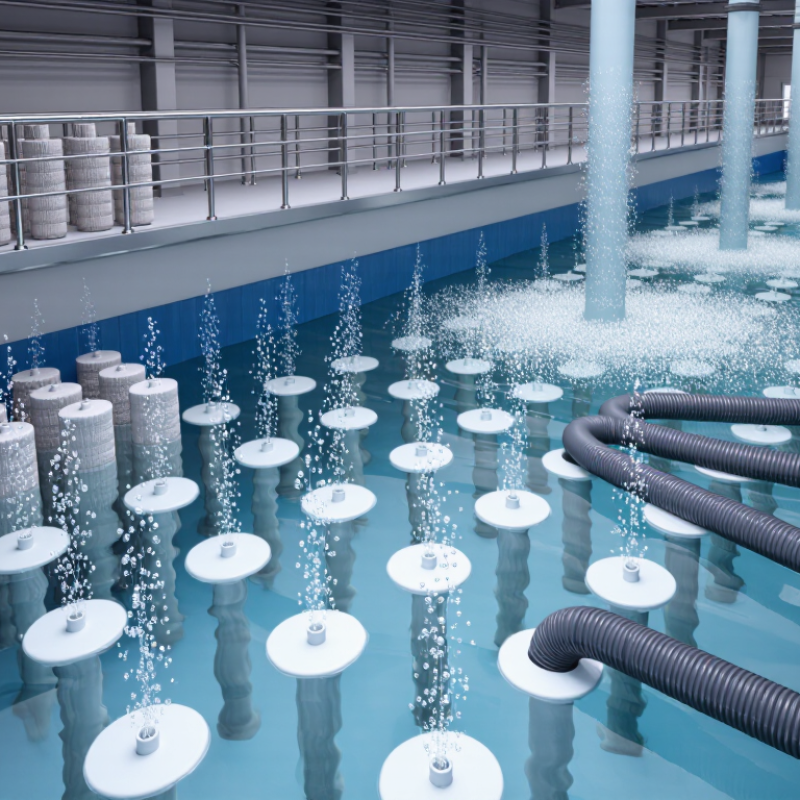
Table of Contents [Hide]
What Aeration Diffusers Are and How They Work
What Are the 2026 Top Aeration Diffuser Types?
Aeration diffusers transfer oxygen into wastewater through small air bubbles. A blower sends air through a porous membrane or rigid element. The diffuser releases bubbles across the tank floor. Microorganisms then use dissolved oxygen to break down organic matter. Simple in theory.
Fine-bubble disc and tube diffusers remain strong choices for 2026 systems. Their smaller bubbles provide more surface area for oxygen transfer. The U.S. Environmental Protection Agency reports that fine-pore aeration can reduce energy demand compared with coarse-bubble systems. However, membranes can foul when grease, minerals, or biological solids collect on their surfaces. Performance may decline quietly.
Coarse-bubble diffusers produce larger bubbles and stronger mixing. They suit grit chambers, equalization tanks, and wastewater with heavier solids. They usually resist clogging better, though oxygen transfer is less efficient. The U.S. Department of Energy reports that aeration can consume 45% to 75% of a wastewater plant’s electricity. That figure makes diffuser selection an operating decision, not just an equipment choice. Variable-air systems, ceramic elements, and tubular membranes also deserve attention. Yet no diffuser works perfectly in every tank. Actual results depend on water depth, airflow, cleaning schedules, and diffuser spacing. Field testing still matters more than a catalogue rating.
Brands
Proudly Trusted by Top Suppliers Worldwide







Let us know and we will automate, together to fit your industrial needs.
 +91-97254 16844
Clients
Proudly Trusted by Top Companies Worldwide


Do you need Help? Get in touch.
X
Please fill out the form below and we will get back to you as soon as possible.