o p t i m a r o b o t i c s

Blogs

China Top Robot Vision Manufacturers for Global Buyers

China has become a major sourcing base for robot vision systems, cameras, 3D sensors, and intelligent inspection platforms. Global buyers now compare more than product prices. They examine resolution, frame rates, lighting control, lens compatibility, software stability, and integration support.

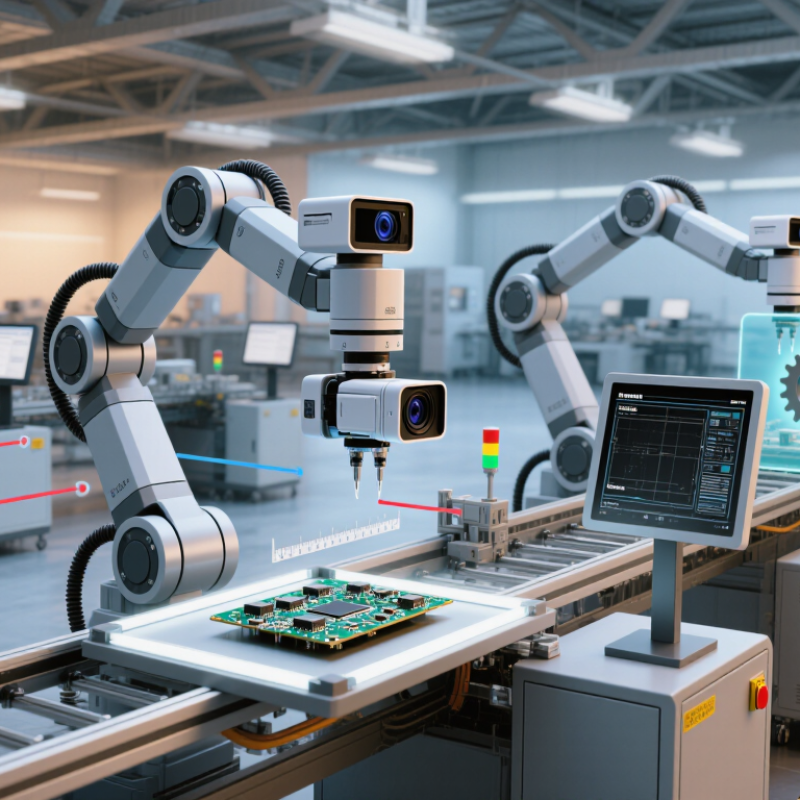
Jeff Bier, a recognized machine vision industry expert and founder of the AIA Vision & Imaging division, has described machine vision as “a key enabler of automation.” His observation remains practical today. A robot vision system must do more than capture clear images. It must help a robotic arm locate parts, identify defects, measure dimensions, and respond consistently on a busy production line.

This guide introduces leading Chinese robot vision manufacturers for international buyers. It focuses on real purchasing concerns, including application experience, product reliability, communication protocols, documentation, and after-sales service. Some suppliers specialize in 2D inspection. Others offer 3D vision, deep-learning software, or complete robotic workstations. The difference matters.

Look closely at the details.

A polished demo may hide difficult integration work. A low quotation may exclude lighting, calibration, training, or replacement support. Buyers should request sample testing with their own parts and production speeds. They should also verify factory experience, testing procedures, warranty terms, and export service capabilities.

No manufacturer is perfect. Even experienced suppliers can struggle with reflective surfaces, changing colors, vibration, or poor lighting. Careful evaluation is essential. The right partner combines dependable hardware, usable software, technical expertise, and honest communication. This overview helps global buyers compare China’s robot vision market with clearer expectations and fewer costly assumptions.
China Top Robot Vision Manufacturers for Global Buyers

What Robot Vision Systems Do in Industrial Automation

What Robot Vision Systems Do in Industrial Automation

Robot vision systems give machines the ability to inspect, locate, measure, and guide objects. Cameras capture images, while software identifies edges, colors, defects, and positions. A robot can then pick a part from a moving conveyor, adjust its grip, or reject a scratched component. The International Federation of Robotics reported 541,302 industrial robot installations worldwide in 2023. As automation expands, reliable visual feedback becomes increasingly important.

Vision also supports quality control at production speed. In a packaging line, it can check missing labels, incorrect caps, and damaged seals within milliseconds. In electronics assembly, it compares tiny components against programmed tolerances. MarketsandMarkets projects the machine vision market to grow at about 9.5% annually through 2028, reflecting wider use across manufacturing. Global buyers should examine lighting, camera resolution, processing speed, and software compatibility, not only the quoted equipment price.

Yet vision is not magic. Glare, dust, vibration, and changing product surfaces can reduce accuracy. A polished metal part may look perfect under one lamp and invisible under another. Practical trials matter. Engineers should test real samples, including defective ones, before approving a system. Even a strong algorithm can fail when training images are limited. This is where supplier experience, clear performance records, and responsive technical support become valuable.

What Robot Vision Systems Do in Industrial Automation

Robot vision systems capture and analyze images to support inspection, identification, measurement, robot guidance, and bin-picking tasks. The chart shows representative processing-time ranges commonly used in industrial machine-vision workflows; actual performance depends on camera resolution, lighting, algorithms, and controller hardware.

How to Evaluate Robot Vision Manufacturers in China

China Top Robot Vision Manufacturers for Global Buyers

How to Evaluate Robot Vision Manufacturers in China

China’s robot vision market deserves careful technical screening, not catalogue-based purchasing. The International Federation of Robotics reported 276,288 industrial robot installations in China during 2023, representing about 51% of global installations. This scale creates strong manufacturing experience, but supplier quality still varies. A polished demonstration can mislead.

Ask manufacturers to test your actual parts, lighting, conveyor speed, and defect samples. Request a recorded trial using scratched surfaces, reflective metal, dark plastics, and mixed orientations. Measure detection accuracy, false rejects, processing latency, and repeatability. A useful supplier should explain lens selection, illumination design, camera resolution, and algorithm limitations in practical terms. Generic accuracy claims are weak evidence.

MarketsandMarkets estimates that the global machine vision market could grow from about 9.4 billion US dollars in 2024 to 13.7 billion by 2029. This growth increases supplier choice and evaluation pressure. Check optical component traceability, software update controls, cybersecurity practices, and compatibility with common industrial protocols. Review factory acceptance procedures and spare-part availability in your region. ISO 9001 certification helps, but it does not prove inspection performance. Ask for customer references in similar production conditions. I would also require a pilot run before signing a large order. No scorecard is perfect. Field data matters more than presentation quality.

Leading Chinese Robot Vision Manufacturers and Their Specialties

China Top Robot Vision Manufacturers for Global Buyers

Leading Chinese robot vision manufacturers serve different production needs rather than one universal market. Some specialize in 2D cameras for barcode reading, inspection, and robotic guidance. Others focus on 3D vision, using structured light or stereo imaging to measure height, gaps, and irregular surfaces. Their specialties often reflect China’s strong manufacturing sectors, including electronics, automotive components, packaging, and warehousing.

For global buyers, technical evidence matters more than catalog claims. A capable manufacturer should provide repeatability data, sample images, lighting tests, and communication protocols. Ask whether the system supports common industrial interfaces, stable calibration, and local service. A practical trial may include dark metal parts, reflective plastic, and dusty work areas. These details expose weaknesses quickly. Small errors can stop a robot cell.

Some manufacturers build compact embedded vision modules for limited workspaces. Others develop high-speed line-scan systems for continuous web inspection. More specialized teams provide 3D guidance for bin picking and precise assembly. Software quality also differs. Clear tools for training, logging, and fault diagnosis reduce engineering time. Yet no supplier fits every factory. A camera may perform well in demonstrations but struggle under changing light. Buyers should test real parts, real cycle times, and real operators. That step is easy to skip. It should not be.

Industries and Applications Served by Chinese Robot Vision Systems

China Top Robot Vision Manufacturers for Global Buyers

Chinese robot vision systems now serve automotive, electronics, logistics, food processing, pharmaceuticals, and renewable energy production. In automotive plants, cameras inspect weld points, surface scratches, and connector positions. Electronics factories use vision modules to check tiny components, printed labels, and soldering quality. These systems can detect differences that human operators may miss during long shifts.

In logistics centers, vision-guided robots read barcodes, measure parcels, and identify damaged cartons. Food processors apply cameras to inspect product size, packaging seals, and foreign color variations. Lighting matters greatly here. A glossy package can confuse an otherwise capable camera. Controlled illumination and regular calibration improve inspection stability.

Pharmaceutical production requires careful traceability. Vision systems verify labels, caps, batch codes, and package alignment without touching products. Solar panel and battery manufacturers use imaging tools to detect cracks, coating defects, and assembly errors. Practical integration still needs attention. Dust, vibration, changing materials, and unclear acceptance standards can reduce accuracy. No camera solves every problem.

Experienced buyers should request sample testing with real production parts. They should also review image data, response time, software compatibility, and local service capacity. A system may perform well in a demonstration but behave differently beside a fast conveyor. That gap deserves honest testing. Human review remains useful for unusual defects and uncertain cases.

What Global Buyers Should Verify Before Choosing a Supplier

When comparing robot vision manufacturers in China, global buyers should look beyond resolution claims. Ask how the system performs under changing factory conditions. Request sample images from shiny metal, dark plastic, and fast-moving parts. A camera that works in a bright demo room may struggle beside a vibrating conveyor.

Check the sensor, lens, lighting, and software as one system. Confirm the supplier can explain exposure settings, calibration steps, and expected inspection limits in plain language. Ask for test results using your own parts, not only prepared samples. Small details matter. Verify communication protocols, integration support, spare-part availability, and response times across time zones. Also clarify who handles updates and troubleshooting after installation. These details can affect production more than a headline accuracy figure.

Review quality controls, documentation, and traceability for the equipment you will receive. Ask whether each unit is tested before shipment and what records accompany it. A factory visit or live remote inspection can help, though neither guarantees long-term performance. Request a written acceptance plan with measurable criteria, such as detection rate, cycle time, and error handling. Be cautious when claims sound unusually precise without test conditions. I have seen buyers focus heavily on price, then discover that lighting changes require extra tuning. That is an easy detail to miss, and not every supplier will flag it early.

Brands

Proudly Trusted by Top Suppliers Worldwide

Let us know and we will automate, together to fit your industrial needs.

Clients

Proudly Trusted by Top Companies Worldwide

Do you need Help? Get in touch.

X

Please fill out the form below and we will get back to you as soon as possible.

    Subscribe our newsletter & get updates