o
p
t
i
m
a
r
o
b
o
t
i
c
s

Make a Call


Make a Call
Blogs
Top 10 Types of Electric Bike Scooters for Global Buyers
Choosing among Electric Bike Scooters can feel simple until the specifications become confusing. A compact folding model may fit beneath an office desk, while a cargo design may carry groceries through rain and uneven streets. Fat-tire scooters offer stability on sand and gravel, but they can feel heavy on crowded sidewalks. The right choice depends on distance, terrain, rider comfort, storage space, and local safety requirements.
Horace Dediu, a respected micromobility analyst and founder of Micromobility Industries, has said, “Micromobility is the future of mobility.” His observation helps explain why buyers now compare more than speed and battery range. They examine motor performance, charging time, braking systems, frame strength, tire width, lighting, and after-sales support. These details matter when a daily commute includes steep roads, loose stones, or a sudden afternoon shower.
This guide explores ten major types for global buyers, including commuter, folding, cargo, fat-tire, mountain, road, moped-style, seated, tricycle, and long-range models. Each category solves a different transportation problem. None is perfect. A fast scooter may sacrifice portability, while a lightweight frame may reduce carrying capacity. That trade-off is easy to miss in polished product photos. Real experience matters more: test the riding position, inspect the controls, and confirm replacement-part access before purchasing. Specifications can look impressive. Daily comfort decides more. Buyers should also review local rules, certified safety features, and responsible riding practices, because requirements differ between countries and cities.
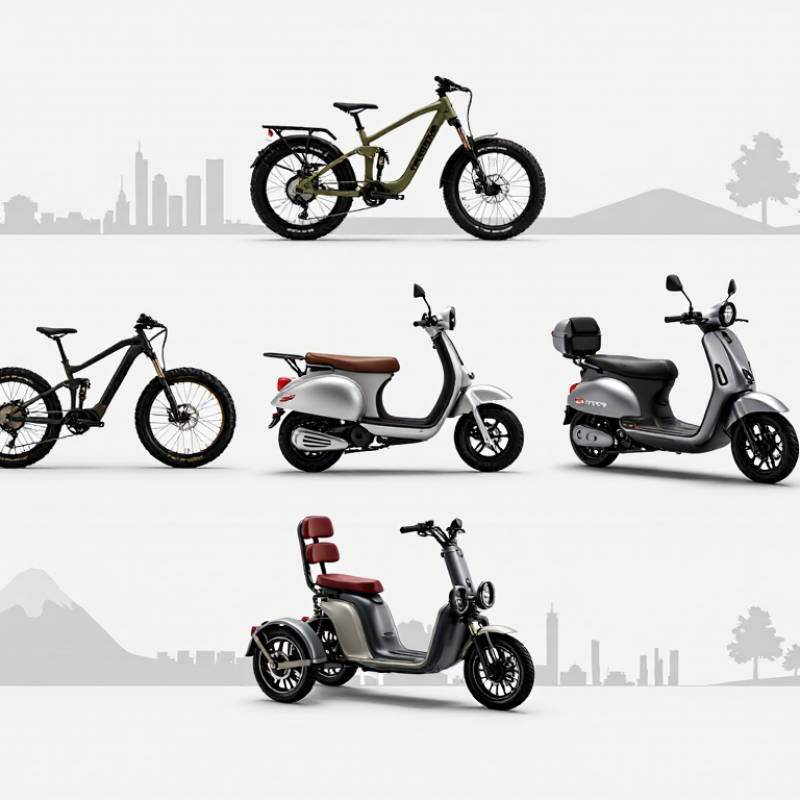
Table of Contents [Hide]
How the 10 Types Are Classified by Motor, Battery, Wheels, and Use
Top 10 Types of Electric Bike Scooters for Global Buyers
How the 10 Types Are Classified by Motor, Battery, Wheels, and Use
Electric bike scooters are easier to compare when four practical details guide the choice: motor, battery, wheels, and intended use. City step-through models usually use compact hub motors, small batteries, and 16 to 20-inch wheels. Folding commuter models share similar motors but use lighter frames and smaller wheels. Fat-tire scooters use wider wheels for sand, snow, and uneven paths. Mountain models often use mid-drive motors, stronger brakes, and larger batteries for climbing. Cargo models need high torque, reinforced frames, and extended battery capacity.
Moped-style scooters focus on comfort, with broad seats, rear hub motors, and 20-inch wheels. Seated scooters are often shorter and easier to handle in crowded streets. Long-range touring models carry larger batteries, sometimes with a second battery mount. Lightweight portable models trade range for easy lifting. Utility tricycles add two rear wheels for balance and carrying groceries. Wheel size changes stability, while motor placement affects hill performance and handling.
Tips: Check battery watt-hours, not only advertised range. Real-world distance drops with hills, cold weather, heavy loads, and frequent stops. Test the brake feel and folding joints before purchase. I have found that a comfortable scooter often beats a faster one after several weeks. This is easy to underestimate. Confirm charger safety, battery certification, weight limits, and local riding requirements before ordering. A perfect category does not exist; daily roads reveal compromises quickly.
Brands
Proudly Trusted by Top Suppliers Worldwide







Let us know and we will automate, together to fit your industrial needs.
 +91-97254 16844
Clients
Proudly Trusted by Top Companies Worldwide


Do you need Help? Get in touch.
X
Please fill out the form below and we will get back to you as soon as possible.