o
p
t
i
m
a
r
o
b
o
t
i
c
s

Make a Call


Make a Call
Blogs
Best HDPE Pipe Cutting Tools Manufacturers in China
Choosing the best Hdpe Pipe Cutting Tools manufacturers in China requires more than comparing prices or polished product photos. It demands practical judgment. Pipe cutting affects joint quality, installation speed, worker safety, and material waste. A reliable manufacturer should understand these pressures from real construction sites, not only from a catalog.
This guide examines Chinese suppliers through measurable and practical criteria. These include cutting accuracy, blade durability, tool compatibility, production capacity, quality control, and after-sales support. It also considers whether manufacturers provide clear technical data, replacement parts, operating instructions, and responsive communication. Small details matter. A stable handle, clean cutting edge, and properly aligned guide can prevent expensive rework on site.
Experience helps reveal weaknesses.
A strong supplier should explain how its tools perform on different HDPE pipe diameters, wall thicknesses, and working conditions. Certifications and test records can support credibility, but they should not replace independent evaluation. Product claims need careful checking. No shortlist is perfect, and manufacturer information may be incomplete or unevenly presented. Buyers should request samples, confirm specifications, and test tools before placing large orders.
The manufacturers discussed here are evaluated from a professional purchasing and application perspective. Their strengths may differ. One company may offer advanced hydraulic cutters, while another may provide simpler manual tools for routine maintenance. By comparing evidence instead of relying on broad marketing language, buyers can identify dependable partners for infrastructure, plumbing, irrigation, and industrial projects.
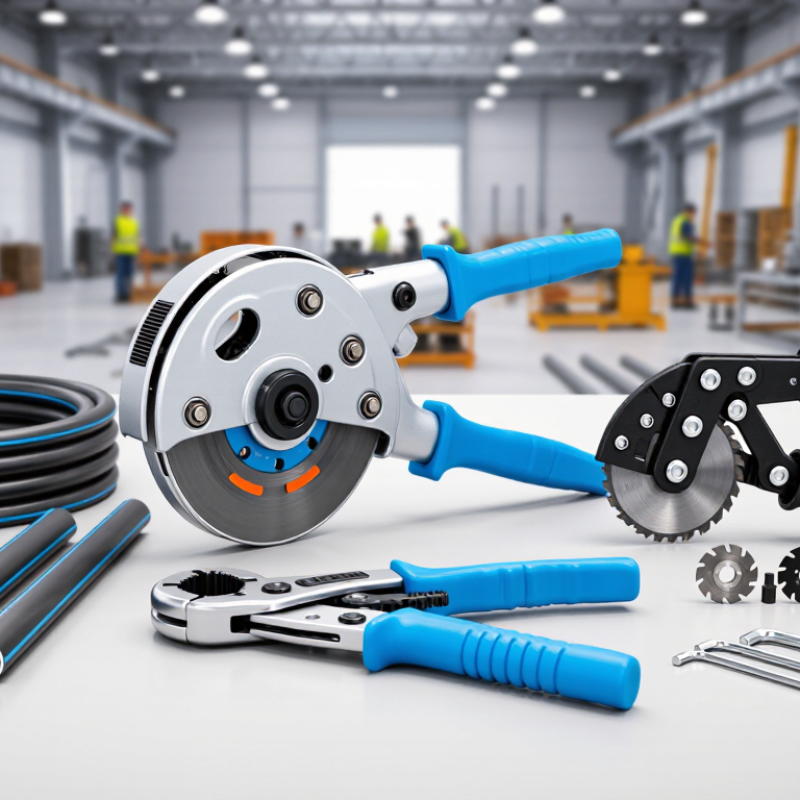
Table of Contents [Hide]
HDPE Pipe Standards: PE100, MRS 10 MPa, SDR 11, and ISO 4427
Best HDPE Pipe Cutting Tools Manufacturers in China
When selecting HDPE pipe cutting tools from China, understand the pipe standard first. PE100 indicates a polyethylene grade with an MRS of 10 MPa under defined long-term testing conditions. It does not mean every pipe handles 10 MPa in service. Temperature, safety factors, and installation conditions still matter.
SDR 11 means the outside diameter is roughly eleven times the wall thickness. For example, a 110 mm pipe has a wall thickness near 10 mm. The exact value depends on the manufacturer’s specification and tolerance. ISO 4427 covers polyethylene water supply and pressure pipe systems, not cutting machines themselves. A suitable tool should create a square, clean end without crushing the pipe wall.
From practical inspections, reliable manufacturers provide rigid clamps, replaceable blades, clear diameter ranges, and repeatable alignment. A cold-cutting design is often preferable because excessive heat can soften PE100 and distort the cut edge. Ask for cutting tests using SDR 11 samples, not only catalog photographs. Check dimensional reports, material certificates, and factory quality records.
Small details matter. A rough edge can complicate electrofusion preparation. Dust may also hide an uneven cut. I once underestimated clamp pressure; the pipe shifted slightly. The result looked acceptable, but alignment was poor. That mistake deserves attention. Good tooling reduces such risks, yet trained operators remain essential. A famous specification cannot repair careless preparation.
Brands
Proudly Trusted by Top Suppliers Worldwide





Let us know and we will automate, together to fit your industrial needs.
 +91-97254 16844
Clients
Proudly Trusted by Top Companies Worldwide


Do you need Help? Get in touch.
X
Please fill out the form below and we will get back to you as soon as possible.