o
p
t
i
m
a
r
o
b
o
t
i
c
s

Make a Call


Make a Call
Blogs
Top 10 OCR Inspection Systems for Global Buyers
Ocr Inspection systems turn printed characters into measurable production data. They read lot codes, expiry dates, serial numbers, and labels as products move along a line. For global buyers, a convincing demonstration is not enough. Performance must hold across fonts, substrates, lighting conditions, and operating speeds.
Computer-vision pioneer Dr. Fei-Fei Li has said, “If we want machines to think, we need to teach them to see.” Her observation speaks to a core challenge: machines must interpret visual details, not merely capture images. In this guide, the Top 10 OCR Inspection Systems for Global Buyers are compared through practical purchasing criteria, including reading accuracy, inspection speed, integration options, language support, and service availability. Small details matter. A glossy pouch can create glare; a curved bottle can distort a code.
No single system suits every factory. Results depend on camera setup, print quality, product variation, and the cost of missed or incorrect reads. Buyers should test real samples under real line conditions, then review failure cases—not just headline accuracy. That step is easy to overlook. This comparison aims to clarify trade-offs, while recognizing that vendor specifications do not replace a site-specific trial. Even a strong system may need careful tuning. A useful shortlist begins with evidence, not promises.
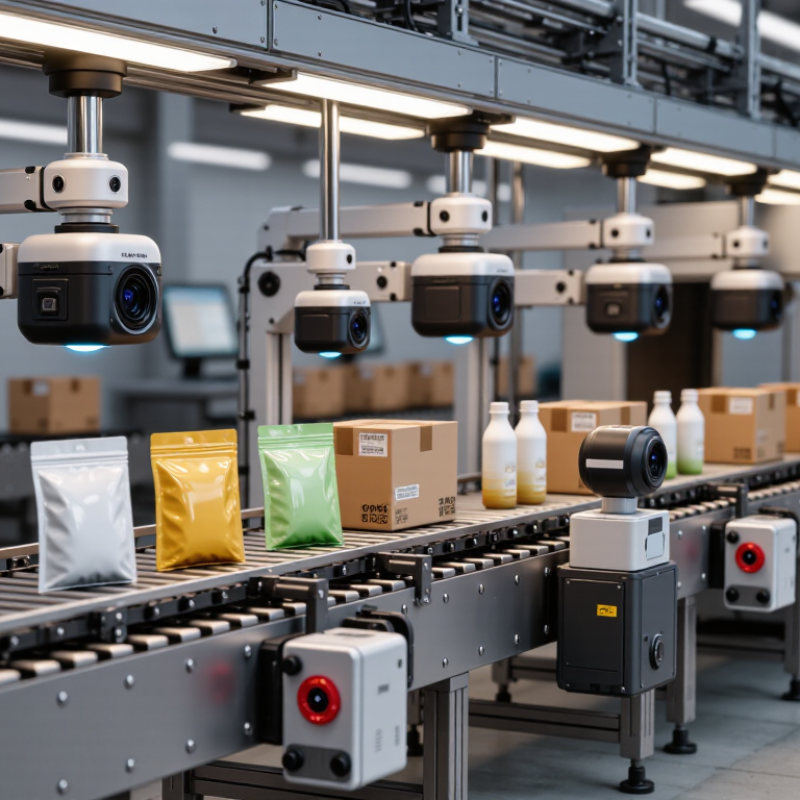
Table of Contents [Hide]
Defining OCR Inspection: OCR, OCV, and Their Roles on Production Lines
OCR turns printed or marked characters into readable data; OCV checks whether those characters match an expected value. On a packaging line, OCR may read a date code from a moving carton. OCV can then verify that the code matches the scheduled format and product record. They overlap, but they answer different questions: “What does it say?” and “Is it correct?” Small errors matter.
Selection depends on the inspection task, not just camera resolution. Consider print contrast, glare on glossy film, line speed, code location, and character spacing. A system should flag unreadable codes as well as readable-but-wrong ones. Good lighting and stable image capture often matter as much as recognition software. Still, no setup is perfect; condensation, worn printheads, or a slightly skewed label can create false rejects. Review sample images and challenge the system with realistic defects before setting acceptance limits.
Tips: Test codes at normal line speed, including faint and smudged examples. Keep inspection logs, and periodically check whether reject rates reflect real defects or tuning issues.
Brands
Proudly Trusted by Top Suppliers Worldwide




Let us know and we will automate, together to fit your industrial needs.
 +91-97254 16844
Clients
Proudly Trusted by Top Companies Worldwide


Do you need Help? Get in touch.
X
Please fill out the form below and we will get back to you as soon as possible.