o p t i m a r o b o t i c s

Blogs

What is a Welding Robot and How Does it Work?

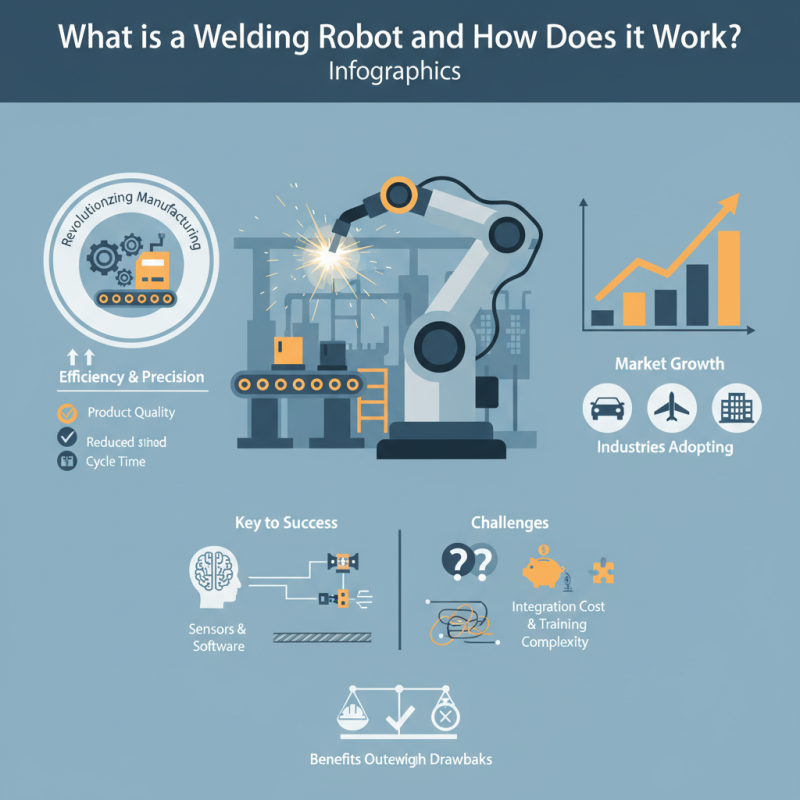
Welding robots have revolutionized manufacturing processes. These advanced machines automate welding tasks, enhancing efficiency and precision. The global welding robot market was valued at approximately $4 billion in 2022, with growth projected at a compound annual rate of 7% until 2030. Industries spanning automotive, aerospace, and construction are increasingly adopting these technologies.

The key to a welding robot's success lies in its ability to execute complex welds with minimal human intervention. Equipped with sensors and sophisticated software, these robots ensure consistent quality. However, challenges exist. Integration into existing workflows can be costly and requires workforce training. Some companies report difficulties in programming these machines for unique tasks.

Despite these hurdles, the benefits often outweigh the drawbacks. Welding robots minimize human error, reduce production time, and enhance workplace safety. Understanding how they work is vital for businesses looking to stay competitive. Exploring the workings of welding robots reveals not only their capabilities but also areas for improvement in this evolving field.
What is a Welding Robot and How Does it Work?

What is a Welding Robot?

What is a Welding Robot and How Does it Work?

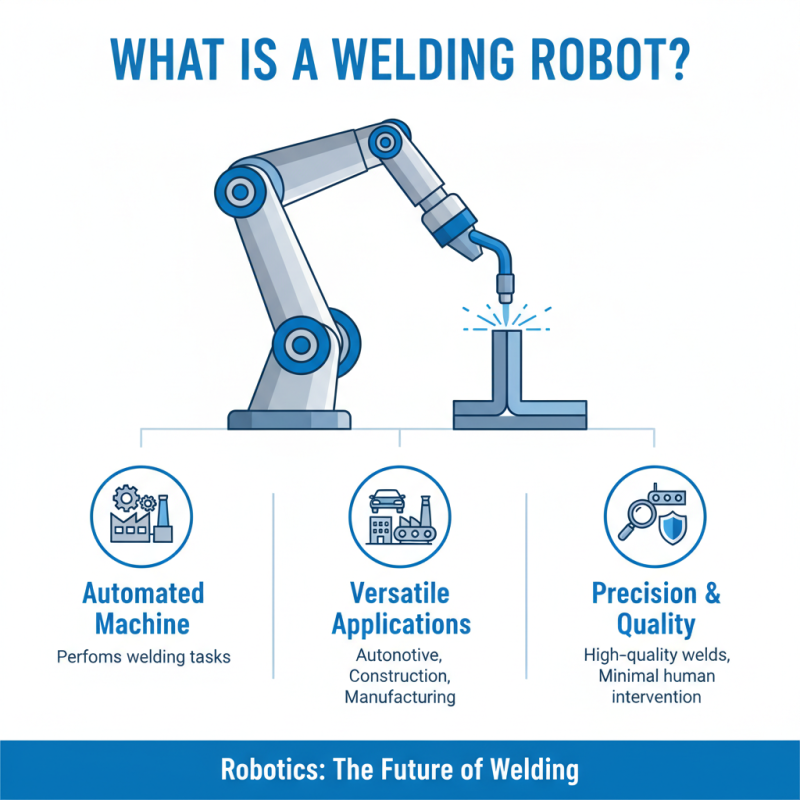
A welding robot is an automated machine designed to perform welding tasks. These robots can operate in various industries, including automotive, construction, and manufacturing. Using precise movements, they ensure high-quality welds with minimal human intervention.

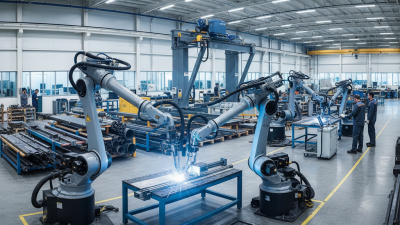
Welding robots work by utilizing advanced technology. They are often equipped with sensors and cameras for accurate positioning. The robotic arm mimics human motions, allowing for consistent and efficient welding. This automation reduces human error and increases productivity. However, programming a welding robot requires expertise and careful calibration. An incorrectly set parameter can lead to faulty welds and wasted materials.

Many companies are exploring the use of welding robots for efficiency. But the transition requires training for the existing workforce. Operators must adjust to a new work environment. Potential technical issues may arise, demanding prompt attention. Despite challenges, the benefits of welding robots are substantial. They enhance speed and precision in production lines. With ongoing advancements, these robots will likely become even more integral to manufacturing processes.
The Components of a Welding Robot

Welding robots are sophisticated machines that enhance efficiency and accuracy in metal joining processes. The core components of a welding robot include its robotic arm, welding power supply, controller, and sensors. Each part plays a critical role in optimizing performance and ensuring quality output.

The robotic arm is a mechanical structure designed for flexibility and precision. It typically consists of several joints and links, allowing it to navigate complex geometries. Recent industry reports indicate that advanced robotic arms can achieve movement accuracy of ±0.1 mm. This level of precision is crucial in applications where even minor deviations can lead to structural failures.

The welding power supply provides the necessary energy for the welding process. It ensures consistent heat delivery, which is vital in preventing defects. Controllers follow the programmed instructions to synchronize the arm’s movements with the welding process. Many experts emphasize that the choice of sensors is equally important. They help monitor variables such as temperature and arc stability. In a recent survey, over 70% of welding professionals cited the importance of real-time data for improving welding quality. Balancing these components requires a deep understanding of welding techniques and robotics.

How Welding Robots Operate: The Process Explained

Welding robots are automated machines that perform welding tasks. They use advanced sensors and programming to execute precise movements. The operating process begins with programming the robot for specific welding tasks. The robot can be set to different parameters, such as speed, angle, and type of weld.

Once programmed, the robot uses its arms to reach the welding position. It maintains a steady movement to ensure quality welds. As the tool heats and joins materials, it continuously monitors the weld quality in real-time. This feedback loop allows the robot to adjust its actions as needed, enhancing precision. Operators must often refine the programming to adapt to different materials or production demands, which can be challenging.

Safety is a critical focus during robot operation. Workers must keep a safe distance while the robot functions, as its movements can be unpredictable. Regular maintenance is crucial too. Faulty sensors can lead to errors in the welding process. These details are essential for ensuring both product quality and worker safety.

Welding Robot Usage Statistics by Industry

Types of Welding Robots and Their Applications

Welding robots are reshaping industries with their efficiency and precision. Several types of welding robots exist, each tailored for specific applications. The most common types include articulated robots, which have rotary joints. These robots excel in complex welding paths. According to the International Federation of Robotics, articulated robots now account for about 70% of the welding automation market.

Collaborative robots, or cobots, are another type making strides in the industry. They work alongside humans, enhancing safety and productivity. A report from ABI Research highlights that the use of cobots is expected to grow by 40% annually in the next few years. This growth is fueled by their versatility and ease of integration into existing workflows.

However, challenges remain. Not all welding processes can fully utilize robotics. For example, intricate welding tasks may still require human touch. This gap emphasizes the importance of training and adaptation. Although robots can perform consistent welds, they often need skilled operators for setup and monitoring. Investing in both technology and human expertise is vital for a successful transition to robotic welding solutions.

What is a Welding Robot and How Does it Work? - Types of Welding Robots and Their Applications

Robot Type Operating Principle Common Applications Advantages
Articulated Robots Utilizes rotating joints to mimic human arm motion. Industrial manufacturing, automotive assembly. Flexible movement, high precision.
Cartesian Robots Moves in linear paths along X, Y, and Z axes. Welding of flat components, assembly tasks. Stable and easy to program.
SCARA Robots Combines vertical lift capabilities with horizontal movement. Electronics manufacturing, small parts assembly. High speed, offers good accuracy.
Delta Robots Uses parallel arms to achieve high-speed movement. Pick and place applications, packaging. Fast operation, compact design.
Collaborative Robots (Cobots) Designed to work alongside humans with safety features. Small-scale assembly, maintenance tasks. User-friendly, safe interaction with operators.

Benefits of Using Welding Robots in Manufacturing

What is a Welding Robot and How Does it Work?

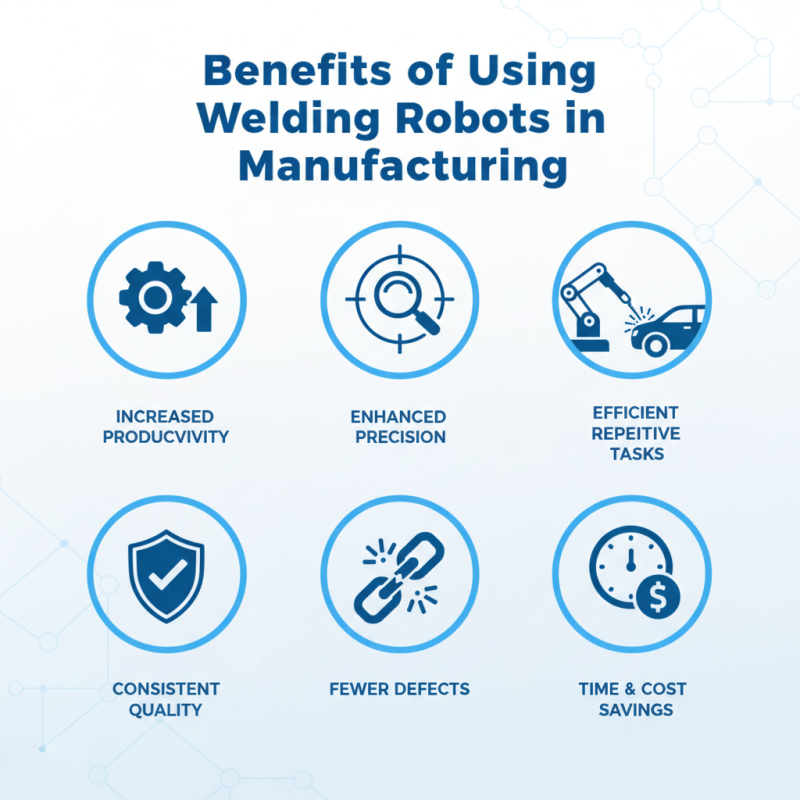
Welding robots have transformed the manufacturing landscape. These machines offer numerous benefits, enhancing productivity and precision. They execute repetitive tasks efficiently, reducing human error. With welding robots, manufacturers can achieve consistent quality in their products. The precision of robotic welding can lead to fewer defects and rework, saving time and resources.

Increased safety is another significant advantage. Welding involves high heat and potentially hazardous environments. Robots can take on dangerous tasks, protecting human workers from injuries. Yet, the initial investment in welding robots can be substantial. Companies must weigh the costs against potential savings and efficiency gains.

Moreover, programmers need expertise to operate these systems. Training is essential for effective integration into existing workflows. Some facilities struggle with adapting to this new technology. A complete understanding of robot limitations is vital. Automation may not suit every welding application, highlighting the need for careful evaluation before implementation.

Brands

Proudly Trusted by Top Suppliers Worldwide

Let us know and we will automate, together to fit your industrial needs.

Clients

Proudly Trusted by Top Companies Worldwide

Do you need Help? Get in touch.

X

Please fill out the form below and we will get back to you as soon as possible.

    Subscribe our newsletter & get updates