o
p
t
i
m
a
r
o
b
o
t
i
c
s

Make a Call


Make a Call
Blogs
What Are the Top Types of Cardboard Edging?
Cardboard Edging looks simple, but its performance depends on material, geometry, and application. It protects pallet corners, stabilizes stacked cartons, and reduces pressure marks during transport. The best type is rarely the thickest one. It must match the load.
Smithers’ The Future of Global Packaging to 2028 links packaging growth with material efficiency, recyclability, and supply-chain protection. CEPI’s 2023 preliminary statistics reported approximately 79.5 million tonnes of paper and board production across its member countries. These figures show the scale behind everyday paper-based protection. Even a small edge profile can influence waste, handling speed, and product damage.
Packaging engineer and author W. Soroka offers a useful principle: “Packaging protects products, contains products, and communicates information.” That principle applies directly to Cardboard Edging. A rigid angle board may suit heavy appliances. A flexible paper edge protector may work better for bundled panels. Recycled fiber can reduce virgin-material demand, though moisture resistance may decline. It is not always a clean trade-off.
This guide compares the top types of Cardboard Edging by strength, shape, finish, and end use. Some rankings may appear too neat. Real warehouses are less predictable. Humidity changes results. Operator handling matters. Reported specifications also need practical testing before purchase. The discussion therefore combines industry evidence with cautious judgment, helping buyers choose protection that performs beyond the product brochure.
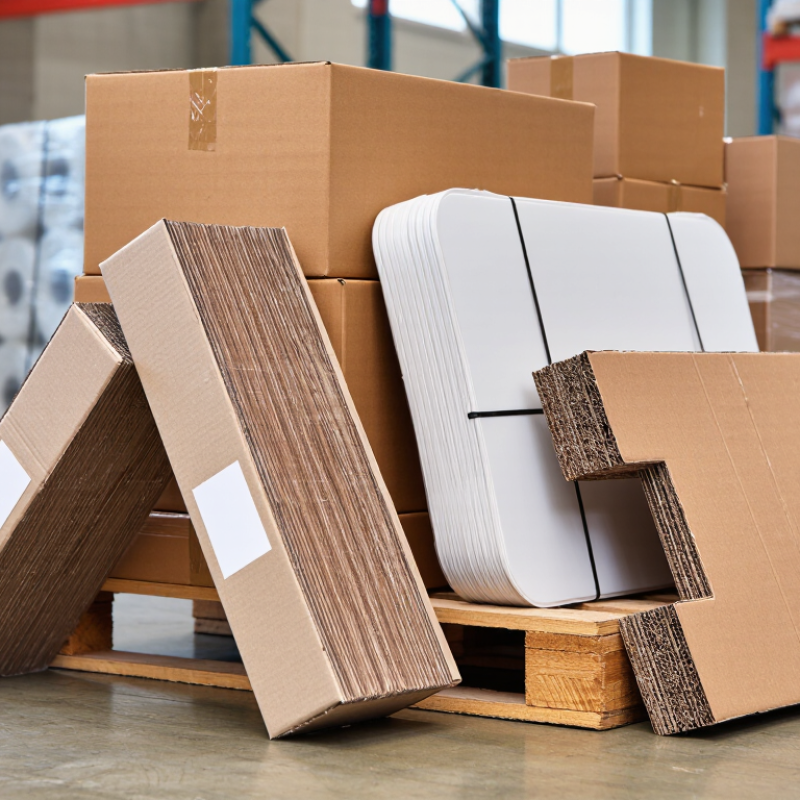
Table of Contents [Hide]
What Is Cardboard Edging and What Purposes Does It Serve?
Cardboard edging is a protective strip made from several compressed paperboard layers. It usually forms an L-shaped, U-shaped, or custom corner profile. Workers place it along exposed carton edges before applying stretch film or straps. The material creates a firmer boundary around the load.
Its main purpose is edge protection. Without it, tight straps can cut into boxes and crush product corners. Cardboard edging spreads pressure across a wider surface. It also reduces scuffing during forklift movement, stacking, and warehouse handling. On a pallet, vertical edge protectors can help cartons stay aligned. Horizontal pieces may reinforce the top and bottom layers.
Different profiles suit different handling problems. L-shaped edging fits common pallet corners. U-shaped pieces protect narrow panels or sheet materials from two sides. Corner guards focus on vulnerable points, while longer angle boards support full pallet height. Thickness, leg size, and compression strength should match the load, not just the carton size.
Moisture changes the calculation. Damp paperboard can lose stiffness quickly. A protected-looking pallet may still shift if its base is weak. This is where practical inspection matters. Check crushed edges, strap marks, and movement after transport trials. Cardboard edging is useful, but it is not a complete packaging system. Choosing a heavier profile may seem safer, yet unnecessary material can increase cost and waste. Testing remains the more reliable guide.
Brands
Proudly Trusted by Top Suppliers Worldwide







Let us know and we will automate, together to fit your industrial needs.
 +91-97254 16844
Clients
Proudly Trusted by Top Companies Worldwide


Do you need Help? Get in touch.
X
Please fill out the form below and we will get back to you as soon as possible.