o
p
t
i
m
a
r
o
b
o
t
i
c
s

Make a Call


Make a Call
Blogs
What Are the Top Types of Powder Feeders?
Choosing the right Powder Feeder can determine whether a production line runs smoothly or struggles with inconsistent dosing. Powders differ widely in density, moisture, particle size, flowability, and electrostatic behavior. A material that moves easily through a hopper may bridge inside another feeder within minutes. That difference matters.
This guide examines the top types of powder feeders used in food processing, pharmaceuticals, chemicals, minerals, and advanced manufacturing. It considers screw feeders, vibratory feeders, rotary feeders, pneumatic systems, volumetric feeders, and gravimetric loss-in-weight designs. Each option has practical strengths and limits. Some provide steady throughput, while others offer better accuracy under changing bulk density. The best choice depends on the powder, target rate, cleaning requirements, available space, and control system.
Details matter here. A twin-screw feeder may handle cohesive powders better than a single screw. A vibratory unit can provide gentle movement, yet it may struggle with damp materials. Gravimetric control often improves accuracy, but it usually requires more sensors, calibration, and maintenance. These trade-offs are easy to overlook. Even experienced engineers can select an unsuitable design when laboratory results replace real production testing.
The following overview combines established feeder principles with practical selection factors. It also recognizes an important limitation: no single Powder Feeder performs perfectly for every application. Careful trials, reliable data, and honest evaluation remain essential before installation.
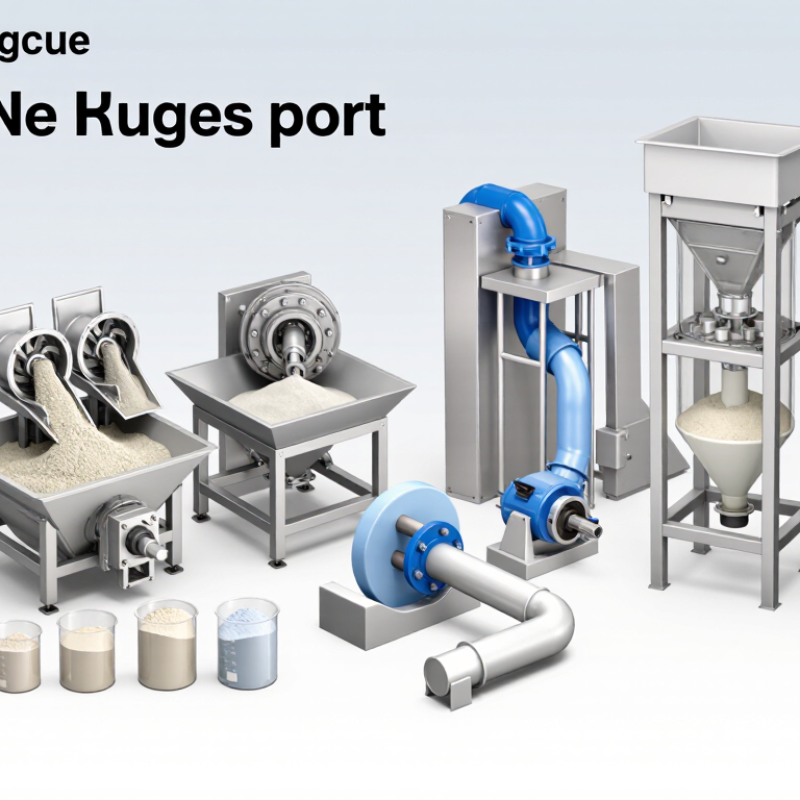
Table of Contents [Hide]
What Is a Powder Feeder and How Does It Work?
A powder feeder meters dry material from a storage vessel into a process line.
It controls flow more carefully than a simple discharge valve. Inside, an agitator may loosen powder, while a screw, vibratory tray, or rotating disk moves it forward. The outlet then delivers a measured stream to a mixer, reactor, press, or packaging machine.
The main types include screw feeders, vibratory feeders, rotary feeders, and loss-in-weight feeders. Screw feeders use a rotating auger and suit many powders with stable flow behavior. Vibratory feeders move material through controlled vibration and can handle gentle, intermittent dosing.
Rotary feeders use pockets or cavities to transfer repeated volumes. Loss-in-weight feeders monitor the hopper and feeder together, calculating flow from weight changes over time. They often provide stronger accuracy, but calibration and stable mounting matter.
Powder behavior decides more than the equipment label. Fine particles may bridge above the outlet. Damp material can cling to metal surfaces. A fast screw does not always create a faster reliable feed. Operators should test bulk density, moisture, particle size, and flow consistency before selecting a feeder. Small changes can matter.
One assumption deserves questioning. A feeder that works well at full capacity may perform poorly near its minimum rate. Regular checks of screw wear, vibration, load cells, and hopper buildup help reveal this weakness. The best setup is not always the most complex one. It is the one that delivers steady powder under real operating conditions.
Brands
Proudly Trusted by Top Suppliers Worldwide






Let us know and we will automate, together to fit your industrial needs.
 +91-97254 16844
Clients
Proudly Trusted by Top Companies Worldwide


Do you need Help? Get in touch.
X
Please fill out the form below and we will get back to you as soon as possible.