o p t i m a r o b o t i c s

Blogs

Why Choose a Universal Robot Arm for Automation?

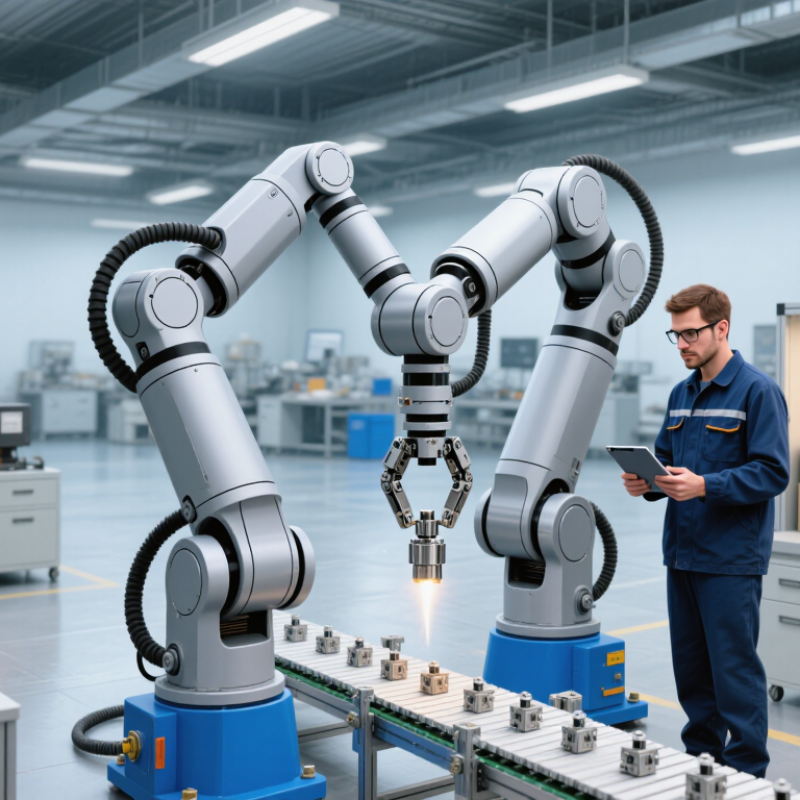
A universal robot arm is changing how manufacturers approach automation. It can weld, pick, assemble, inspect, and pack with consistent motion. Unlike fixed machinery, it can often move between tasks with limited mechanical changes. That flexibility matters in factories with short production runs and frequent product variations.

Esben Østergaard, co-founder of Universal Robots and a recognized collaborative robotics expert, said, “The future of robotics is not about replacing people, but about augmenting them.” His view reflects what many production teams experience daily. A robot may handle repetitive screwdriving while an operator checks alignment, surface quality, and unusual defects. The result is not magic. It depends on correct tooling, safe programming, stable fixtures, and realistic cycle-time testing.

Small details decide success.

A universal robot arm can reduce physical strain and improve repeatability, but it is not automatically the best choice for every process. Payload limits, reach, software skills, floor space, and integration costs must be examined before purchase. A poorly selected gripper can create jams every afternoon. An unstable workbench can turn accurate programming into inconsistent output. These problems are easy to underestimate.

This guide explores why businesses choose universal robot arm technology for automation. It considers practical benefits, common limitations, workplace collaboration, and long-term operating value. The discussion also questions a popular assumption: flexible automation is not always simple automation. Reliable results come from careful trials, trained workers, documented safety procedures, and continuous adjustment. That honest approach helps companies build systems that work beyond the showroom.

Why Choose a Universal Robot Arm for Automation?

Define Universal Robot Arms: Six Axes, Payload, Reach, and Safety Limits

Why Choose a Universal Robot Arm for Automation?

A universal robot arm usually means a six-axis articulated system. Six joints let the tool rotate, tilt, and approach parts from different directions. That flexibility suits assembly, inspection, packaging, and machine tending. However, “universal” can be misleading. Every arm still has limits.

Payload is not simply the advertised lifting number. It includes the gripper, cables, fixture, and workpiece. A five-kilogram part may exceed capacity when the tool extends far from the wrist. Reach defines the working envelope, but joint angles can create unreachable zones. In practice, engineers should test the farthest pick point, not only the nominal radius. The International Federation of Robotics reported 541,302 industrial robot installations worldwide in 2023, showing strong adoption across production environments. Yet adoption does not remove integration risks.

Safety limits require equal attention. ISO 10218 covers industrial robot safety, while ISO/TS 15066 provides guidance for collaborative applications. Speed, force, stopping distance, and protective separation depend on the risk assessment. A slower movement may still be unsafe near a sharp fixture. A low payload may still create dangerous momentum. Production teams should validate emergency stops, reduced-speed modes, guarding, and tool failure scenarios. Reports provide useful benchmarks, but factory conditions differ. That is where many project assumptions become imperfect. A short reach test can reveal more than a confident specification sheet.

Quantify Automation Demand: 541,302 Industrial Robots Installed in 2023 (IFR)

Why Choose a Universal Robot Arm for Automation?

Automation demand is measurable, not speculative. The International Federation of Robotics reported 541,302 industrial robots installed worldwide in 2023. This was the second-highest annual figure ever recorded. The global operational stock reached approximately 4.28 million units.

These figures show sustained investment across automotive, electronics, metals, and logistics. Yet installation volume alone does not guarantee a successful project.

A universal robot arm can support welding, machine tending, packaging, inspection, and material handling. Its value comes from controlled flexibility. One arm may serve several production tasks as demand changes.

In practical deployment, engineers should measure cycle time, payload, reach, safety requirements, and operator interaction. A compact cell can reduce floor-space pressure. However, flexibility may introduce programming effort and tool-change delays. That trade-off is often underestimated.

More automation is not always better.

Tips:

Start with one repetitive task.

Record cycle time, error rate, and changeover minutes for two weeks.

Then compare manual and automated results.

Check integration costs, maintenance skills, and training needs. The IFR data confirms strong market demand, but each factory still needs local evidence. A universal arm can be a sound choice, though not automatically the correct one.

Compare Collaborative Robots: About 10% of 2022 Installations (IFR)

A universal robot arm can support welding, assembly, dispensing, and machine tending with the right tooling. Its value comes from flexibility, not from performing every task perfectly. Engineers can reconfigure one arm when product designs change. That reduces some hardware replacement costs.

Collaborative robots deserve closer attention. The International Federation of Robotics reported about 55,000 collaborative robot installations in 2022. That was approximately 10% of global industrial robot installations. IFR also recorded 31% year-on-year growth for this category. The figures show strong adoption, but they do not prove that cobots suit every factory. Conventional industrial robots still offer higher speed, payload, and repeatability in controlled cells. Cobots usually provide easier deployment and closer human interaction. They often fit low-volume production better.

The practical difference appears on the shop floor. A technician may move a lightweight arm between two benches, adjust a program, and test a new fixture within one shift. That experience is valuable. It also exposes weaknesses. A cobot can slow production when safety limits, heavy tools, or frequent stops interrupt the cycle. Risk assessments must follow applicable standards, including ISO 10218 and ISO/TS 15066. Force limits alone are not enough. Tool shape, pinch points, workspace layout, and operator behavior still matter. A universal arm becomes a credible automation choice when engineers measure cycle time, payload, reach, safety requirements, and future product changes before purchase. Mistakes happen. Careful validation reduces them.

Why Choose a Universal Robot Arm for Automation? — Comparing Collaborative Robots, About 10% of 2022 Installations
A practical comparison of general-purpose industrial robot arms and collaborative robots for automation planning.
Data Dimension Universal Robot Arm
(General-Purpose Industrial Arm)
Collaborative Robot
(Cobot)
Automation Planning Implication
Primary operating concept Designed for programmed, repeatable industrial automation, normally used with a safeguarded work cell. Designed to support applications where people and the robot may work in close proximity, subject to a documented risk assessment. Choose the architecture based on the required speed, safeguarding method, operator interaction, and process risk.
2022 installation context Part of the wider industrial robot market, which recorded approximately 553,000 new installations globally in 2022. More than 55,000 collaborative robots were installed globally in 2022, representing approximately 10% of total industrial robot installations. Cobots were a significant and growing segment, but conventional industrial robots still represented the larger share of installations.
Typical production speed Generally better suited to high-speed, continuous-cycle production when the cell is properly engineered and safeguarded. Often operated at reduced speeds when people are nearby; actual limits depend on payload, tooling, application hazards, and the safety assessment. For high-volume production, a safeguarded industrial cell may provide greater throughput. For flexible, lower-volume work, a cobot may reduce integration complexity.
Payload range Available across a broad range, from small assembly loads to heavy material-handling and process loads. Commonly focused on light- to medium-duty handling, assembly, packaging, inspection, and machine-tending tasks. Include the weight of the end effector, workpiece, cables, and dynamic forces when calculating the required payload.
Reach and workspace Can be selected for compact workstations or extended reach across large production areas. Typically optimized for human-scale workspaces, although available reach varies by model and application. Measure the full required envelope, including approach angles, tooling clearance, fixtures, and access for operators.
Safety approach Usually relies on physical guarding, interlocked access, safety scanners, light curtains, or a combination of measures. May use power-and-force limiting, speed-and-separation monitoring, safety-rated monitored stop, or other validated protective measures. “Collaborative” does not automatically mean safe for every task. A risk assessment and validation are required for both robot types.
Human interaction Best suited to applications where people remain outside the active robot workspace during automatic operation. Can support shared workstations, such as presenting parts, loading fixtures, or performing manual finishing beside the robot. Use close human interaction only when the combined robot, tool, workpiece, process, and layout have been assessed as acceptable.
Programming and deployment Often requires structured programming, cell design, safety integration, and commissioning by trained automation personnel. Frequently emphasizes graphical programming, hand-guiding, reusable routines, and relatively quick setup for small or changing batches. Ease of programming can lower deployment time, but complex vision, welding, force control, and multi-machine integration may still require specialist skills.
Changeover flexibility Highly flexible when paired with modular tooling, vision, quick-change fixtures, and suitable software. Strong advantage
Often practical for frequent product changes, variable product mixes, and tasks that alternate between manual and automated work.
For high product variety, evaluate not only robot programming time but also fixture changes, gripper changes, calibration, and operator training.
Floor-space considerations May require a larger protected cell, safety fencing, access doors, and material-flow space. Can often be deployed in a smaller shared workstation, but safety equipment and separation distances may still be necessary. Compare the complete footprint, not only the robot base: include guarding, conveyors, pallets, maintenance access, and operator movement.
Best-fit applications High-speed assembly, welding, painting, heavy handling, palletizing, machine tending, and other repetitive processes. Light assembly, packaging, inspection, screwdriving, dispensing, machine tending, material presentation, and ergonomic assistance. Match the robot to the process requirements rather than selecting solely on purchase price or the presence of collaborative features.
Key advantages High throughput, broad payload options, repeatability, mature cell architectures, and suitability for demanding duty cycles. Flexible deployment, easier operator interaction, potentially lower space requirements, and practical automation for smaller production runs. A universal robot arm is attractive when performance and scalability dominate; a cobot is attractive when flexibility and shared workspace are priorities.
Main limitations Cell guarding and integration can increase installation time, footprint, and upfront engineering requirements. Speed, payload, tooling hazards, and process forces can limit collaborative operation; safeguarding may still be required. Estimate total cost of ownership, including integration, safety validation, tooling, maintenance, training, and production downtime.
Recommended selection criteria Cycle time, payload, reach, repeatability, duty cycle, environmental conditions, safety-cell design, and future expansion. Human interaction, product variation, ease of redeployment, operator training, payload, reach, safety functions, and cycle-time tolerance. Run a proof-of-concept using the real workpiece and tooling before making a final selection.
Reference note: Global installation figures are based on 2022 industrial robot statistics reported by the International Federation of Robotics. The approximately 10% figure is derived from more than 55,000 collaborative robot installations compared with approximately 553,000 total industrial robot installations worldwide.

Evaluate Flexibility: One Cobot Platform Across 20+ Application Categories (A3)

A universal robot arm can reduce automation friction when production needs change. The real test is flexibility: one collaborative platform supporting more than 20 application categories. These may include machine tending, inspection, packaging, palletizing, welding, dispensing, and screwdriving. In a working cell, operators can move the arm from a CNC door to a packing table. The same control environment remains familiar. Quick redeployment matters.

Engineers should verify payload, reach, repeatability, tooling, safety functions, and integration effort for every task. A compact arm may handle precise inspection well but struggle with heavy grippers or long horizontal reaches. That limitation is easy to miss during a showroom demonstration. An A3 evaluation should use production evidence, not category counts alone. Test real parts, variable lighting, uneven fixtures, and normal operator behavior. Record cycle time, unplanned stops, changeover minutes, and training hours. A flexible platform should let trained technicians adjust waypoints, change end effectors, and diagnose faults without specialist support.

Still, universal does not mean effortless. Some applications need external vision, force sensing, custom software, or redesigned fixtures. Those additions can change the business case. In field evaluations, teams often overestimate flexibility by counting possible applications instead of measuring repeatable performance. A pilot across two contrasting tasks may expose slower changeovers, awkward cable routing, or unexpected guarding needs. That evidence deserves careful attention before expanding automation.

Verify Safe Integration Through ISO 10218 and ISO/TS 15066 Standards

Why Choose a Universal Robot Arm for Automation?

A universal robot arm can support assembly, inspection, packaging, and machine tending. Its value depends on safe integration, not motion range alone. During commissioning, engineers should document the arm, tooling, payload, speed, workspace, and nearby equipment. Small details matter. A sharp fixture edge can create a serious hazard.

ISO 10218 provides a foundation for industrial robot safety. It addresses robot design, safeguarding, control systems, and integration responsibilities. A risk assessment should identify crushing points, unexpected movement, restart conditions, and maintenance access. Test every operating mode, including manual setup and fault recovery. Do not treat factory settings as proof of safety.

ISO/TS 15066 adds guidance for collaborative applications. It considers contact risks, body regions, force, pressure, speed, and separation distances. A collaborative layout may require reduced speed, protective scanners, limiting devices, or physical barriers. The correct choice depends on the complete application. It is not enough to label an arm “collaborative.” Measure the actual tool and workpiece interaction. Validate emergency stops and protective functions under realistic conditions. Qualified safety professionals should review the results and retain clear records. Some teams rush this stage. That is a mistake worth reconsidering. Standards guide decisions, but competent integration makes them dependable.

Why Choose a Universal Robot Arm for Automation?

Universal robot arms can support flexible automation when their application, installation, safeguarding, and collaborative operation are validated against the applicable safety requirements. ISO 10218-1 and ISO 10218-2 define safety requirements for industrial robots, robot applications, and robot cells, while ISO/TS 15066 provides guidance for collaborative robot systems and applications.

Brands

Proudly Trusted by Top Suppliers Worldwide

Let us know and we will automate, together to fit your industrial needs.

Clients

Proudly Trusted by Top Companies Worldwide

Do you need Help? Get in touch.

X

Please fill out the form below and we will get back to you as soon as possible.

    Subscribe our newsletter & get updates