o
p
t
i
m
a
r
o
b
o
t
i
c
s

Make a Call


Make a Call
Blogs
Why Choose Reaction Injection Molding?
Why choose Reaction Injection Molding? The answer often begins with the part itself: a broad instrument panel, a lightweight equipment housing, or a molded component with ribs and inserts. Reaction Injection Molding combines liquid reactive materials inside a closed mold, where they cure into a solid part. This process can suit large, detailed components that would be challenging or costly to produce using other methods.
Its appeal is practical. Compared with conventional injection molding, RIM commonly uses lower injection pressures, which can allow lighter tooling. Designers may also integrate features that would otherwise require separate assembly. The result can be fewer parts and less handling. But it is not a shortcut. Material selection, mold temperature, mixing, and cure time all affect the finished component. A small process variation can leave visible defects or uneven properties.
Plastics-processing author Dr. James L. Throne’s work offers a useful perspective. A paraphrase of its core lesson is: “Material, tooling, and process control must work together.” That is not a direct quotation; it summarizes a central manufacturing principle. Before choosing RIM, teams should compare part geometry, expected production volume, material performance, and tooling cost. A sample panel can reveal surface and fit issues early. It may also expose assumptions that looked sound on paper. RIM can be an effective choice, but only when the process fits the product—not the other way around.
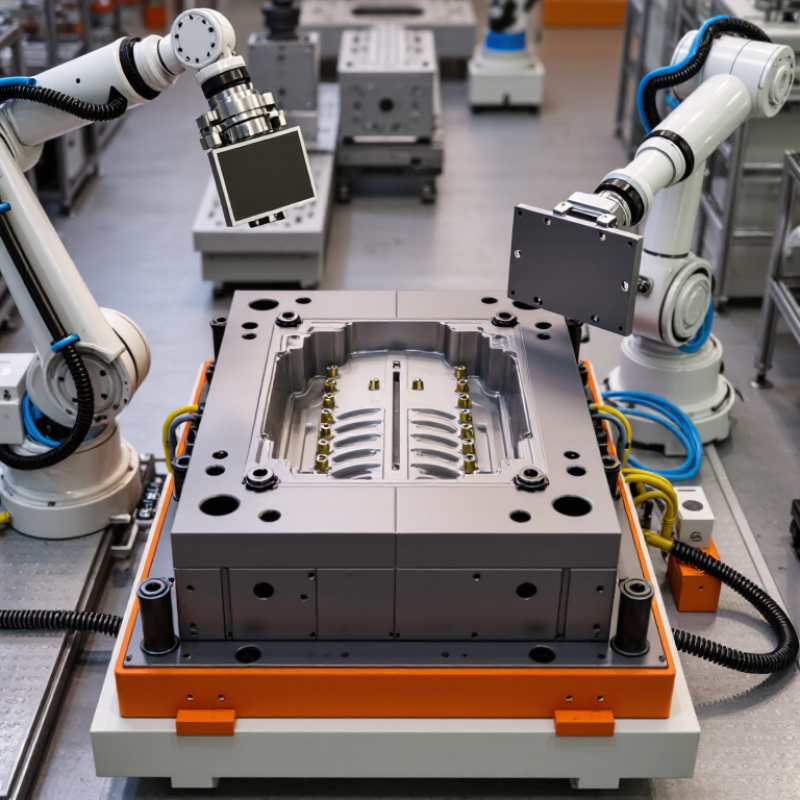
Table of Contents [Hide]
What Reaction Injection Molding Is
Reaction injection molding (RIM) forms a part by mixing reactive liquid components and injecting them into a closed mold. The mixture reacts and cures inside the tool. Polyurethane is a common RIM material. Unlike conventional thermoplastic injection molding, RIM uses low-viscosity liquids before curing. This can help fill large cavities and detailed features, such as deep ribs or curved panels. The result depends on the formulation, mold design, and process control.
Grand View Research’s 2023 polyurethane market report estimated the global polyurethane market at USD 78.1 billion in 2022, with projected growth of 6.2% annually from 2023 to 2030. This figure covers polyurethane broadly, not RIM alone. It signals a substantial material sector, but it does not prove RIM is right for every part. RIM can suit larger components and lower-volume production, though cure time and surface finish need careful testing. A missed detail: results can vary with temperature and mixing, even when the mold stays unchanged.
Tip: Review the part’s wall thickness, expected production volume, and surface requirements with a process engineer. Ask for sample parts. Check the edges and molded-in features closely.
Brands
Proudly Trusted by Top Suppliers Worldwide







Let us know and we will automate, together to fit your industrial needs.
 +91-97254 16844
Clients
Proudly Trusted by Top Companies Worldwide


Do you need Help? Get in touch.
X
Please fill out the form below and we will get back to you as soon as possible.