o
p
t
i
m
a
r
o
b
o
t
i
c
s

Make a Call


Make a Call
Blogs
Why Choose Sand Casting Parts for Custom Manufacturing?
Why Choose Sand Casting Parts for Custom Manufacturing?
Custom manufacturing often begins with a practical question: how can complex metal shapes be produced without excessive tooling costs? Sand Casting Parts offer a flexible answer, especially for prototypes, replacement components, and low-to-medium production runs. Engineers can create molds around a detailed pattern, adjust dimensions quickly, and support alloys such as aluminum, iron, and steel. This adaptability matters when a design changes after testing.
The scale of the industry supports this choice. The American Foundry Society’s 2023 Census of World Casting Production reported more than 109 million metric tons of castings produced globally in 2022. Grand View Research also identified steady growth in the global metal casting market, driven by automotive, machinery, energy, and construction demand. These reports show a mature process, not a temporary manufacturing trend. However, market size alone does not guarantee a suitable result.
The details decide performance. A foundry technician must control moisture, sand strength, pouring temperature, gating, and cooling time. A small defect near a bolt hole can compromise an otherwise strong part. Sand casting is not flawless. Surface finish may require machining, and dimensional consistency can demand careful process control. Still, its relatively low tooling investment and broad design freedom remain valuable. With certified suppliers, documented inspections, and material traceability, Sand Casting Parts can balance cost, speed, and engineering practicality. The best decision depends on tolerance, volume, geometry, and end-use risk—not on price alone.
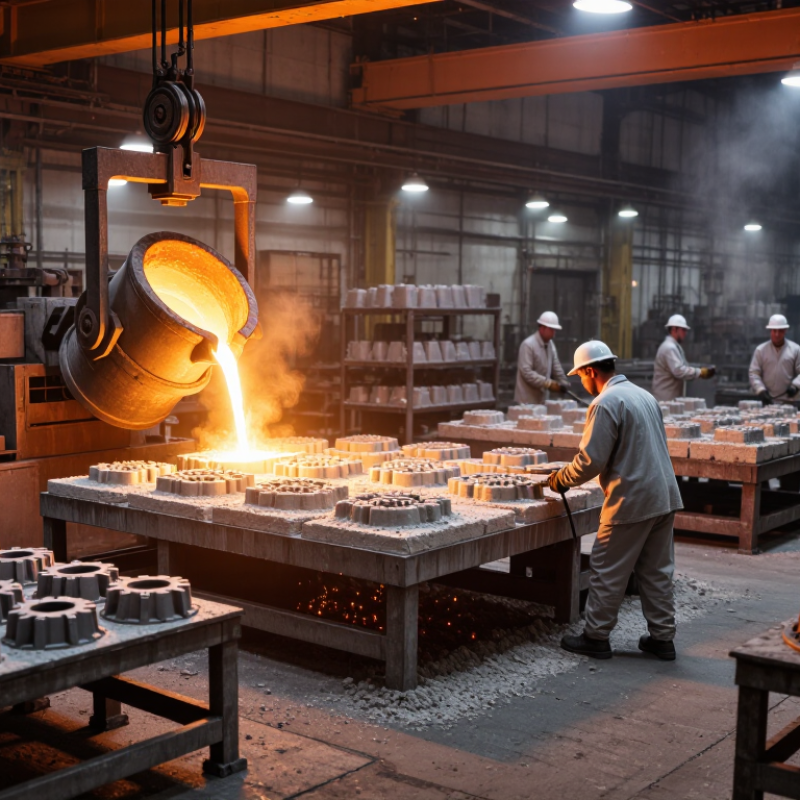
Table of Contents [Hide]
What Sand Casting Is and How the Process Works
Sand casting makes a metal part by pouring molten alloy into a cavity formed in prepared sand. A pattern, shaped like the intended component, forms that cavity. The mold usually has two halves, called the cope and drag, which close around the pattern impression. If a part needs a hollow passage, a sand core sits inside the mold. Gates guide the incoming metal, while risers feed it as the casting cools and shrinks. Once the metal solidifies, workers break the mold, remove the casting, and clean away adhering sand. Inspection and, when needed, machining check key dimensions and functional surfaces.
Tips: Keep wall thickness reasonably even and avoid abrupt changes, which can contribute to cooling stress or shrinkage defects. Share critical dimensions and machining allowances with the foundry early. A simple drawing can hide a tricky feature.
For custom parts, this process suits varied shapes and can use patterns tailored to a specific design. The final surface and dimensional accuracy depend on the alloy, mold quality, and finishing plan, so confirm requirements before production. One detail is easy to underestimate: a passage that looks straightforward on screen may need a core that is difficult to position or remove. Reviewing the parting line and core arrangement with a casting specialist can reveal such issues, though it may require revising the design.
Brands
Proudly Trusted by Top Suppliers Worldwide







Let us know and we will automate, together to fit your industrial needs.
 +91-97254 16844
Clients
Proudly Trusted by Top Companies Worldwide


Do you need Help? Get in touch.
X
Please fill out the form below and we will get back to you as soon as possible.