o
p
t
i
m
a
r
o
b
o
t
i
c
s

Make a Call


Make a Call
Blogs
Why Choose Steel Rebar for Global Construction Projects?
Choosing the right reinforcement can determine how a bridge, warehouse, or residential tower performs for decades. Steel Rebar remains a trusted choice because it combines tensile strength, predictable behavior, and practical availability across many construction markets. Concrete handles compression well, but it performs poorly when pulled. Steel rebar helps control cracking and supports structural loads within reinforced concrete systems.
On active projects, its value becomes visible in ordinary details. Bundles arrive with heat numbers, bar diameters, and delivery records. Workers cut and bend the bars according to approved drawings. Inspectors then check spacing, lap lengths, concrete cover, and tying before the pour. These steps support quality control and make mistakes easier to identify. Engineers also compare product certificates with applicable standards, such as ASTM, BS, or European specifications, depending on the project location.
Steel rebar is not flawless. Poor storage can create excessive rust, while incorrect bends may weaken construction quality. Transportation delays can also disrupt a carefully planned schedule. This is where experienced suppliers, qualified engineers, and independent testing become important. A reliable supply chain should provide traceability, mechanical test results, weldability information, and clear documentation.
The decision requires judgment. Coastal structures may need enhanced corrosion protection, while seismic regions demand carefully detailed reinforcement connections. Recycled steel can support sustainability goals, but its quality and certification still require verification. Steel rebar offers strong, measurable performance, yet it only works well when design, materials, workmanship, and inspection remain connected. That practical discipline is often more important than the product alone.
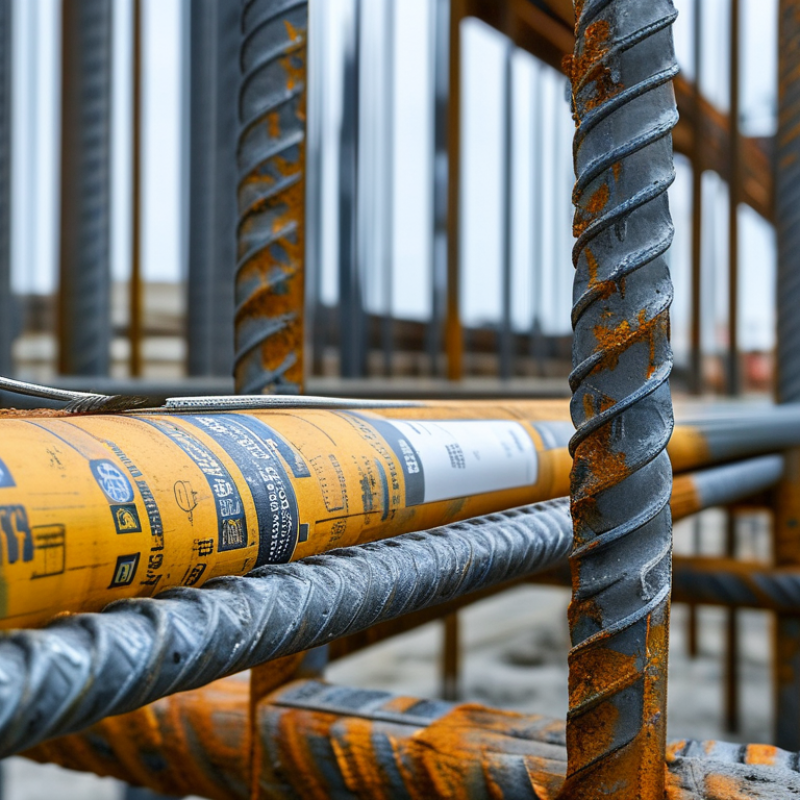
Table of Contents [Hide]
What Is Steel Rebar and How Is It Used in Construction?
Steel rebar, short for steel reinforcing bar, is a ribbed steel rod embedded in concrete. Concrete handles compression well, but it performs poorly under tension. Rebar fills that weakness. Its ribs improve grip, helping concrete and steel act as one structural system. Common shapes include straight lengths, bent bars, and welded mesh.
On a construction site, crews place rebar inside footings, columns, beams, walls, and slabs. They follow structural drawings for bar diameter, spacing, lap length, and concrete cover. Plastic or concrete supports keep bars away from soil and formwork. That small distance matters. It helps protect steel from moisture and corrosion. Workers tie intersections with wire, then inspectors check alignment before pouring concrete.
Good practice depends on more than placing metal in a grid. Steel grade, bar condition, cutting methods, and storage areas all affect performance. Rust staining is not automatically dangerous, but deep scale deserves attention. A hurried inspection can miss an open lap or misplaced support. Field teams often pause around congested beam-column joints and confirm the engineer’s intent. Rebar is strong, recyclable, and widely available, yet it is not flawless. Poor detailing or careless placement can reduce its value. Accurate records, tested materials, and disciplined site checks make its use more dependable.
Brands
Proudly Trusted by Top Suppliers Worldwide







Let us know and we will automate, together to fit your industrial needs.
 +91-97254 16844
Clients
Proudly Trusted by Top Companies Worldwide


Do you need Help? Get in touch.
X
Please fill out the form below and we will get back to you as soon as possible.