o
p
t
i
m
a
r
o
b
o
t
i
c
s

Make a Call


Make a Call
Blogs
Why Use Industrial RFID Tablets in Global Warehouses?
Global warehouses operate under constant pressure. Orders move across receiving docks, storage aisles, and export stations every hour. Paper records and ordinary tablets often struggle in these demanding environments. Dust, vibration, cold rooms, and heavy handling can quickly expose their weaknesses.
INDUSTRIAL RFID TABLETS combine rugged computing with faster item identification. Workers can scan tagged pallets, cartons, and assets without returning to fixed workstations. A supervisor may verify a shipment beside a loading bay, even while forklifts move nearby. RFID support can reduce manual entry and improve visibility across inventory processes. It also helps teams locate misplaced goods before delays affect customers. That changes everything.
The practical value depends on thoughtful implementation. Field experience shows that durable hardware cannot repair inaccurate tags, weak network coverage, or poorly designed workflows. The details matter. Warehouse managers should examine scan distance, battery endurance, screen readability, glove operation, and software compatibility before purchasing. Independent testing, supplier documentation, and service records can support a more reliable decision. Security controls and user permissions also deserve attention, especially when devices connect with enterprise systems. A tablet may survive a fall, yet still fail operationally if updates are neglected. That uncomfortable point is easy to overlook. The strongest programs combine trained employees, clear procedures, and measurable performance targets. They review missed scans, charging habits, and repair trends regularly. When selected and managed responsibly, rugged RFID tablets can strengthen warehouse accuracy, mobility, and accountability across international operations. They are not a shortcut. They are a practical tool within a larger, continually improving system.
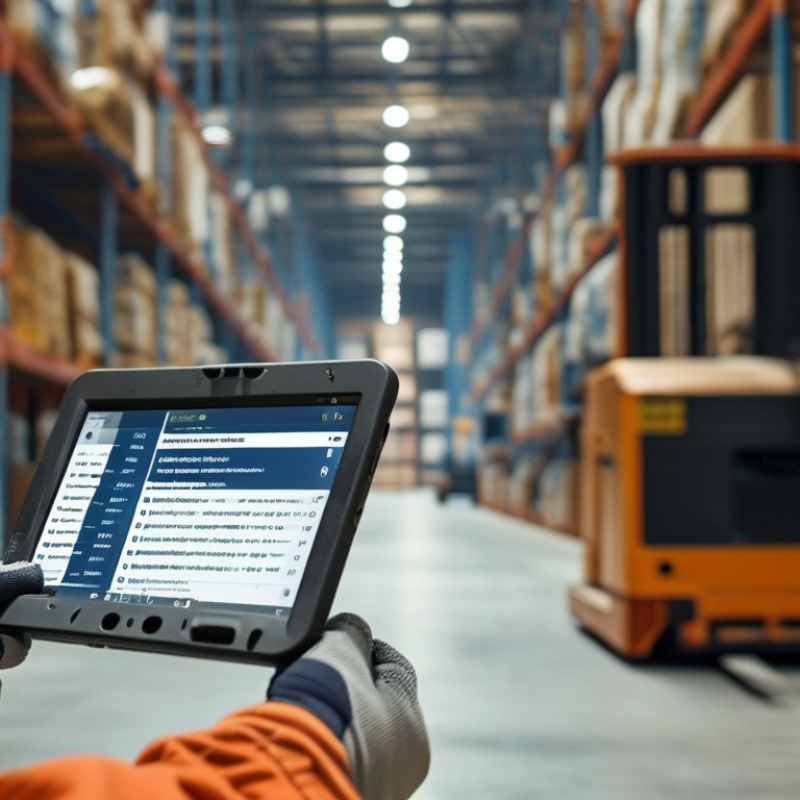
Table of Contents [Hide]
What Are Industrial RFID Tablets?
Why Use Industrial RFID Tablets in Global Warehouses?
What Are Industrial RFID Tablets?
Industrial RFID tablets are rugged mobile computers designed for demanding warehouse work. They combine a touchscreen, RFID reader, barcode scanner, and wireless communication in one device. Their sealed housing resists dust, moisture, drops, and repeated handling. Workers can scan tagged cartons without opening every container. The tablet then displays stock details, location data, and task instructions. This supports faster receiving, picking, cycle counting, and shipment checks.
Unlike ordinary tablets, industrial models usually offer stronger batteries, brighter screens, and glove-friendly controls. These details matter in cold rooms, loading bays, and noisy aisles. A worker may hold the tablet with one hand while moving a pallet with the other. Reliable software also matters. It should record scans clearly and connect with warehouse systems without creating duplicate entries. RFID is not magic. Metal racks, liquids, and overlapping tags can reduce reading accuracy. Testing remains essential.
Tips: Map reading zones before installation. Test tags on real cartons and pallets. Keep a barcode option for difficult materials. Train workers to confirm unusual quantities instead of trusting every automatic scan. Access controls and encrypted connections should protect inventory data. One practical lesson is easy to miss: faster scanning can reveal weak data rules. Teams may need to revise workflows after the first trial. That is not failure. It is useful evidence.
Brands
Proudly Trusted by Top Suppliers Worldwide






Let us know and we will automate, together to fit your industrial needs.
 +91-97254 16844
Clients
Proudly Trusted by Top Companies Worldwide


Do you need Help? Get in touch.
X
Please fill out the form below and we will get back to you as soon as possible.